

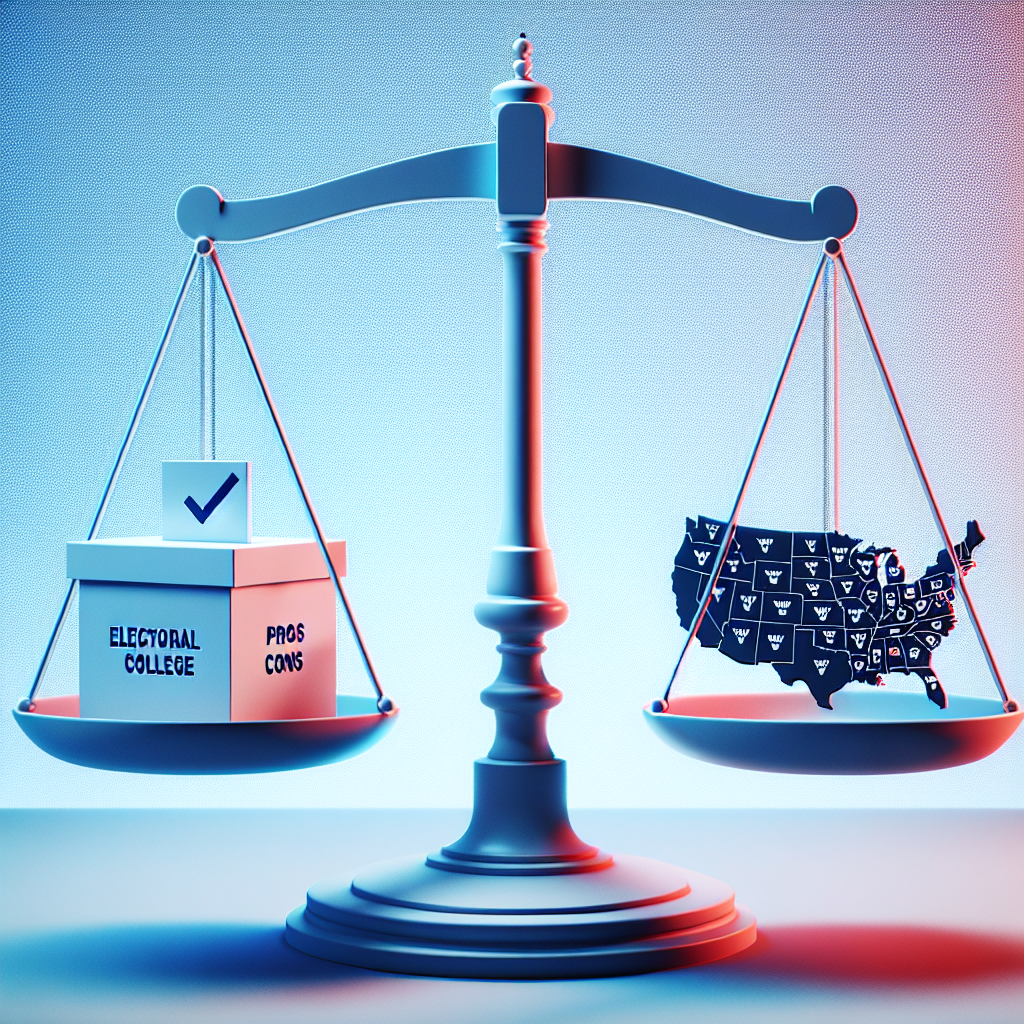
The Electoral College: Pros and Cons
The Electoral College has long been a subject of debate in American politics. From its inception to its modern-day implementation, this unique system has sparked discussions on its effectiveness and relevance in today’s democratic landscape. But what exactly is the Electoral College, and why does it evoke such strong opinions? In this blog post, we’ll delve into the pros and cons of the Electoral College, offering a balanced view to help you understand its impact on presidential elections.
Understanding the Electoral College
Before we examine the advantages and disadvantages, it’s essential to understand what the Electoral College is. Established by the U.S. Constitution, the Electoral College is a mechanism for electing the President and Vice President of the United States. Instead of a direct popular vote, citizens cast their vote for electors, who then vote for the presidential candidates. Each state has a specific number of electors based on its representation in Congress, totaling 538 electors. A candidate needs at least 270 electoral votes to win the presidency.
Pros of the Electoral College
1. Preserving a Federal System of Government
One of the primary benefits of the Electoral College is that it upholds the federal system of government. By allowing states to have a voice proportional to their size and population, the system ensures that both large and small states can influence the outcome of a presidential election. This balance prevents more populous states from solely determining the presidency, giving smaller states a say in the national dialogue.
2. Encouraging Nationwide Campaigning
The Electoral College encourages presidential candidates to campaign across the entire country rather than focusing solely on densely populated urban centers. This nationwide campaigning ensures that candidates address a wide range of issues affecting different regions, from agriculture in the Midwest to technology on the West Coast. As a result, candidates must build diverse coalitions, appealing to a broader spectrum of voters.
3. Preventing Regional Domination
By requiring candidates to win electoral votes from various regions, the Electoral College prevents any single region from dominating national politics. This system encourages political diversity and discourages the emergence of regional candidates who might only focus on local interests rather than national ones.
Cons of the Electoral College
1. Disproportionate Influence of Smaller States
One of the most significant criticisms of the Electoral College is that it gives disproportionate influence to smaller states. Because each state has a minimum of three electoral votes regardless of population, smaller states have a relatively larger say per voter compared to larger states. This imbalance can lead to situations where the popular vote does not align with the electoral vote, raising questions about democratic fairness.
2. Potential for “Faithless Electors”
While rare, the possibility of “faithless electors” exists within the Electoral College system. These are electors who choose not to vote for the candidate they pledged to support. Although most states have laws to bind electors to their pledged candidates, the potential for faithless electors adds an element of unpredictability and concern about the integrity of the election process.
3. Focus on Swing States
The Electoral College often leads candidates to focus their efforts on a handful of swing states that can tip the balance in an election. This focus can marginalize voters in safe states, who may feel their votes carry less weight. Consequently, issues pertinent to swing states might receive more attention than those affecting the broader national population.
Conclusion: Balancing Tradition and Reform
The Electoral College remains a contentious feature of American democracy, with strong arguments on both sides of the debate. Its design reflects a compromise between empowering states and ensuring a collective national decision. However, as the country evolves, so too might the conversation around potential reforms. Whether the Electoral College continues in its current form or undergoes changes, understanding its pros and cons is crucial for informed civic engagement.
FAQs
Q: Why was the Electoral College created?
A: The Electoral College was created as a compromise between electing the President by a vote in Congress and electing the President by a popular vote of qualified citizens. It aimed to balance the influence of populous and less populous states.
Q: Can the Electoral College be abolished?
A: Abolishing the Electoral College would require a constitutional amendment, which is a challenging process. It would need approval from two-thirds of both houses of Congress and ratification by three-fourths of the states.
Q: Has a candidate ever won the presidency without winning the popular vote?
A: Yes, there have been instances where candidates have won the presidency through the Electoral College despite losing the popular vote. Notable examples include the elections of 1824, 1876, 1888, 2000, and 2016.
Q: What is the role of electors in the Electoral College?
A: Electors are individuals chosen by political parties in each state to represent their respective candidates in the Electoral College. They pledge to vote for their party’s candidate and officially cast their votes after the general election.



Leave a Reply