
Tech Innovations in Education: Transforming the Learning Experience
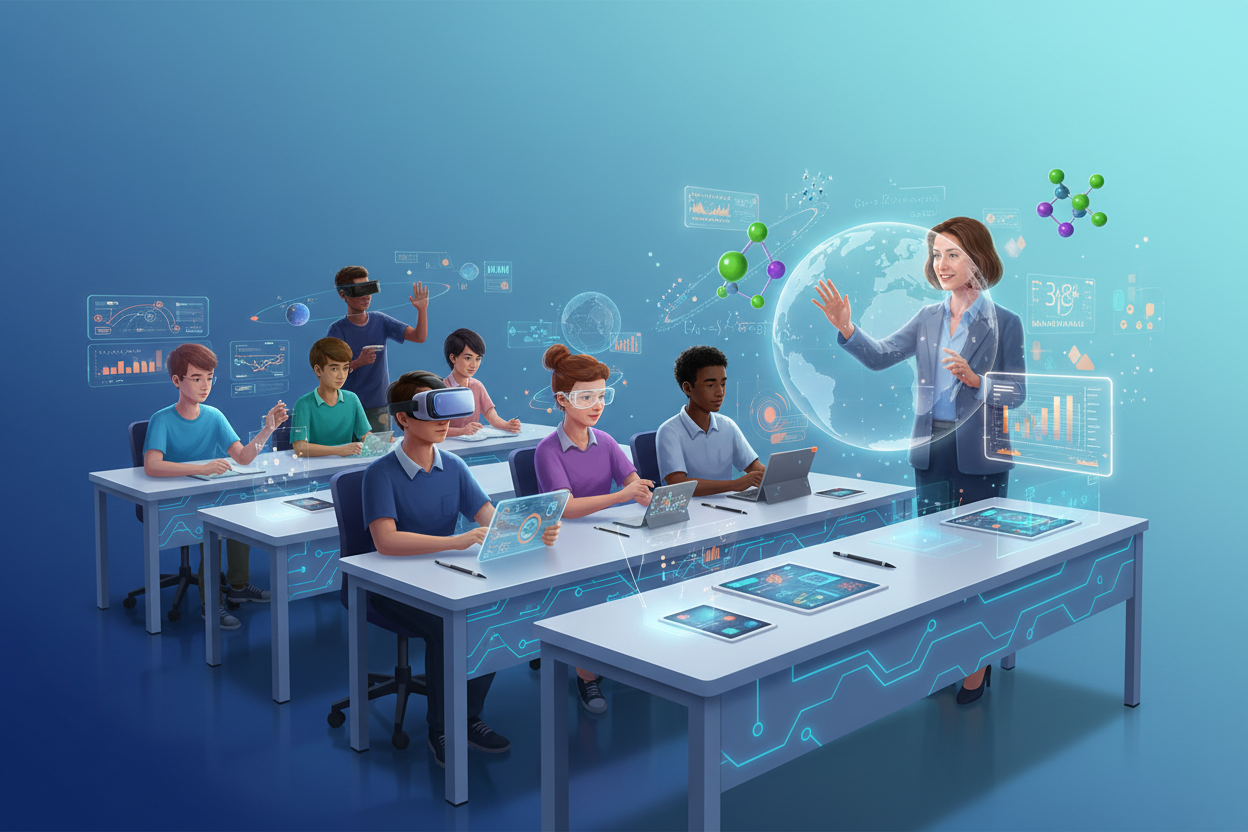
Remember when the most exciting piece of technology in your classroom was an overhead projector? Those days feel like ancient history now. Today’s educational landscape is being revolutionized by cutting-edge technologies that are fundamentally changing how students learn, teachers teach, and knowledge is shared. From artificial intelligence to virtual reality, these innovations aren’t just fancy gadgets – they’re powerful tools that are making education more accessible, engaging, and effective than ever before.
The digital transformation in education has accelerated dramatically, especially in recent years. What started as simple computer labs has evolved into sophisticated learning ecosystems where technology seamlessly integrates with traditional teaching methods. This shift isn’t just about keeping up with trends; it’s about preparing students for a future where digital literacy is as essential as reading and writing.
The Rise of Artificial Intelligence in Classrooms
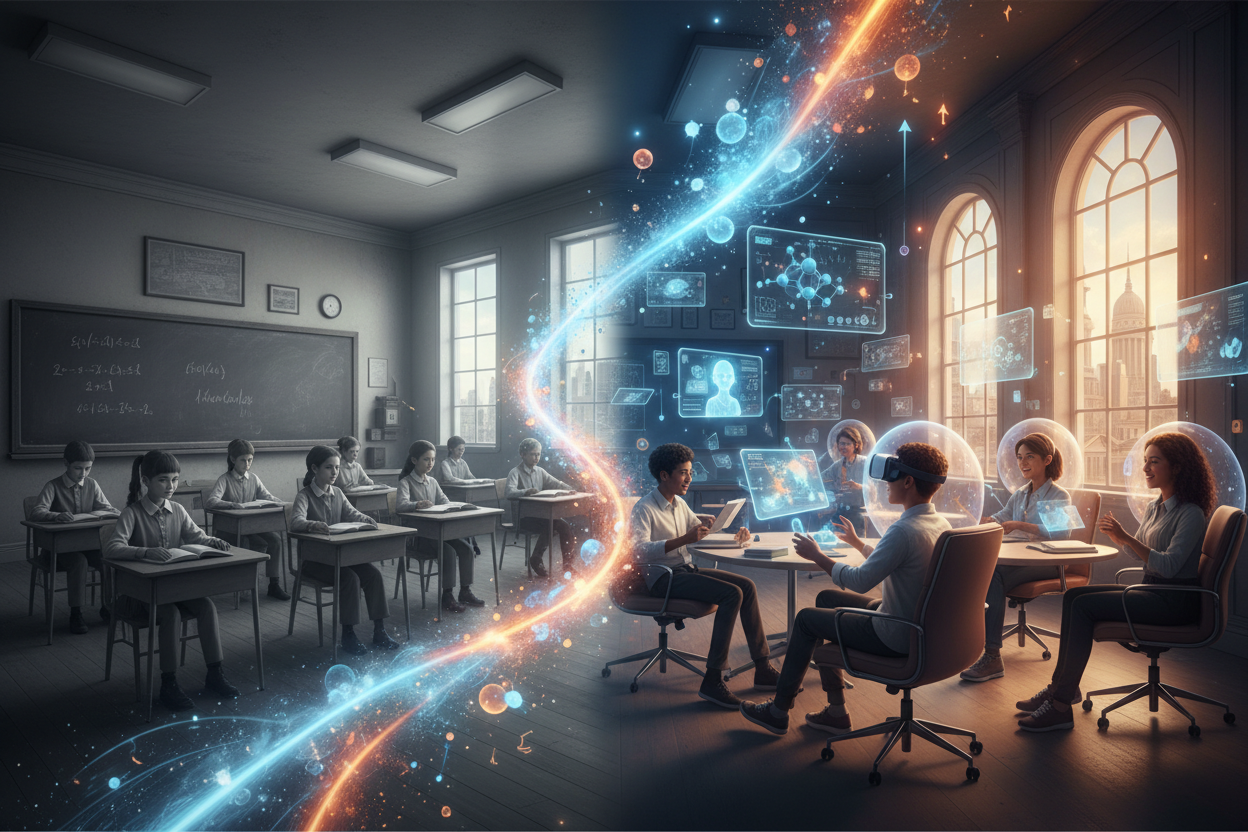
Artificial intelligence is no longer confined to science fiction movies – it’s actively reshaping how we approach education. AI-powered learning platforms can now analyze individual student performance patterns, identifying strengths and weaknesses with remarkable precision. This technology enables personalized learning paths that adapt to each student’s unique pace and learning style.
Take adaptive learning software, for example. These intelligent systems continuously assess student responses and adjust the difficulty level in real-time. If a student struggles with algebra concepts, the AI can provide additional practice problems and alternative explanations until mastery is achieved. Conversely, advanced learners can skip ahead to more challenging material without waiting for the rest of the class.
AI tutoring systems are also becoming increasingly sophisticated. These virtual assistants can answer student questions 24/7, provide instant feedback on assignments, and even detect when a student might be feeling frustrated or confused based on their interaction patterns. It’s like having a patient, knowledgeable tutor available around the clock.
Virtual and Augmented Reality: Bringing Learning to Life
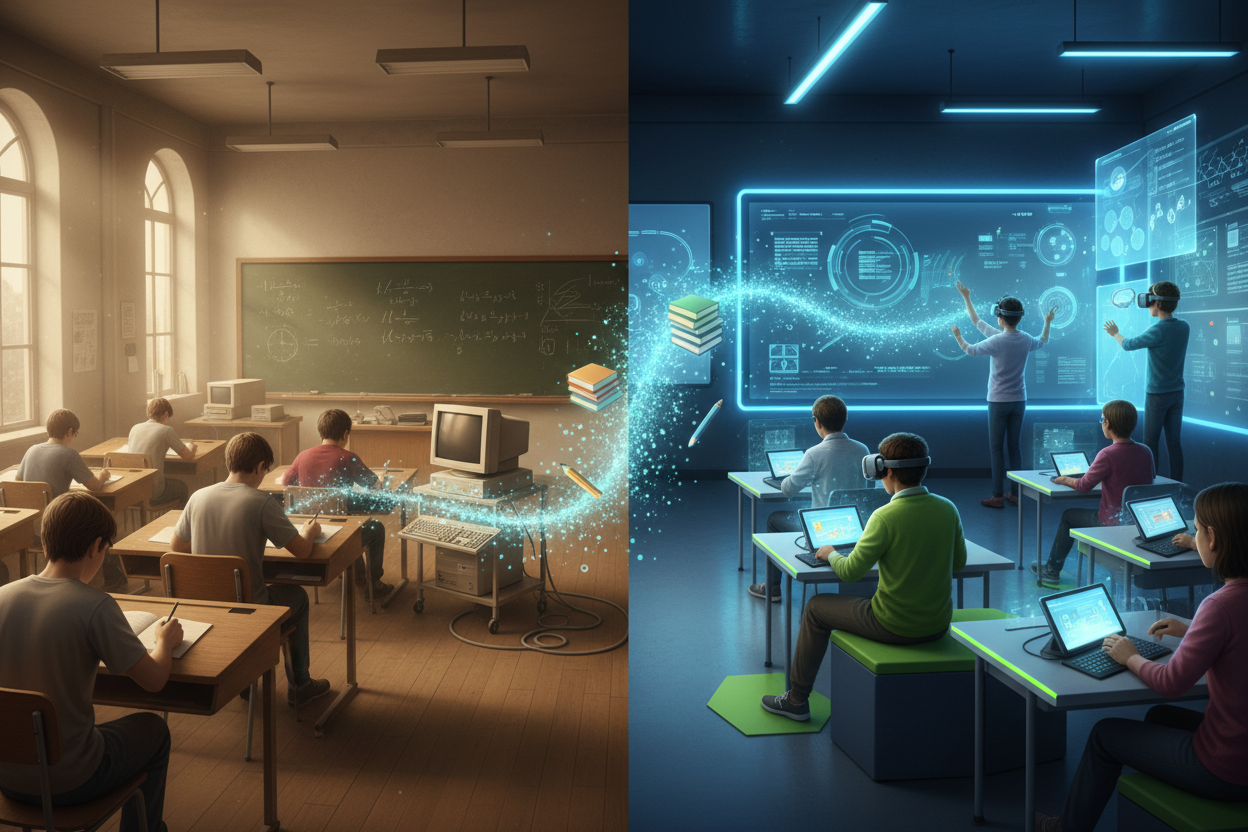
Imagine studying ancient Rome by actually walking through the Colosseum, or exploring the human circulatory system from the inside. Virtual and augmented reality technologies are making these impossible scenarios possible, creating immersive learning experiences that engage students in ways textbooks never could.
VR headsets transport students to different times, places, and even microscopic worlds. History lessons become time travel adventures, geography classes turn into global expeditions, and science concepts come alive through interactive 3D models. This technology is particularly valuable for visual and kinesthetic learners who benefit from hands-on, experiential learning.
Augmented reality, meanwhile, overlays digital information onto the real world. Students can point their tablets at a worksheet and watch mathematical equations solve themselves step-by-step, or scan a historical artifact to see additional information and context appear on their screens. This seamless blend of physical and digital learning creates memorable educational moments that stick with students long after class ends.
Cloud Computing and Collaborative Learning Platforms
The shift to cloud-based learning platforms has democratized access to educational resources and enabled unprecedented levels of collaboration. Students can now work together on projects in real-time, regardless of their physical location. Teachers can share resources instantly with colleagues around the world, and educational institutions can provide consistent learning experiences across multiple campuses.
Google Classroom, Microsoft Teams for Education, and similar platforms have become the backbone of modern educational delivery. These tools facilitate seamless communication between teachers and students, streamline assignment distribution and collection, and provide centralized hubs for all course materials. The result is more organized, efficient, and accessible education for everyone involved.
Cloud computing also enables schools to access powerful software and resources that would otherwise be prohibitively expensive. Instead of purchasing individual licenses for every computer, institutions can provide students with access to professional-grade design software, statistical analysis tools, and specialized applications through cloud-based subscriptions.
Gamification: Making Learning Fun and Engaging
Who says learning can’t be fun? Educational gamification incorporates game design elements into traditional learning activities, transforming potentially dry subjects into engaging challenges. Points, badges, leaderboards, and achievement levels tap into students’ natural competitive instincts and desire for recognition.
Language learning apps like Duolingo have mastered this approach, turning vocabulary acquisition into an addictive daily habit. Students earn streaks for consecutive days of practice, unlock new levels as they progress, and compete with friends to maintain their positions on leaderboards. This gamified approach has proven remarkably effective at maintaining long-term engagement.
Educational video games take this concept even further. Complex problem-solving games can teach mathematical concepts, strategy games can illustrate historical events, and simulation games can provide hands-on experience with scientific principles. When students are having fun, they’re more likely to retain information and develop a genuine love for learning.
Mobile Learning and Microlearning Revolution
Smartphones and tablets have transformed education into a truly mobile experience. Students no longer need to be tied to a desk or classroom to access learning materials. Mobile learning apps enable studying during commutes, quick review sessions between classes, and just-in-time learning when specific information is needed.
Microlearning breaks complex topics into bite-sized, digestible chunks that are perfect for mobile consumption. Instead of hour-long lectures, students might watch a series of five-minute videos, complete quick interactive quizzes, or participate in brief discussion forums. This approach aligns with modern attention spans and allows for more flexible learning schedules.
The convenience of mobile learning has also made education more accessible to non-traditional students. Working professionals can pursue degrees or certifications during lunch breaks, parents can study while children nap, and rural students can access the same quality education as their urban counterparts.
Data Analytics and Learning Insights
Educational technology generates vast amounts of data about student learning patterns, and analytics tools are helping educators make sense of this information. Learning analytics can identify at-risk students before they fall behind, reveal which teaching methods are most effective, and provide insights into optimal learning conditions.
Predictive analytics can flag students who might be struggling based on factors like assignment submission patterns, time spent on tasks, and engagement levels with course materials. This early warning system allows teachers to intervene proactively rather than reactively, potentially preventing academic failure.
These insights also help educational institutions make data-driven decisions about curriculum design, resource allocation, and support services. When schools understand how students actually learn and what challenges they face, they can create more effective educational programs.
Challenges and Considerations
While educational technology offers tremendous benefits, it’s not without challenges. The digital divide remains a significant concern, as not all students have equal access to devices and reliable internet connections. Schools must work to ensure that technological innovations don’t inadvertently widen educational inequalities.
Privacy and security concerns are also paramount when dealing with student data. Educational institutions must implement robust cybersecurity measures and maintain strict data protection protocols to safeguard sensitive information about minors.
Additionally, there’s the question of screen time and its impact on student health and development. Educators must strike a balance between leveraging technology’s benefits and ensuring students still develop essential social skills and maintain physical activity levels.
The Future of Educational Technology
Looking ahead, emerging technologies promise even more dramatic changes to education. Blockchain technology could revolutionize credential verification and make academic achievements more portable and verifiable. Internet of Things (IoT) devices might create smart classrooms that automatically adjust lighting, temperature, and acoustics for optimal learning conditions.
Brain-computer interfaces, while still in early stages, could eventually enable direct knowledge transfer or enhanced learning capabilities. These sci-fi concepts are closer to reality than many people realize, and they could fundamentally change our understanding of human learning potential.
As these technologies continue to evolve, the key will be thoughtful implementation that prioritizes student outcomes over technological novelty. The most successful educational innovations will be those that enhance rather than replace the human elements of teaching and learning.
The transformation of education through technology is not just about adopting new tools – it’s about reimagining what’s possible in teaching and learning. As we continue to innovate and experiment, we’re creating educational experiences that are more personalized, engaging, and effective than ever before. The classroom of tomorrow is being built today, one innovation at a time, and the potential for positive impact on student outcomes is truly exciting.
Frequently Asked Questions
How is artificial intelligence being used in education today?
AI is currently being used for personalized learning platforms that adapt to individual student needs, automated grading systems, intelligent tutoring systems, and predictive analytics to identify students at risk of falling behind. AI chatbots also provide 24/7 student support and answer common questions.
What are the main benefits of virtual reality in education?
VR provides immersive learning experiences that make abstract concepts tangible, allows students to visit impossible locations like ancient civilizations or inside human organs, increases engagement and retention rates, and accommodates different learning styles, particularly visual and kinesthetic learners.
How does gamification improve student learning outcomes?
Gamification increases student motivation through rewards and achievements, makes learning more enjoyable and engaging, encourages consistent practice through streaks and challenges, provides immediate feedback on progress, and taps into natural competitive instincts to drive improvement.
What challenges do schools face when implementing new educational technologies?
Major challenges include ensuring equitable access to devices and internet connectivity, training teachers to effectively use new technologies, managing cybersecurity and student privacy concerns, balancing screen time with traditional learning methods, and securing adequate funding for technology infrastructure.
How can parents support their children’s technology-enhanced learning at home?
Parents can create dedicated study spaces for digital learning, ensure reliable internet access, monitor and limit recreational screen time while supporting educational use, engage with their children about what they’re learning through technology, and communicate with teachers about their child’s progress with digital tools.



Leave a Reply