
The Influence of Socialism on Education Policy: Shaping Modern Learning Systems
Education has always been more than just textbooks and classrooms. It’s a reflection of society’s values, priorities, and vision for the future. Throughout history, various political ideologies have left their mark on how we structure learning systems, and socialism has played a particularly significant role in shaping modern education policy. From universal access to free public education, many principles we take for granted today have roots in socialist thought.
Understanding how socialism has influenced education policy isn’t just an academic exercise – it’s crucial for anyone interested in educational reform, policy development, or simply understanding why our schools operate the way they do. Whether you’re an educator, parent, or policy maker, exploring this connection reveals fascinating insights about the relationship between political philosophy and learning systems.
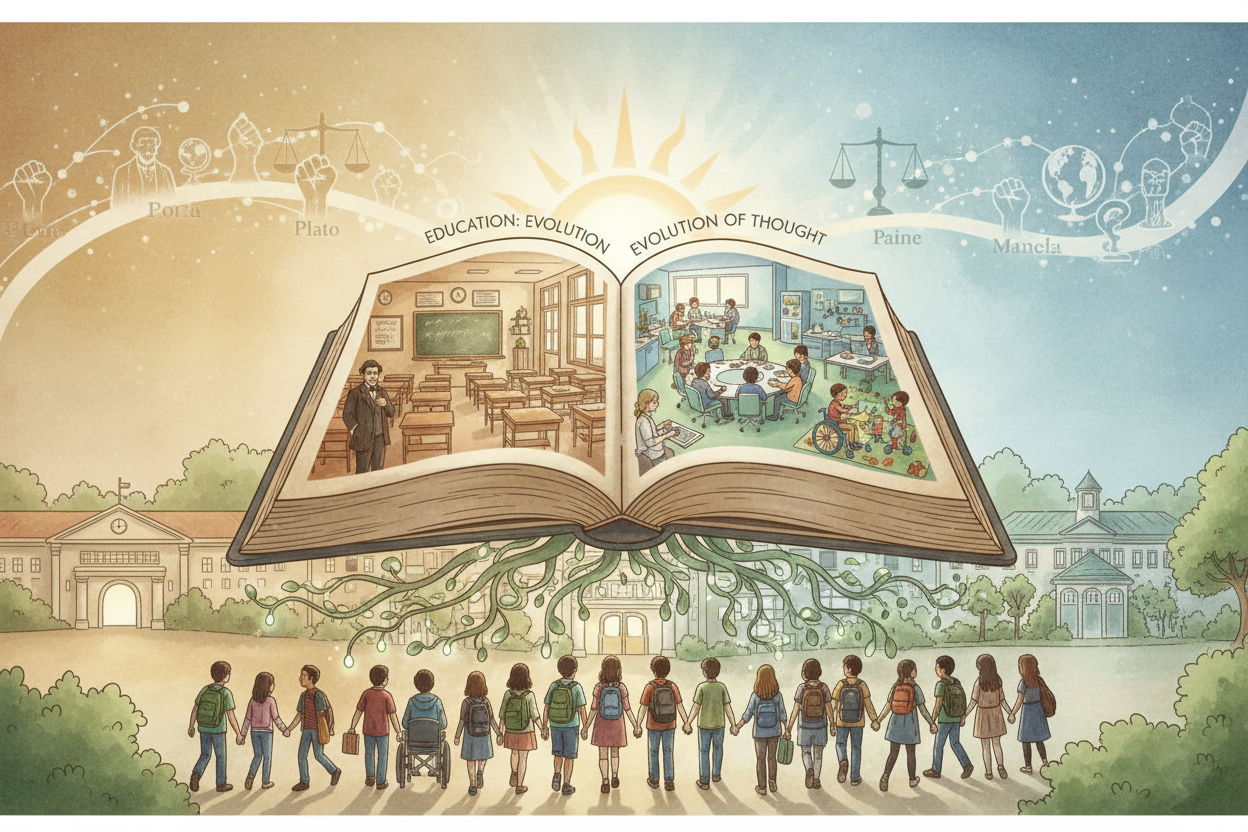
Historical Foundations of Socialist Education Philosophy
The relationship between socialism and education began long before modern school systems existed. Early socialist thinkers like Robert Owen and Karl Marx recognized education as a powerful tool for social transformation. They believed that traditional education systems perpetuated class divisions and inequality, keeping working-class children trapped in cycles of poverty.
Marx himself wrote extensively about education, arguing that true learning should combine intellectual development with practical skills. He envisioned schools that would break down the artificial barriers between mental and manual labor, creating well-rounded individuals capable of contributing to society in multiple ways.
These foundational ideas weren’t just theoretical musings. They began influencing real educational experiments in the 19th century. Owen’s New Lanark schools in Scotland demonstrated how education could serve broader social goals, providing not just literacy and numeracy but also moral and practical education for working-class children.
Core Socialist Principles in Education Policy
Several key principles emerge when examining socialism’s impact on education policy. Understanding these helps explain why certain educational approaches gained popularity and continue to influence policy debates today.
Universal access stands as perhaps the most fundamental principle. Socialist ideology promotes the idea that education should be available to everyone, regardless of economic background, social class, or geographic location. This principle directly challenged earlier systems where quality education was primarily available to the wealthy elite.
Equality of opportunity represents another cornerstone. Socialist-influenced policies often emphasize leveling the playing field, ensuring that a child’s potential isn’t limited by their family’s financial circumstances. This has led to policies supporting free textbooks, meal programs, and transportation services.
The concept of education as a public good rather than a private commodity also stems from socialist thinking. This perspective views education as benefiting society as a whole, not just individual students, justifying public investment and government oversight.
Universal Public Education: A Socialist Legacy
Perhaps nowhere is socialism’s influence more visible than in the development of universal public education systems. Before the 19th century, formal education was largely the privilege of the wealthy. The idea that governments should provide free education to all children was revolutionary.
Countries like Prussia led the way in establishing compulsory public education, partly influenced by socialist and progressive thinking about social welfare. These early systems demonstrated that universal education could work on a large scale, inspiring similar developments worldwide.
In the United States, the common school movement of the 1800s reflected many socialist principles, even though it wasn’t explicitly labeled as such. Advocates like Horace Mann argued that public education was essential for democracy and social cohesion – ideas that aligned closely with socialist thought about education’s role in society.
Today, universal public education is so deeply embedded in most societies that we rarely question its origins. Yet this system, which provides free education to millions of children globally, represents one of socialism’s most enduring contributions to educational policy.
Socialist Countries and Educational Innovation
Examining education systems in explicitly socialist countries reveals both successes and challenges in implementing socialist educational principles. The Soviet Union, despite its many flaws, achieved remarkable literacy rates and made significant advances in technical education.
Cuba’s education system offers another interesting case study. Despite economic challenges, Cuba has maintained high literacy rates and has emphasized education as a cornerstone of their socialist society. Their focus on combining academic learning with practical work experience reflects Marx’s original vision of integrated education.
Nordic countries, while not strictly socialist, have incorporated many socialist principles into their education policies. Finland’s education system, often praised for its excellence, emphasizes equality, minimal standardized testing, and strong public investment – all principles that align with socialist educational philosophy.
These examples show that socialist influence on education policy isn’t limited to officially socialist countries. Many successful education systems worldwide have adopted socialist-inspired principles while adapting them to local contexts and needs.
Modern Applications and Contemporary Debates
Socialist influence on education policy continues to shape contemporary debates about school reform, funding, and access. Current discussions about free college tuition, student debt relief, and educational equity often echo historical socialist arguments about education as a public good.
The debate over school vouchers and privatization represents a modern battleground between socialist and capitalist approaches to education. Supporters of public education often draw on socialist principles when arguing against market-based reforms, emphasizing education’s role in promoting social cohesion and equality.
Technology has added new dimensions to these debates. Questions about digital equity, access to online learning resources, and the role of private tech companies in education all reflect underlying tensions between socialist principles of universal access and market-driven approaches to educational innovation.
Teacher unions, which often advocate for policies aligned with socialist principles, continue to play significant roles in shaping education policy. Their emphasis on professional working conditions, adequate funding, and resistance to excessive standardization reflects broader socialist concerns about worker rights and public service quality.
Challenges and Criticisms
While socialist principles have contributed significantly to educational progress, they’ve also faced legitimate criticisms and challenges. Critics argue that excessive government control can stifle innovation and reduce educational quality through bureaucratic inefficiency.
Some point to examples of socialist countries where political indoctrination became more important than genuine learning, highlighting the potential dangers of state-controlled education systems. The balance between promoting social values and maintaining intellectual freedom remains a ongoing challenge.
Economic sustainability also presents difficulties. Providing truly universal, high-quality education requires substantial public investment, which can strain government budgets and lead to difficult choices about resource allocation.
Additionally, globalization and technological change have created new challenges that traditional socialist educational models weren’t designed to address. Questions about preparing students for rapidly changing job markets and international competition have led some to question whether socialist approaches can remain relevant in the modern economy.
The Future of Socialist Influence in Education
Looking ahead, socialist principles will likely continue influencing education policy, though perhaps in evolved forms. Growing concerns about inequality and social mobility have renewed interest in education’s role in promoting social justice – a fundamentally socialist concern.
Climate change and global challenges are also creating new arguments for education as a public good that serves broader social purposes beyond individual advancement. This aligns with socialist thinking about education’s role in addressing collective challenges.
The COVID-19 pandemic highlighted both the importance of public education systems and their vulnerabilities. Debates about educational recovery, digital equity, and the role of government in ensuring educational continuity often reflect underlying tensions between socialist and market-based approaches to education policy.
As societies grapple with automation, artificial intelligence, and changing work patterns, questions about education’s purpose and funding will likely draw on both socialist principles and newer ideas about human development and social organization.
Conclusion
The influence of socialism on education policy extends far beyond textbook definitions and political labels. From the fundamental concept of free public education to ongoing debates about educational equity and access, socialist principles have profoundly shaped how modern societies approach learning and human development.
Understanding this influence doesn’t require embracing or rejecting socialism wholesale. Instead, it helps us appreciate the complex historical forces that have shaped our educational systems and continue to influence policy debates today. Whether we’re discussing school funding, curriculum standards, or educational technology, echoes of socialist thought about education’s social purpose remain relevant.
As we face new challenges in the 21st century – from technological disruption to climate change to growing inequality – the socialist emphasis on education as a tool for social progress and collective problem-solving offers valuable insights. The key lies in learning from both the successes and failures of socialist-influenced educational policies while adapting these lessons to contemporary needs and circumstances.
Ultimately, the ongoing influence of socialism on education policy reminds us that education is never politically neutral. How we structure our schools, fund our universities, and think about learning reflects deeper beliefs about society, equality, and human potential. By understanding these connections, we can make more informed decisions about the future of education and its role in creating the kind of society we want to live in.
Frequently Asked Questions
What are the main ways socialism has influenced modern education policy?
Socialism has primarily influenced education through promoting universal access to free public education, emphasizing equality of opportunity regardless of economic background, treating education as a public good rather than a private commodity, and advocating for comprehensive government funding of educational systems.
Are public schools considered socialist institutions?
While public schools incorporate socialist principles like universal access and government funding, they aren’t necessarily “socialist institutions.” Most public education systems blend various political philosophies and adapt to local contexts, making them more accurately described as publicly funded institutions that reflect some socialist values.
How do socialist education policies differ from capitalist approaches?
Socialist approaches typically emphasize government control, universal access, and education as a public service, while capitalist approaches often favor market mechanisms, school choice, private competition, and education as a commodity. In practice, most systems combine elements of both philosophies.
Which countries best demonstrate socialist influence in education?
Nordic countries like Finland, Denmark, and Sweden demonstrate strong socialist influence through comprehensive public systems, minimal privatization, and emphasis on equality. Cuba and some former Soviet states also show explicit socialist educational approaches, though with varying degrees of success.
Can socialist education principles work in capitalist economies?
Yes, many successful capitalist countries have incorporated socialist education principles. Examples include Germany’s dual education system, Canada’s publicly funded universities, and various European countries that provide free higher education while maintaining market economies in other sectors.
What are the main criticisms of socialist approaches to education?
Common criticisms include potential for government overreach and political indoctrination, reduced innovation due to lack of competition, bureaucratic inefficiency, high costs to taxpayers, and difficulty adapting quickly to changing economic needs or technological advances.



Leave a Reply