
The Role of Blockchain Technology in Modern Business: Transforming Industries One Block at a Time
Remember when we first heard about Bitcoin back in 2009? Most of us probably dismissed it as some tech geek’s experiment that would never amount to anything. Fast forward to today, and the underlying technology behind Bitcoin – blockchain – has become one of the most transformative forces reshaping how businesses operate across virtually every industry.
I’ve been following blockchain’s evolution for years, and what started as a curiosity has turned into genuine amazement at how this technology is solving real-world business problems. From supply chain transparency to secure digital transactions, blockchain is no longer just about cryptocurrency. It’s become the backbone of trust in our increasingly digital business world.
In this comprehensive guide, we’ll explore how blockchain technology is revolutionizing modern business operations, examine real-world applications across different industries, and discuss what this means for the future of commerce. Whether you’re a business owner, entrepreneur, or simply curious about emerging technologies, understanding blockchain’s role in today’s business landscape is crucial for staying ahead of the curve.
Understanding Blockchain Technology in Business Context
Before diving into specific applications, let’s clarify what blockchain actually means for businesses. Think of blockchain as a digital ledger that’s shared across multiple computers, where each transaction is recorded in a “block” and linked to previous transactions, creating an unbreakable “chain” of records.
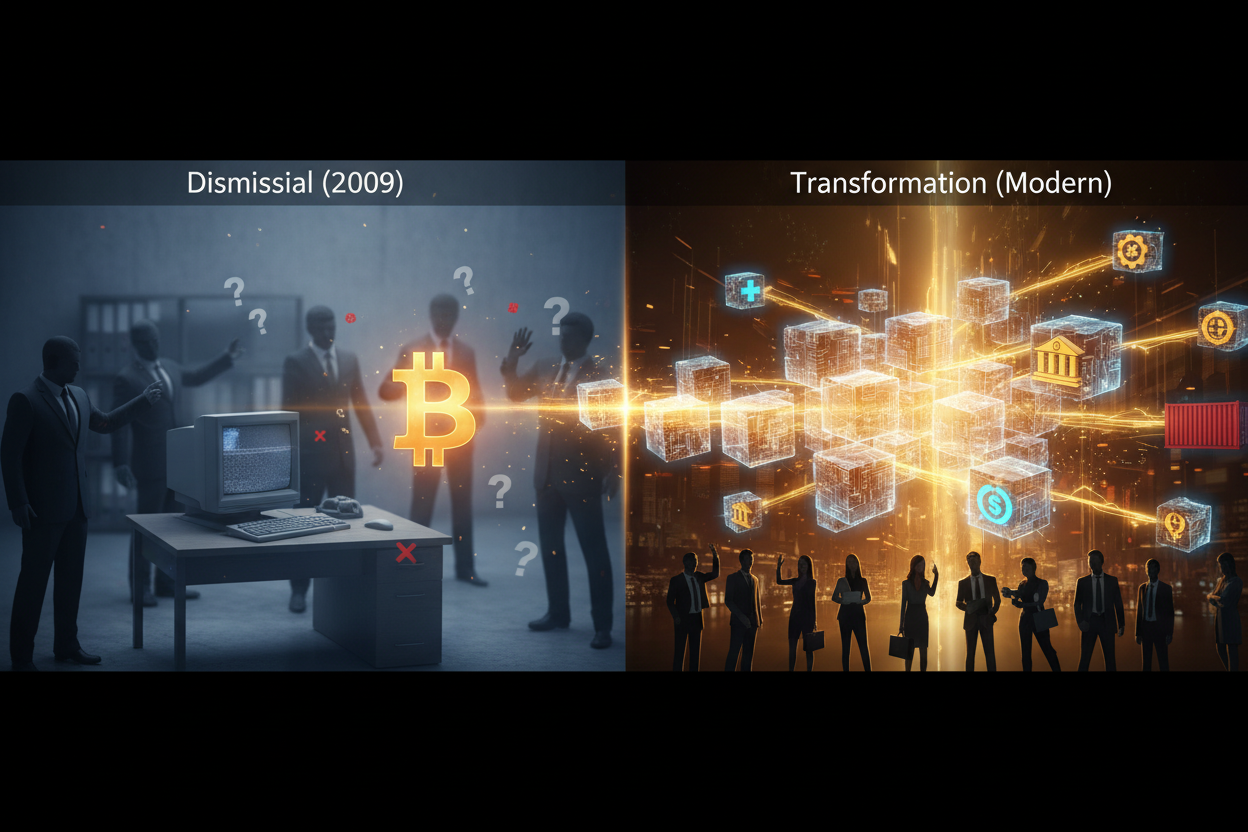
What makes this revolutionary for business is the concept of distributed trust. Traditional business transactions often require intermediaries – banks, lawyers, or other third parties – to verify and validate agreements. Blockchain eliminates this need by creating a system where trust is built into the technology itself.
The key characteristics that make blockchain valuable for modern business include immutability (records can’t be altered once confirmed), transparency (all participants can view transactions), and decentralization (no single point of failure or control). These features address some of the most persistent challenges businesses face: fraud, lack of transparency, high transaction costs, and slow processing times.
Supply Chain Management Revolution
One of the most compelling applications I’ve witnessed is in supply chain management. Companies like Walmart and Unilever are using blockchain to track products from origin to consumer, creating unprecedented transparency in their supply chains.
Imagine being able to scan a QR code on your coffee package and instantly see the farm where the beans were grown, when they were harvested, how they were processed, and every step of their journey to your local store. This isn’t science fiction – it’s happening right now thanks to blockchain technology.
For businesses, this transparency solves multiple problems simultaneously. When contamination occurs, companies can identify the exact source within minutes instead of weeks. This capability proved invaluable during recent food safety crises, where blockchain-enabled tracking helped isolate problems quickly and prevent widespread health issues.
The technology also helps combat counterfeiting, a problem that costs businesses billions annually. Luxury goods manufacturers are embedding blockchain records into their products, making it nearly impossible for counterfeiters to replicate authentic items convincingly.
Financial Services and Digital Payments Transformation
The financial services industry has been at the forefront of blockchain adoption, and for good reason. Traditional banking systems often involve multiple intermediaries, leading to slow processing times and high fees, especially for international transactions.
Blockchain-based payment systems are changing this dynamic dramatically. Cross-border payments that traditionally took 3-5 business days can now be completed in minutes. Companies like Ripple have partnered with banks worldwide to facilitate near-instantaneous international transfers at a fraction of traditional costs.
Smart contracts represent another game-changing application in financial services. These self-executing contracts automatically enforce agreement terms when predetermined conditions are met. For instance, an insurance claim could be automatically processed and paid when satellite data confirms crop damage, eliminating weeks of paperwork and manual verification.
The lending industry is also being transformed through blockchain technology. Decentralized finance (DeFi) platforms enable peer-to-peer lending without traditional banking intermediaries, often providing better rates for both borrowers and lenders while reducing processing time from weeks to hours.
Healthcare Industry Applications
Healthcare presents unique challenges that blockchain is uniquely positioned to address. Patient data security, medical record interoperability, and drug traceability are persistent issues that have plagued the industry for decades.
Blockchain technology enables secure sharing of medical records between healthcare providers while maintaining patient privacy. Instead of carrying physical files or dealing with incompatible systems, patients can grant specific healthcare providers access to relevant portions of their medical history through blockchain-based systems.
The pharmaceutical industry is using blockchain to combat counterfeit drugs, a problem that affects millions of patients worldwide. By tracking medications from manufacturing through distribution to final sale, blockchain creates an unalterable record that verifies drug authenticity.
Clinical trial data integrity is another area where blockchain shines. Research data stored on blockchain networks cannot be altered retroactively, ensuring the credibility of clinical trial results and accelerating the drug approval process.
Real Estate and Property Management Innovation
Real estate transactions have traditionally been paper-heavy, time-consuming processes involving multiple parties and extensive verification procedures. Blockchain technology is streamlining these processes while reducing fraud and increasing transparency.
Property ownership records stored on blockchain create immutable proof of ownership that cannot be disputed or fraudulently altered. This is particularly valuable in regions where property rights have been historically unclear or disputed.
Smart contracts are revolutionizing property transactions by automating many manual processes. Escrow services, title transfers, and even rental agreements can be executed automatically when predetermined conditions are met, reducing transaction times from months to days.
Property management is also being enhanced through blockchain applications. Rental payments, maintenance requests, and tenant screening can all be managed through blockchain-based platforms that provide transparency and reduce disputes between landlords and tenants.
Manufacturing and Quality Assurance
Manufacturing companies are leveraging blockchain technology to enhance quality control and build consumer trust. Every component used in manufacturing can be tracked through blockchain systems, creating detailed records of product composition and manufacturing processes.
This capability is particularly valuable in industries where quality and safety are paramount, such as automotive and aerospace manufacturing. When recalls are necessary, manufacturers can quickly identify affected products and trace them to specific customers, minimizing safety risks and reducing recall costs.
Blockchain also enables new business models in manufacturing. Companies can offer product-as-a-service models where customers pay for usage rather than ownership, with blockchain tracking actual usage patterns and automatically calculating billing.
Challenges and Limitations of Blockchain Implementation
While blockchain offers tremendous potential, it’s important to acknowledge the challenges businesses face when implementing this technology. Scalability remains a significant concern, as many blockchain networks can process only a limited number of transactions per second compared to traditional systems.
Energy consumption is another consideration, particularly for proof-of-work blockchain networks. However, newer consensus mechanisms like proof-of-stake are addressing these environmental concerns while maintaining security.
Integration with existing business systems can be complex and costly. Many companies struggle with the technical expertise required to implement blockchain solutions effectively, leading to increased demand for blockchain consultants and specialized development teams.
Regulatory uncertainty also poses challenges, as governments worldwide are still developing frameworks for blockchain governance. Businesses must navigate evolving regulations while implementing blockchain solutions.
Future Outlook and Emerging Trends
Looking ahead, blockchain technology is poised to become even more integral to business operations. The convergence of blockchain with other emerging technologies like artificial intelligence and Internet of Things (IoT) devices will create new possibilities we’re only beginning to imagine.
Central Bank Digital Currencies (CBDCs) represent a significant trend that will likely accelerate blockchain adoption across all business sectors. As governments launch digital versions of their currencies on blockchain networks, businesses will need to adapt their financial systems accordingly.
Sustainability tracking is emerging as another major application area. As environmental, social, and governance (ESG) considerations become more important to consumers and investors, blockchain provides the transparency needed to verify sustainability claims.
The concept of Web3, where users have greater control over their data and digital assets, will likely drive new blockchain-based business models that prioritize user ownership and decentralized governance.
Getting Started with Blockchain in Your Business
For businesses considering blockchain implementation, starting small and focusing on specific use cases often yields the best results. Identify pain points in your current operations where transparency, trust, or efficiency could be improved through blockchain solutions.
Partnering with established blockchain platforms or service providers can reduce implementation complexity and costs. Many companies offer blockchain-as-a-service solutions that allow businesses to leverage blockchain benefits without managing the underlying infrastructure.
Employee education and training are crucial for successful blockchain adoption. Investing in blockchain literacy across your organization will help identify new opportunities and ensure smooth implementation of blockchain solutions.
Consider starting with pilot projects that demonstrate clear value before scaling blockchain initiatives across your entire organization. This approach allows you to learn and refine your blockchain strategy while minimizing risks.
Conclusion
Blockchain technology has evolved far beyond its cryptocurrency origins to become a fundamental tool for modern business transformation. From supply chain transparency to financial innovation, healthcare security to real estate efficiency, blockchain is solving real problems and creating new opportunities across industries.
While challenges remain, the trajectory is clear: businesses that understand and adopt blockchain technology strategically will have significant advantages in transparency, efficiency, and trust-building with customers and partners. The question isn’t whether blockchain will impact your industry, but how quickly you’ll adapt to leverage its benefits.
As we move forward, blockchain will likely become as fundamental to business operations as the internet is today. Companies that start exploring blockchain applications now will be best positioned to thrive in an increasingly digital and decentralized business environment.
The blockchain revolution is just beginning, and the businesses that embrace this technology thoughtfully and strategically will shape the future of commerce for decades to come.
Frequently Asked Questions
What is the main advantage of blockchain technology for businesses?
The primary advantage is creating trust without intermediaries through immutable, transparent record-keeping. This reduces costs, increases efficiency, and eliminates many forms of fraud while providing unprecedented transparency in business operations.
How much does it cost to implement blockchain technology in a business?
Costs vary significantly depending on the scope and complexity of implementation. Simple blockchain applications might cost $15,000-$50,000, while comprehensive enterprise solutions can range from $200,000 to over $1 million. Many businesses start with blockchain-as-a-service platforms to reduce initial costs.
Is blockchain technology secure for business use?
Yes, blockchain is inherently secure due to its cryptographic design and distributed nature. However, security also depends on proper implementation, key management, and smart contract auditing. Businesses should work with experienced blockchain developers to ensure security best practices.
Can small businesses benefit from blockchain technology?
Absolutely. Small businesses can leverage blockchain for supply chain transparency, secure customer data management, automated contracts, and efficient payment processing. Many blockchain solutions are now accessible to small businesses through cloud-based platforms and affordable service providers.
What industries are most suitable for blockchain implementation?
While blockchain can benefit virtually any industry, it’s particularly valuable in sectors requiring high transparency, security, and trust, such as finance, healthcare, supply chain management, real estate, and manufacturing. Industries dealing with complex multi-party transactions see the greatest immediate benefits.
How long does it typically take to implement blockchain solutions?
Implementation timelines vary from a few weeks for simple applications to 12-18 months for complex enterprise solutions. Factors affecting timeline include system complexity, integration requirements, regulatory compliance needs, and team expertise. Most businesses see initial results within 3-6 months of starting implementation.