

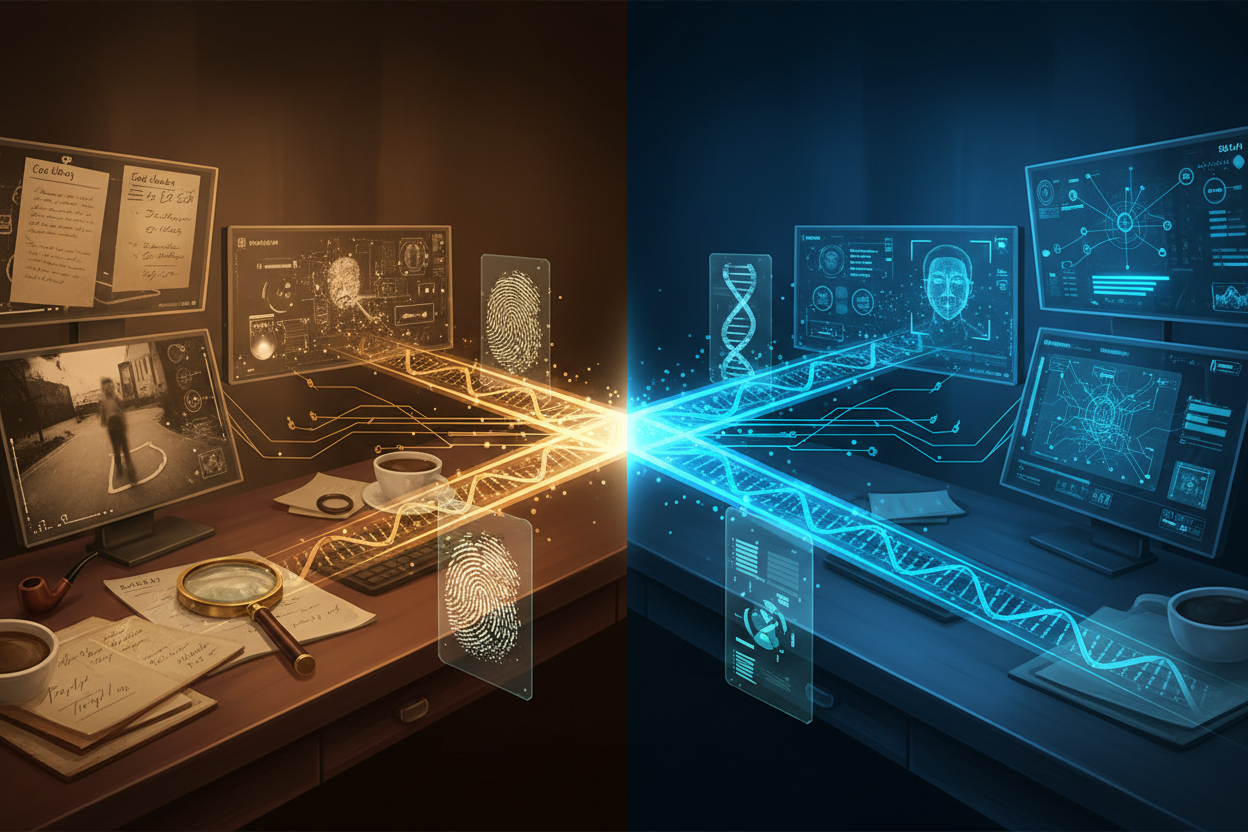
True Crime in the Digital Age: How Technology Solves Cold Cases
The dusty file cabinet filled with unsolved cases that once haunted detective offices is slowly becoming a relic of the past. Today’s investigators have something their predecessors could only dream of: cutting-edge technology that can breathe new life into decades-old mysteries. From DNA analysis that can identify suspects from microscopic traces to artificial intelligence that spots patterns humans might miss, the digital revolution has transformed how we approach cold cases.
What makes this technological renaissance particularly fascinating is how it’s not just changing the game for law enforcement—it’s democratizing crime solving in ways we never imagined. Amateur sleuths armed with laptops and determination are now contributing to investigations that stumped professionals for years. This isn’t science fiction; it’s happening right now, and the results are nothing short of extraordinary.

The Digital Detective’s Toolkit: Revolutionary Technologies Cracking Cold Cases
Modern crime solving reads like something straight out of a futuristic thriller, yet these tools are very much grounded in today’s reality. The arsenal available to investigators has expanded exponentially, offering new hope for families who thought they’d never get answers.
Genetic genealogy has emerged as perhaps the most game-changing technology in recent years. Unlike traditional DNA testing that requires a direct match in criminal databases, this approach uses publicly available genealogy websites to build family trees and identify potential suspects through their relatives. The Golden State Killer case, solved in 2018 after four decades, demonstrated the incredible potential of this method. Investigators uploaded crime scene DNA to a genealogy database, traced it through family connections, and ultimately identified Joseph James DeAngelo as the perpetrator.
Advanced forensic imaging has also revolutionized evidence analysis. High-resolution scanning and 3D reconstruction can now reveal details invisible to the naked eye. Fingerprints that seemed too degraded to use, bite marks that appeared inconclusive, and trace evidence overlooked in initial investigations can now provide crucial leads. These technologies don’t just enhance what investigators can see—they fundamentally change what constitutes usable evidence.
Artificial Intelligence: The Unblinking Eye That Never Forgets
Perhaps no technology has captured the imagination quite like artificial intelligence in criminal investigations. Machine learning algorithms can process vast amounts of data in ways that would take human investigators years to accomplish. These systems excel at pattern recognition, connecting seemingly unrelated pieces of information across multiple cases and jurisdictions.

One particularly powerful application involves analyzing communication patterns and behavioral data. AI can examine thousands of hours of surveillance footage, identify suspicious patterns, and flag potential leads that might otherwise go unnoticed. In missing person cases, these systems can analyze social media activity, financial transactions, and location data to create comprehensive timelines that reveal crucial insights.
The beauty of AI in cold case investigations lies in its ability to approach evidence without preconceived notions. While human investigators might unconsciously focus on certain theories or suspects, AI examines all available data with equal scrutiny. This objective analysis has led to breakthroughs in cases where tunnel vision may have previously hindered progress.
Digital Forensics: Uncovering Electronic Breadcrumbs
Our digital lives leave traces everywhere, creating an unprecedented opportunity for investigators working on both recent and historical cases. Even in older cases where digital evidence wasn’t initially considered, investigators are now revisiting evidence with fresh eyes and new capabilities.
Cell phone data has proven particularly valuable, even in cases from the early days of mobile technology. Tower records can establish location patterns, while deleted text messages and call logs often contain crucial information. Advanced data recovery techniques can retrieve information from damaged or deliberately wiped devices, sometimes years after the original investigation.
Social media platforms have become treasure troves of investigative information. Posts, photos, check-ins, and connections paint detailed pictures of victims’ and suspects’ lives leading up to crimes. This digital archaeology often reveals relationships, conflicts, and activities that weren’t apparent during initial investigations.
The Power of Crowdsourcing: When Amateur Sleuths Join the Hunt
The internet has democratized crime solving in unprecedented ways. Online communities dedicated to true crime have emerged as valuable resources for law enforcement, bringing fresh perspectives and collective intelligence to cold cases.
Platforms like Reddit’s UnresolvedMysteries community and specialized websites allow thousands of amateur investigators to collaborate on cases. These digital detectives often bring unique skills—retired professionals, genealogy experts, technology specialists—who volunteer their time and expertise. While not every online theory proves valuable, the sheer volume of analysis and the diverse backgrounds of contributors have led to genuine breakthroughs.
The key to successful crowdsourcing lies in proper coordination with official investigations. When law enforcement agencies embrace these communities and provide appropriate guidance, the results can be remarkable. However, it’s crucial that amateur investigators understand the importance of not interfering with ongoing cases or potentially compromising evidence.
Breakthrough Success Stories: Technology Delivers Justice
The proof of technology’s impact lies in the solved cases that once seemed hopeless. Beyond the famous Golden State Killer case, numerous other investigations have benefited from technological advances.
The 1973 murder of Christy Mirack in Pennsylvania remained unsolved for over four decades until genetic genealogy led investigators to Raymond Rowe in 2018. Similarly, the 1987 double murder of Jay Cook and Tanya Van Cuylenborg was solved in 2018 using the same technology, leading to the arrest of William Earl Talbott II.
These cases share common elements: dedicated investigators who refused to give up, families who never stopped hoping, and technology that finally provided the missing pieces. Each success story represents not just justice served, but validation of the technological revolution transforming criminal investigations.
What’s particularly encouraging is that these aren’t isolated incidents. Cold case units across the country report increasing success rates as they incorporate new technologies into their investigations. The backlog of unsolved cases, while still substantial, is finally beginning to shrink.
Privacy Concerns and Ethical Considerations in Digital Crime Solving
The same technologies that solve cold cases also raise important questions about privacy and civil liberties. Genetic genealogy, while incredibly effective, relies on DNA databases that millions of people contributed to for personal genealogy research, not criminal investigations.
The ethical landscape becomes even more complex when considering surveillance technologies and data mining. While these tools can identify criminals, they also have the potential for misuse and overreach. Balancing public safety with individual privacy rights requires ongoing dialogue between law enforcement, technology companies, and civil liberties advocates.
Transparency in how these technologies are used becomes crucial for maintaining public trust. Clear policies, oversight mechanisms, and public accountability help ensure that powerful investigative tools are used responsibly and ethically.
The Future of Cold Case Investigations
Looking ahead, the trajectory of technological advancement suggests even more powerful tools are on the horizon. Quantum computing could revolutionize data analysis capabilities, while advances in biotechnology might allow investigators to extract useful DNA from increasingly degraded samples.
Virtual and augmented reality technologies are beginning to find applications in crime scene reconstruction, allowing investigators to revisit and reanalyze scenes with unprecedented detail. These immersive technologies could reveal new insights in cases where physical evidence has been lost or contaminated.
Perhaps most importantly, the integration of multiple technologies promises to create synergistic effects. When genetic genealogy combines with AI-powered pattern recognition and advanced digital forensics, the investigative possibilities become truly extraordinary.
Conclusion
The digital age has fundamentally transformed how we approach unsolved crimes, offering new hope to families who thought justice would never come. Technology hasn’t just improved existing investigative methods—it’s created entirely new possibilities for solving cases that once seemed impossible.
While we must remain mindful of privacy concerns and ethical implications, the potential for technology to deliver justice and closure cannot be ignored. Every cold case solved represents a family that finally gets answers, a community that finds peace, and a demonstration that time doesn’t always favor the perpetrator.
As these technologies continue to evolve and improve, we can expect even more dramatic breakthroughs in the years ahead. The golden age of cold case investigation may just be beginning, powered by human determination and technological innovation working hand in hand.
Frequently Asked Questions
How accurate is genetic genealogy in solving cold cases?
Genetic genealogy has proven highly accurate when properly conducted by trained professionals. The technology has led to hundreds of solved cases with very few false positives. However, success depends on the quality of DNA evidence and the availability of genetic matches in databases.
Can old DNA evidence from decades-old cases still be useful today?
Yes, modern DNA analysis techniques can often extract useful genetic information from samples that were considered too degraded for testing in the past. Advanced methods can work with much smaller and older samples than previously possible.
How do amateur online investigators help solve cold cases?
Online communities contribute by analyzing public information, generating new theories, identifying potential connections between cases, and bringing specialized skills to investigations. However, they work best when coordinated with official law enforcement efforts.
What privacy protections exist for genetic genealogy databases?
Privacy protections vary by database and jurisdiction. Some databases require explicit consent for law enforcement searches, while others allow users to opt out. Many platforms have implemented policies specifically addressing law enforcement use.
How long does it typically take to solve a cold case using modern technology?
The timeline varies greatly depending on the available evidence, the specific technologies used, and the complexity of the case. Some cases are solved within months of applying new technology, while others may still take years of investigation even with advanced tools.
Are there any limitations to what technology can accomplish in cold cases?
While technology has dramatically improved cold case investigations, it still requires quality evidence to work with. Cases with no physical evidence, no witnesses, and no digital trail remain challenging. Technology enhances human investigation but doesn’t replace the need for skilled detectives and thorough police work.