

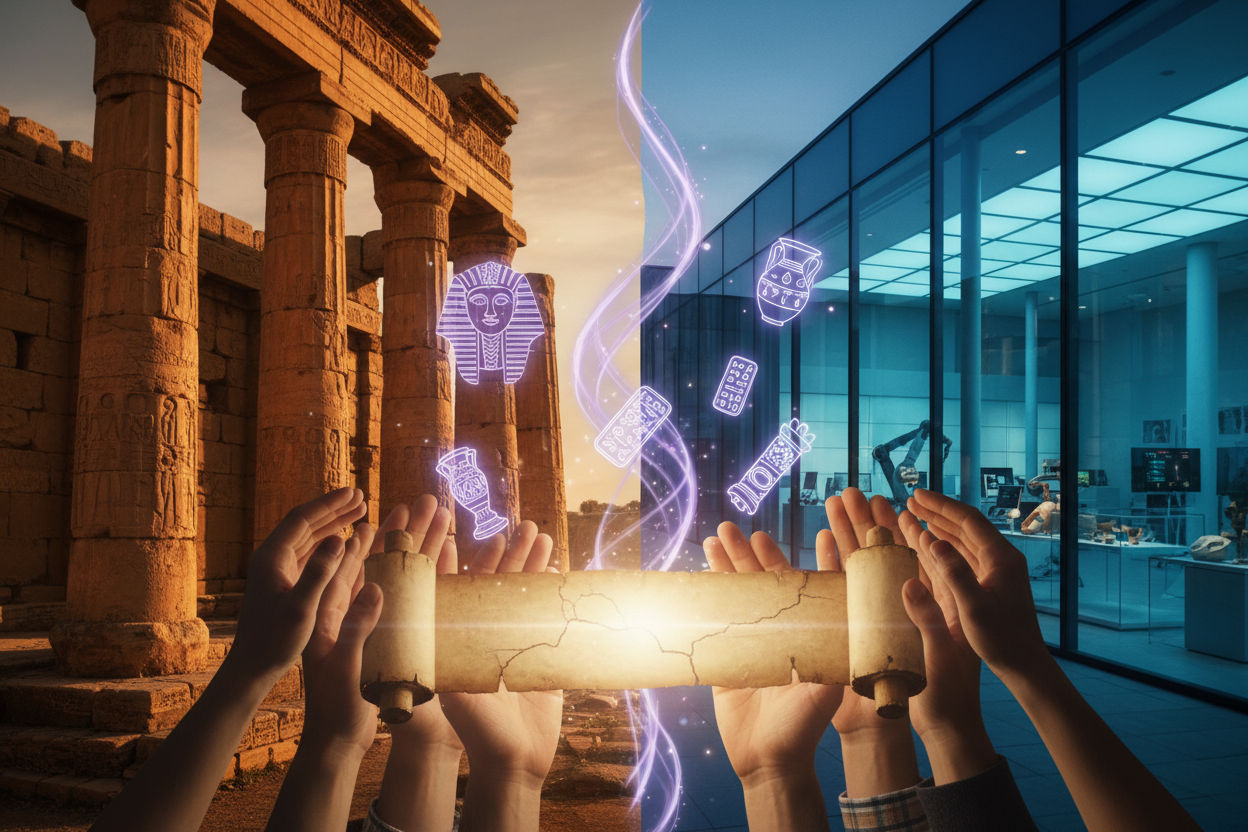
Cultural Heritage and Its Preservation in the Modern World: Safeguarding Our Past for Future Generations
Picture walking through the ancient streets of Rome, touching stones that witnessed the rise and fall of empires, or standing before a centuries-old temple where countless generations once gathered in prayer. These moments connect us to something profound—our shared human story. Yet in our rapidly changing world, these precious links to our past face unprecedented threats. Cultural heritage preservation has become one of the most pressing challenges of our time, requiring urgent action and innovative solutions.
From the devastating fire at Notre-Dame Cathedral to the deliberate destruction of historical sites in conflict zones, we’ve witnessed how quickly irreplaceable pieces of our collective memory can vanish. But it’s not just dramatic events that threaten our heritage—urbanization, climate change, and the simple passage of time all take their toll on the monuments, traditions, and artifacts that define who we are as a species.
Understanding Cultural Heritage in Today’s Context
Cultural heritage encompasses far more than ancient buildings and dusty museum artifacts. It’s the living, breathing essence of human civilization—the languages we speak, the stories we tell, the crafts we practice, and the spaces where our ancestors lived, worked, and dreamed. UNESCO recognizes two main categories: tangible heritage (buildings, monuments, artifacts) and intangible heritage (traditions, languages, performing arts).
In our interconnected world, cultural heritage faces a paradox. While globalization has made it easier to share and celebrate diverse cultures, it has also accelerated the homogenization that threatens unique local traditions. A grandmother’s recipe passed down through generations might be lost when her grandchildren prefer fast food. A traditional craft might disappear when mass-produced alternatives flood the market.
The digital age has transformed how we experience and preserve culture. Virtual reality allows us to explore ancient sites from our living rooms, while social media helps traditional artists reach global audiences. Yet this same technology can also contribute to cultural erosion when digital entertainment replaces traditional storytelling or when online shopping undermines local artisans.
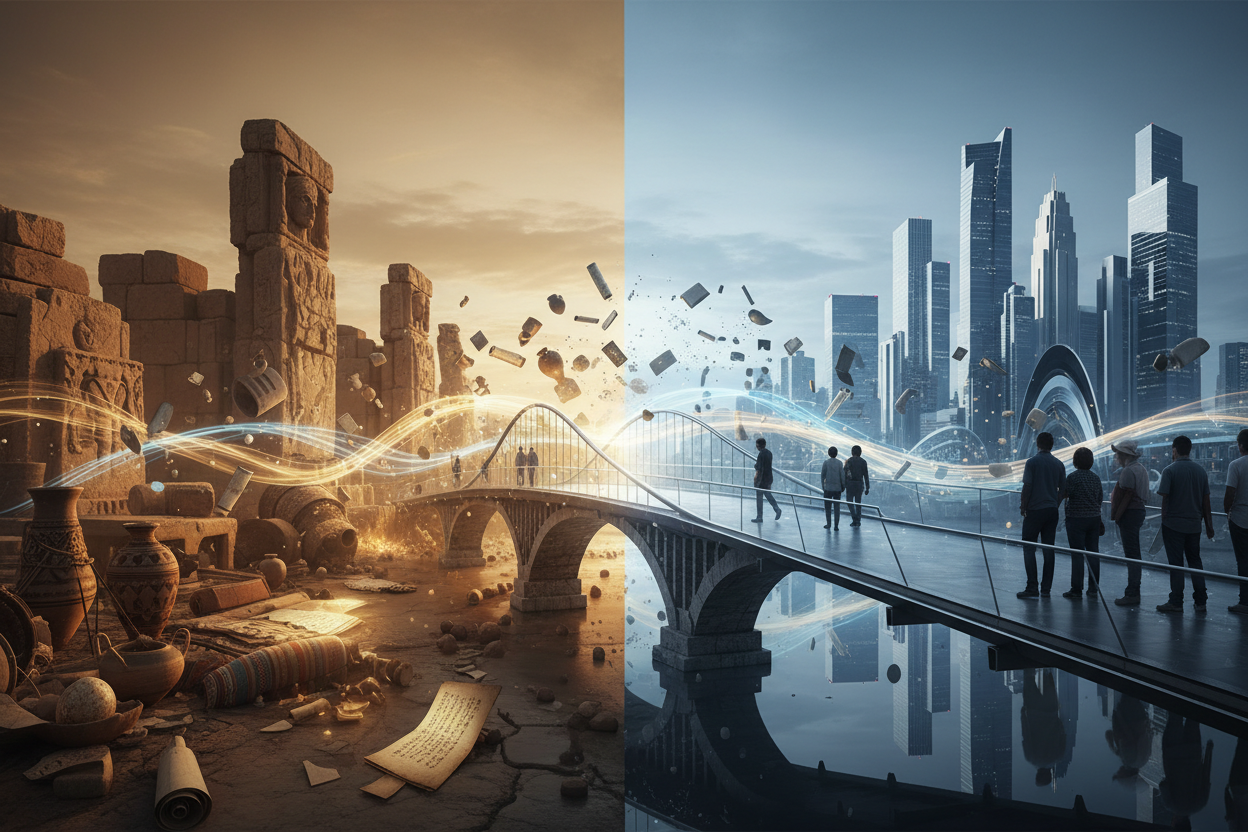
Major Threats Facing Cultural Heritage Today
Climate change has emerged as perhaps the most insidious threat to our cultural heritage. Rising sea levels threaten coastal archaeological sites, while extreme weather events damage historical buildings that weren’t designed to withstand such forces. Venice’s frequent flooding exemplifies this challenge—the city’s unique architecture and artistic treasures face constant peril from acqua alta.
Armed conflict and terrorism pose another devastating threat. The intentional destruction of cultural sites has become a weapon of war, designed to erase identity and demoralize communities. We’ve watched in horror as irreplaceable artifacts in Syria’s museums were destroyed, and ancient sites like Palmyra were deliberately targeted.
Rapid urbanization presents a more subtle but equally dangerous challenge. As cities expand to accommodate growing populations, historical neighborhoods often fall victim to development pressure. The character of entire districts can disappear overnight, replaced by modern structures that prioritize function over cultural significance.
Tourism, while economically beneficial, can also threaten the very sites it celebrates. Overcrowding at popular destinations like Machu Picchu or the Sistine Chapel accelerates deterioration, while tourism infrastructure can alter the authentic character of historical areas.
Innovative Preservation Technologies and Methods
Fortunately, technology is providing new tools for heritage preservation that would have seemed like science fiction just decades ago. 3D scanning and photogrammetry now allow us to create incredibly detailed digital records of historical sites and artifacts. These techniques proved invaluable after the Notre-Dame fire, as existing 3D models helped guide restoration efforts.
Artificial intelligence is revolutionizing how we analyze and preserve cultural materials. Machine learning algorithms can detect patterns in historical documents, helping scholars decipher ancient languages or identify forgeries. AI-powered monitoring systems can track environmental conditions in museums and alert conservators to potential threats before damage occurs.
Nanotechnology offers promising solutions for conservation challenges. Nano-materials can strengthen deteriorating stone without altering its appearance, while nano-sensors can monitor structural health in real-time. These microscopic tools work invisibly to extend the life of irreplaceable artifacts.
Virtual and augmented reality technologies are transforming how we experience heritage sites. The Lascaux caves in France, closed to protect prehistoric paintings, now offer virtual tours that provide access while preserving the originals. AR applications can overlay historical information onto modern cityscapes, bringing the past to life for new generations.
Community-Driven Conservation Efforts
The most successful preservation efforts often begin at the grassroots level, with communities recognizing the value of their own heritage and taking action to protect it. In Japan, the concept of “Living National Treasures” recognizes master craftspeople who embody traditional skills, ensuring these techniques survive by supporting their practitioners.
Community mapping projects have proven particularly effective in documenting intangible heritage. Local residents record oral histories, traditional songs, and cultural practices before they disappear. These efforts often reveal hidden aspects of heritage that formal institutions might overlook.
Youth engagement has become crucial for heritage preservation. Programs that teach traditional crafts in schools or involve young people in archaeological projects create new generations of heritage advocates. When children understand their cultural roots, they’re more likely to value and protect them as adults.
Social media has become an unexpected ally in community conservation efforts. Platforms like Instagram and TikTok help traditional artists reach younger audiences, while crowdfunding enables communities to raise money for preservation projects that might otherwise lack funding.
International Cooperation and Policy Frameworks
Heritage preservation requires coordination across borders, as cultural influence rarely respects political boundaries. The World Heritage Convention, established by UNESCO in 1972, remains the primary international framework for protecting sites of outstanding universal value. However, this system faces challenges in our rapidly changing world.
Recent years have seen the development of more flexible and inclusive approaches to heritage protection. The concept of “cultural landscapes” recognizes that heritage often encompasses entire regions where human activity has shaped the environment over centuries. This approach acknowledges that preservation must consider both natural and cultural elements.
International cooperation has proven essential in crisis situations. When heritage sites face imminent threat from conflict or natural disaster, rapid response teams can provide expertise and resources. The ICOMOS-ICORP (International Committee on Risk Preparedness) helps coordinate these emergency efforts.
Digital diplomacy has opened new avenues for heritage cooperation. Countries now share digital collections and expertise online, making cultural treasures accessible to global audiences while fostering international understanding and collaboration.
Balancing Progress with Preservation
One of the greatest challenges in heritage preservation involves finding the right balance between protecting the past and accommodating present needs. Cities must grow and evolve, but how do we ensure this growth doesn’t erase our cultural identity?
Adaptive reuse has emerged as a promising solution, transforming historical buildings for contemporary purposes while preserving their character. Former industrial sites become cultural centers, old churches find new life as community spaces, and historic neighborhoods integrate modern amenities without losing their charm.
The concept of “sustainable heritage tourism” attempts to maximize economic benefits while minimizing cultural and environmental impact. This approach involves limiting visitor numbers, educating tourists about respectful behavior, and ensuring that local communities benefit from tourism revenue.
Sometimes preservation requires difficult choices. When the Aswan High Dam threatened to flood Abu Simbel, the international community collaborated to relocate the entire temple complex. Such dramatic interventions raise questions about authenticity, but they may be necessary to save irreplaceable heritage from destruction.
The Future of Cultural Heritage Preservation
Looking ahead, heritage preservation will likely become increasingly sophisticated and proactive. Predictive modeling using big data could help identify sites at risk before problems become critical. Smart sensors embedded in historical structures could provide continuous monitoring, alerting conservators to changes in temperature, humidity, or structural integrity.
The democratization of preservation tools will empower more communities to protect their own heritage. Affordable 3D scanning equipment and user-friendly documentation software could make detailed heritage recording accessible to local groups worldwide.
Climate adaptation will become central to preservation planning. Historical sites will need resilience strategies that protect them from extreme weather while maintaining their authentic character. This might involve innovative engineering solutions or, in some cases, difficult decisions about relocation.
The integration of heritage preservation with sustainable development goals will create new opportunities for funding and support. When communities can demonstrate that heritage preservation contributes to economic development, education, and social cohesion, it becomes easier to secure resources for conservation projects.
Cultural heritage preservation in the modern world represents both our greatest challenge and our most important opportunity. As we face an uncertain future marked by rapid change and global challenges, our connection to the past provides stability, identity, and wisdom. The traditions, buildings, and artifacts we preserve today will serve as anchors for future generations, helping them understand where they came from and who they are.
The responsibility for preservation doesn’t rest solely with governments or international organizations—it belongs to all of us. Whether we’re documenting family stories, supporting local artisans, or simply taking care of historical sites we visit, every action contributes to the larger effort of keeping our cultural heritage alive.
In a world that often seems to prioritize the new over the old, the fast over the enduring, heritage preservation reminds us that some things are too valuable to lose. Our cultural heritage is irreplaceable—once it’s gone, it’s gone forever. But with commitment, creativity, and cooperation, we can ensure that future generations inherit a world rich with the diversity and wisdom of human culture. The choice is ours, and the time to act is now.
Frequently Asked Questions
What is the difference between tangible and intangible cultural heritage?
Tangible cultural heritage includes physical objects and places such as buildings, monuments, archaeological sites, and artifacts. Intangible heritage refers to traditions, skills, knowledge, and practices passed down through generations, including languages, performing arts, traditional crafts, and cultural practices.
How does climate change specifically threaten cultural heritage sites?
Climate change threatens heritage sites through rising sea levels that can flood coastal archaeological sites, extreme weather events that damage historical structures, increased humidity that promotes decay, and changing precipitation patterns that affect building materials like stone and wood.
Can individuals contribute to cultural heritage preservation efforts?
Yes, individuals can contribute by documenting family histories and traditions, supporting local artisans and cultural practitioners, volunteering with heritage organizations, practicing responsible tourism, and advocating for heritage protection in their communities.
How accurate are digital preservation methods compared to physical conservation?
Digital preservation methods can capture incredible detail and provide valuable documentation, but they complement rather than replace physical conservation. Digital records serve as important backups and research tools, while physical preservation maintains the authentic materials and craftsmanship of original heritage items.
What role does UNESCO play in global heritage preservation?
UNESCO coordinates international heritage protection efforts through the World Heritage Convention, maintains the World Heritage List of sites of outstanding universal value, provides technical assistance and funding for conservation projects, and promotes heritage education and awareness worldwide.
How do communities balance development needs with heritage preservation?
Communities can balance these needs through adaptive reuse of historical buildings, implementing heritage-sensitive development guidelines, engaging in participatory planning processes that include heritage considerations, and demonstrating the economic and social benefits of heritage preservation to support sustainable development.



Leave a Reply