

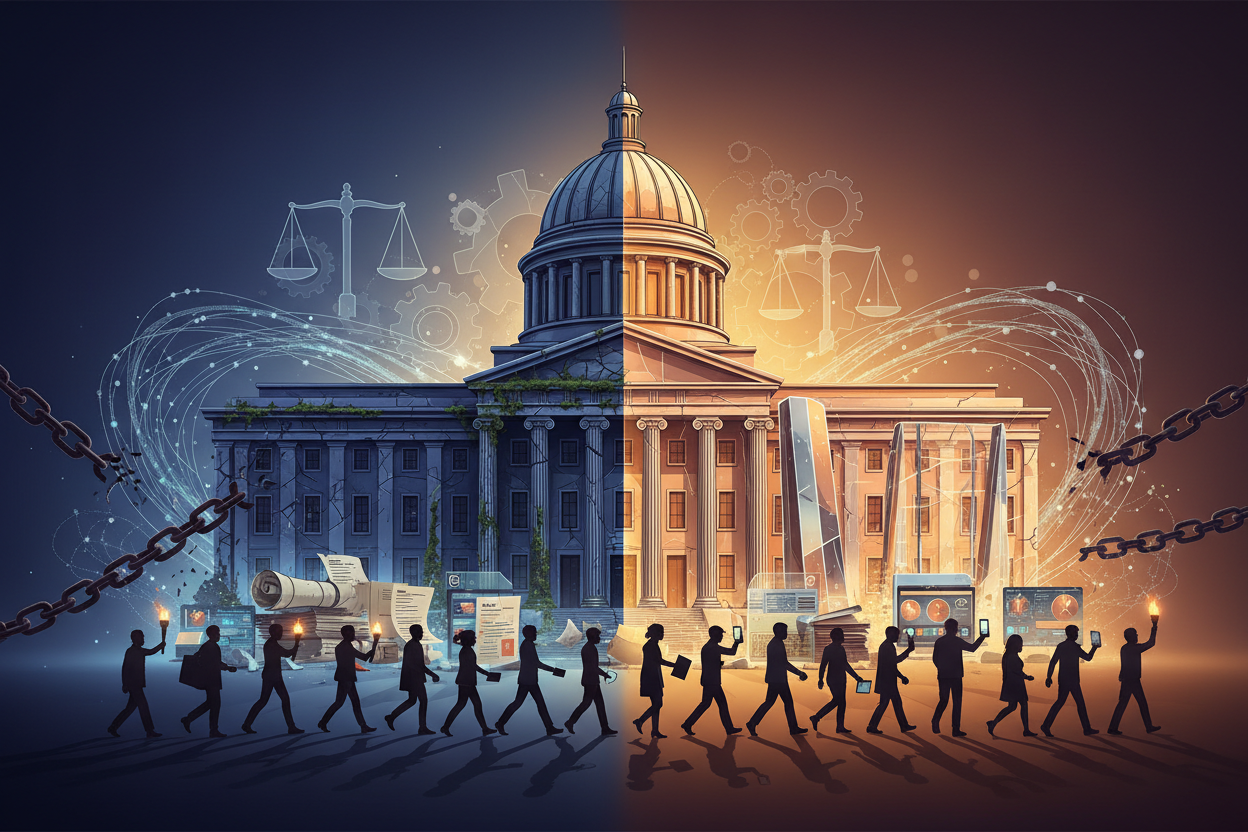
How Historical Revolutions Shaped Today’s Political Landscape: A Deep Dive into Revolutionary Impact
Picture this: you’re casting your vote in a modern democratic election, exercising rights that millions of people around the world take for granted today. But have you ever wondered how we got here? The political freedoms, constitutional protections, and democratic institutions we rely on didn’t just appear overnight. They’re the direct result of revolutionary movements that fundamentally transformed how societies organize themselves politically.
From the cobblestone streets of 18th-century Paris to the colonial assemblies of revolutionary America, ordinary people have risen up to challenge established power structures and create entirely new forms of government. These watershed moments in history continue to influence political systems worldwide, shaping everything from how we elect leaders to what rights we consider fundamental.
Understanding the connection between historical revolutions and modern political systems isn’t just academic exercise—it’s essential for anyone who wants to grasp how contemporary politics really works and why certain institutions exist in the first place.
The American Revolution: Blueprint for Constitutional Democracy
The American Revolution of 1776 wasn’t just about breaking away from British rule—it was about creating something entirely new. The revolutionaries didn’t simply want to replace one king with another; they wanted to build a government based on revolutionary principles that had never been tried on such a scale.
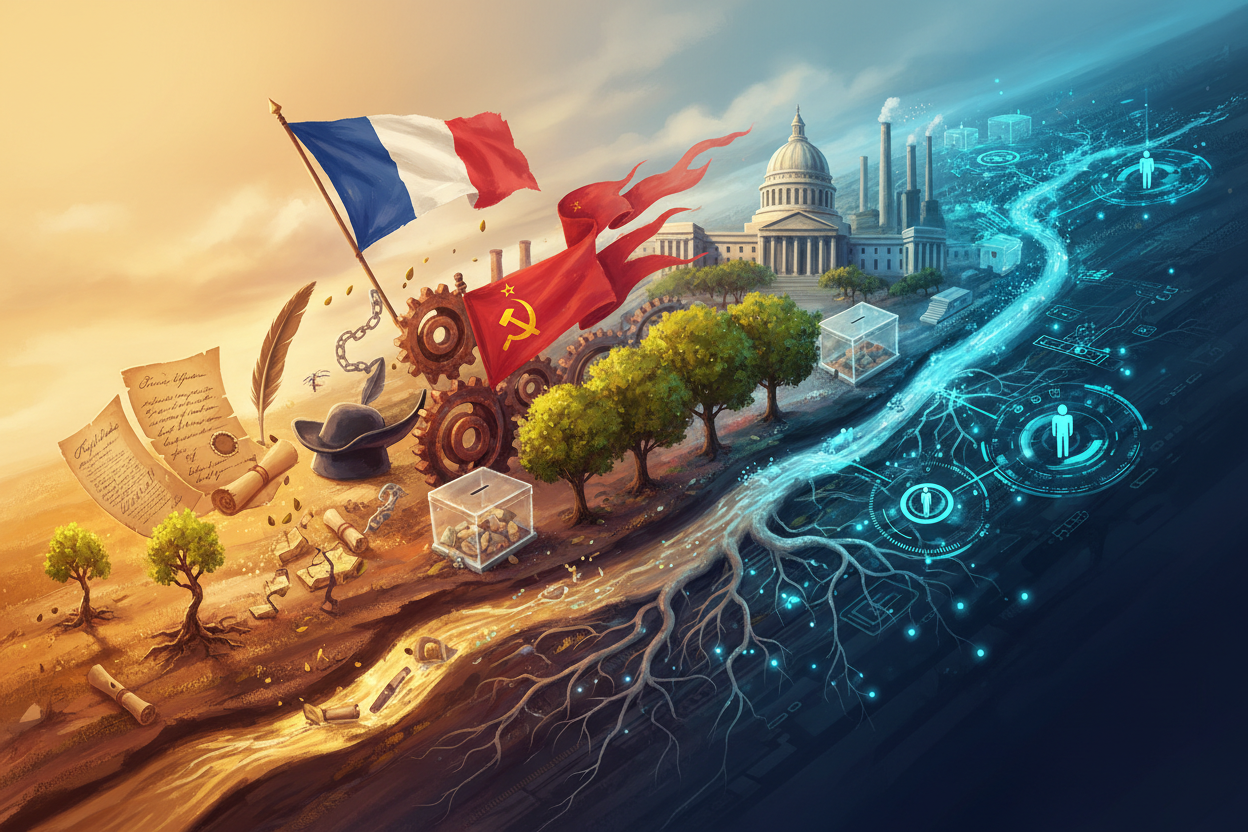
The impact of the American Revolution on modern political systems cannot be overstated. The concept of a written constitution, separation of powers, and federalism all emerged from this revolutionary experiment. When the Founding Fathers crafted the Constitution, they were essentially creating the world’s first modern democracy, complete with checks and balances designed to prevent any single branch of government from becoming too powerful.
Today, constitutional democracies around the world draw heavily from the American model. Countries as diverse as India, Germany, and South Africa have adopted federal systems with written constitutions that limit government power and protect individual rights. The idea that government derives its authority from the consent of the governed—a radical concept in 1776—is now considered a cornerstone of legitimate political authority worldwide.
The French Revolution: Birth of Modern Political Ideologies
While the American Revolution gave us constitutional frameworks, the French Revolution of 1789 gave us the political vocabulary we still use today. Terms like “left-wing,” “right-wing,” “conservative,” and “liberal” all trace their origins back to where different political factions sat in the French National Assembly.
The French Revolution introduced the world to the concept of popular sovereignty taken to its logical extreme. Unlike the American revolutionaries, who sought to limit government power, the French revolutionaries believed in the unlimited power of the people’s will. This led to both incredible democratic innovations and terrifying excesses during the Reign of Terror.
Modern political systems still grapple with the tension the French Revolution highlighted between individual rights and collective will. Parliamentary systems worldwide use political party structures that evolved from the factional divisions first seen in revolutionary France. The very idea that ordinary citizens should have a direct say in government policy—rather than simply choosing representatives—can be traced back to the radical democratic experiments of the French Revolution.
The Russian Revolution: Alternative Models of Political Organization
The Russian Revolution of 1917 demonstrated that revolutions could create entirely different types of political systems, not just variations on democratic themes. The Bolshevik victory led to the world’s first sustained attempt at building a socialist state, fundamentally challenging the assumption that capitalism and democracy naturally went together.
Even though the Soviet Union eventually collapsed, the Russian Revolution’s impact on modern political systems remains profound. The revolution introduced the concept of a vanguard party leading social transformation, influenced liberation movements across the developing world, and forced capitalist democracies to develop welfare states to compete with socialist alternatives.
Many contemporary political systems incorporate elements that can be traced back to revolutionary Russia: strong executive power during crises, centralized economic planning, and the idea that government should actively work to reduce economic inequality. Countries like China and Vietnam have created hybrid systems that blend revolutionary socialist principles with market economics, showing how revolutionary ideas continue to evolve and adapt.
Revolutionary Principles in Contemporary Governance
Walk into any modern government building, and you’ll see revolutionary principles at work everywhere. The idea that political power should be distributed among different branches of government comes directly from revolutionary thinking about preventing tyranny. The concept that citizens have fundamental rights that government cannot violate emerged from revolutionary struggles against absolute monarchy.
Contemporary democratic institutions like independent judiciaries, free press protections, and regular elections all have their roots in revolutionary movements. Even seemingly mundane features of modern government—like public education systems and professional civil services—often originated as revolutionary attempts to create more egalitarian societies.
The revolutionary principle that governments must justify their actions to the people has become so fundamental that even authoritarian regimes feel compelled to hold elections and claim popular support. This represents a complete transformation from pre-revolutionary political thinking, where rulers claimed authority from divine right or hereditary privilege.
How Revolutionary Ideas Spread Across Borders
One of the most fascinating aspects of revolutionary impact is how revolutionary ideas refuse to stay contained within national borders. The American Revolution inspired democratic movements across Europe and Latin America. The French Revolution’s ideals of liberty, equality, and fraternity became rallying cries for revolutionaries worldwide. The Russian Revolution influenced communist movements from China to Cuba to Vietnam.
Modern political systems show clear evidence of this cross-pollination of revolutionary ideas. Parliamentary democracy, which originated in Britain but was refined through various revolutionary experiences, has become the dominant form of government worldwide. Federal systems pioneered in America have been adapted by countries dealing with diverse populations and regional differences.
Even counter-revolutionary movements have shaped modern politics. The conservative reaction to the French Revolution led to political philosophies that emphasize gradual change and respect for tradition—ideas that continue to influence conservative political parties today.
The Digital Age: Are We Living Through Another Revolutionary Moment?
As we navigate the complexities of 21st-century politics, it’s worth asking whether we’re witnessing another revolutionary transformation. Social media has fundamentally altered how political movements organize and spread their messages. The Arab Spring, various color revolutions, and populist movements worldwide all demonstrate how digital technology can rapidly mobilize political change.
Contemporary political systems are struggling to adapt to these new realities. Traditional gatekeepers like political parties and mainstream media have lost their monopoly on political communication. Citizens can now organize political movements without formal institutional support, echoing the grassroots nature of historical revolutions.
The challenge for modern political systems is incorporating these new forms of political participation while maintaining stability and protecting democratic norms. This ongoing tension between innovation and tradition reflects the same fundamental questions that drove historical revolutions: Who should hold political power, and how should that power be exercised?
Lessons for Modern Democracy
Understanding how revolutions shaped modern political systems offers crucial insights for contemporary democratic challenges. Historical revolutions succeeded when they offered compelling alternatives to existing systems and built broad coalitions for change. They failed when they became too extreme or couldn’t create stable institutions.
Modern democracies can learn from both revolutionary successes and failures. The American Revolution’s emphasis on institutional design and the French Revolution’s commitment to popular participation both remain relevant. Even the Russian Revolution’s focus on economic inequality addresses issues that contemporary political systems still struggle to resolve.
Perhaps most importantly, studying revolutionary impact reminds us that political systems are human creations that can be changed. The institutions we take for granted today were once revolutionary innovations. Understanding this history empowers citizens to participate more effectively in ongoing democratic evolution.
Conclusion
The political systems we live under today aren’t accidents of history—they’re the direct products of revolutionary movements that dared to imagine different ways of organizing society. From the constitutional frameworks pioneered by American revolutionaries to the democratic ideologies born in revolutionary France, from the alternative economic models tested in revolutionary Russia to the ongoing digital transformation of political participation, revolutions continue to shape how we govern ourselves.
Understanding this revolutionary heritage isn’t just about appreciating history—it’s about recognizing that political change remains possible and that ordinary people can still reshape the institutions that govern their lives. As we face contemporary challenges like climate change, economic inequality, and technological disruption, the revolutionary tradition reminds us that transformative political change is not only possible but sometimes necessary.
The next time you vote, speak freely, or expect your government to protect your rights, remember that these privileges exist because previous generations were willing to risk everything to create better political systems. Their revolutionary legacy lives on in every democratic institution and every peaceful transfer of power.
Frequently Asked Questions
What was the most influential revolution in shaping modern political systems?
While all major revolutions contributed significantly, the American Revolution arguably had the most direct influence on modern democratic institutions through its introduction of written constitutions, federalism, and systematic separation of powers. However, the French Revolution was equally important in developing modern political ideologies and party systems.
How do revolutionary principles still influence politics today?
Revolutionary principles continue to influence modern politics through constitutional protections of individual rights, democratic election systems, separation of powers, and the fundamental idea that government authority comes from popular consent rather than divine right or hereditary privilege.
Did all revolutions lead to better political systems?
Not all revolutions immediately created better political systems. Many led to periods of instability, violence, or authoritarian rule. However, even failed revolutions often contributed important ideas and lessons that influenced later successful democratic developments.
Are we currently experiencing a revolutionary transformation in politics?
Many scholars argue that digital technology and social media are creating revolutionary changes in how political movements organize and communicate, similar to how printing presses influenced earlier revolutions. Whether this constitutes a full revolutionary transformation remains to be seen.
How did revolutionary ideas spread between different countries?
Revolutionary ideas spread through various means including published works, international correspondence, exile communities, and direct military intervention. The interconnected nature of intellectual and political networks in the 18th and 19th centuries facilitated rapid transmission of revolutionary concepts across borders.
What can modern democracies learn from historical revolutions?
Modern democracies can learn the importance of institutional design, the need to address popular grievances before they become revolutionary, the value of both stability and adaptability, and the ongoing necessity of ensuring that political systems serve the needs of ordinary citizens rather than just elite interests.