
Understanding the Checks and Balances System in American Government: How Democracy Stays Balanced
When the Founding Fathers sat down to craft the Constitution in 1787, they had witnessed firsthand the dangers of concentrated power. Fresh from breaking free from British rule, they were determined to create a government that would never allow tyranny to take root again. Their solution? An ingenious system of checks and balances that has kept American democracy functioning for over two centuries.
The checks and balances system isn’t just a dusty concept from your high school civics class—it’s a living, breathing mechanism that shapes every major decision in American politics today. From Supreme Court rulings that overturn legislation to presidential vetoes that halt congressional actions, this system continues to influence how power flows through our government every single day.

What Are Checks and Balances in Government?
At its core, the checks and balances system is designed to prevent any single branch of government from becoming too powerful. Think of it like a three-way tug-of-war where no team can ever completely win—and that’s exactly the point. The system ensures that the legislative, executive, and judicial branches must work together while simultaneously keeping each other in check.
This concept stems from the separation of powers doctrine, which divides government responsibilities among three distinct branches. But separation alone wasn’t enough for the framers. They wanted each branch to have specific tools to limit the others’ power, creating a dynamic balance that would protect individual rights and prevent governmental overreach.
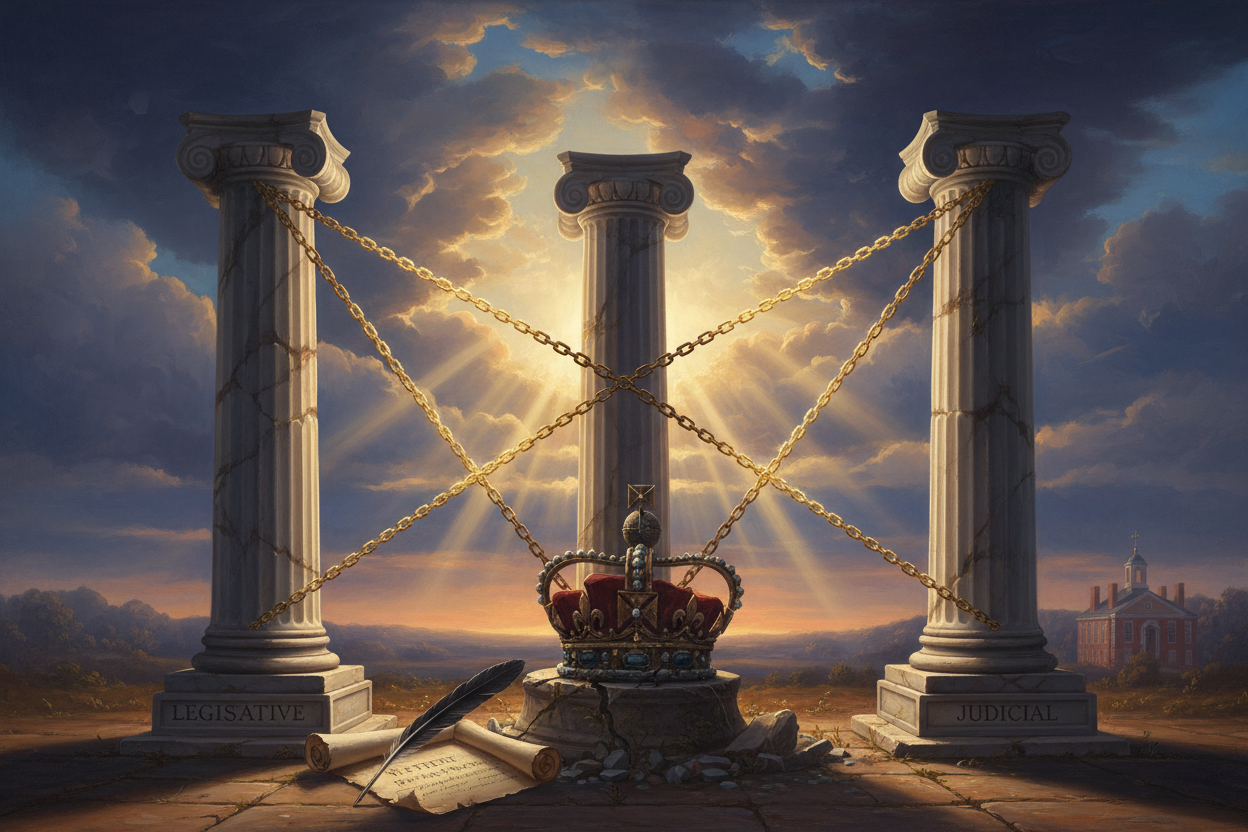
The beauty of this system lies in its self-correcting nature. When one branch attempts to exceed its constitutional authority, the other branches have both the motivation and the means to push back. It’s like having built-in referees in a game where the stakes are nothing less than the preservation of democratic ideals.
The Three Branches: Roles and Responsibilities
Legislative Branch: The Power to Make Laws
Congress, consisting of the House of Representatives and the Senate, serves as the legislative branch of government. This branch holds what many consider the most fundamental power in any democracy: the ability to create laws that govern the nation. But the legislative branch’s responsibilities extend far beyond just writing legislation.
The House and Senate control the federal budget, deciding how taxpayer money gets spent on everything from national defense to education programs. They also have the power to regulate interstate and international commerce, establish post offices, and even declare war. Perhaps most importantly, Congress holds the “power of the purse,” meaning no government program can function without legislative approval of its funding.
What makes the legislative branch unique is its direct connection to the people. Representatives serve two-year terms, ensuring they remain closely tied to their constituents’ immediate concerns. Senators, with their six-year terms, provide more stability and can take longer-term perspectives on national issues.
Executive Branch: Implementation and Enforcement
The executive branch, headed by the President, serves as the government’s action arm. While Congress makes the laws, the President ensures they’re actually carried out. This might sound straightforward, but the executive branch’s role is incredibly complex and far-reaching.
The President commands the military, conducts foreign policy, and oversees a massive federal bureaucracy that touches virtually every aspect of American life. From the Department of Education to the Environmental Protection Agency, executive departments and agencies implement congressional legislation and create detailed regulations that affect millions of Americans daily.
The executive branch also includes the Vice President and the President’s Cabinet, composed of department heads who advise on policy matters. This structure allows the President to manage the enormous scope of federal government operations while maintaining accountability to both Congress and the American people.
Judicial Branch: Interpreting the Law
The judicial branch, crowned by the Supreme Court, serves as the final arbiter of what the Constitution means. Federal judges interpret laws, resolve disputes between states, and most crucially, determine whether government actions align with constitutional principles.
Unlike the other branches, federal judges serve life terms, insulating them from political pressures and allowing them to make decisions based purely on legal merit. This independence is essential for maintaining the rule of law and protecting minority rights against potential majority tyranny.
The court system operates at multiple levels, from district courts that handle initial federal cases to appellate courts that review lower court decisions. The Supreme Court sits at the apex, taking only the most significant cases that have broad implications for American law and society.
How Checks and Balances Work in Practice
Legislative Checks on Executive Power
Congress possesses several powerful tools to keep the executive branch in line. The most dramatic is impeachment, which allows the House to charge and the Senate to try federal officials for “high crimes and misdemeanors.” While rarely used, impeachment serves as a crucial safeguard against executive abuse of power.
More commonly, Congress exercises oversight through committee hearings, budget controls, and confirmation powers. The Senate must approve presidential appointments to key positions, including Cabinet members, federal judges, and ambassadors. This ensures that the President cannot simply surround himself with loyalists who might enable overreach.
Congressional budget authority provides perhaps the most effective check on executive power. No matter what policies a President wants to implement, they require funding that only Congress can provide. This dynamic forces the executive branch to work with legislators and justify its priorities to the people’s representatives.
Executive Checks on Legislative Power
The President’s veto power serves as the primary executive check on congressional authority. When Congress passes legislation the President opposes, a veto can stop it dead in its tracks—unless Congress can muster a two-thirds majority in both chambers to override the veto.
Presidents also influence legislation through their role as chief agenda-setter. The State of the Union address, for example, allows the President to highlight priorities and pressure Congress to act on specific issues. Additionally, the President’s ability to call special congressional sessions ensures that urgent matters receive legislative attention.
Executive orders provide another tool for presidential influence, though these must stay within existing legal frameworks. While not a direct check on Congress, executive orders can shape how laws are implemented and sometimes prompt legislative responses.
Judicial Checks on Both Branches
Judicial review represents perhaps the most powerful check in the entire system. When courts declare laws or executive actions unconstitutional, they effectively nullify government decisions, regardless of how popular or well-intentioned those decisions might be.
This power isn’t explicitly stated in the Constitution but was established in the landmark 1803 case Marbury v. Madison. Since then, the Supreme Court has struck down hundreds of laws and countless executive actions that violated constitutional principles.
Federal courts also check government power through their role in protecting individual rights. When citizens challenge government actions in court, judges serve as neutral arbiters who can restrain both legislative and executive overreach.
Real-World Examples of Checks and Balances
The checks and balances system isn’t just theoretical—it shapes American politics every day. Consider the Affordable Care Act, which faced challenges from all directions. Congress passed it, the President signed it, but the Supreme Court had to rule on its constitutionality. Even after surviving judicial review, ongoing congressional efforts to repeal or modify the law demonstrate how the system continues to work.
Presidential war powers provide another excellent example. While the President serves as Commander-in-Chief, only Congress can declare war. This has led to ongoing tensions over military interventions, with Congress sometimes asserting its authority through funding restrictions or authorization requirements.
Recent impeachment proceedings also showcase the system in action. Whether you agreed with the outcomes or not, these processes demonstrated how Congress can hold executives accountable while courts ensure that proper procedures are followed.
Challenges and Criticisms of the System
No system is perfect, and checks and balances face legitimate criticisms. Some argue that the system creates too much gridlock, making it difficult to address urgent national problems quickly. When different parties control different branches, compromise becomes essential but isn’t always achievable.
Others worry about the increasing polarization of American politics undermining the system’s effectiveness. When party loyalty trumps institutional loyalty, checks and balances can become tools for partisan warfare rather than genuine oversight.
The rise of the administrative state also presents challenges. Federal agencies wield enormous power through regulation-writing, but they don’t fit neatly into the traditional three-branch framework. This has led to debates about accountability and democratic control over bureaucratic decision-making.
Why Checks and Balances Matter Today
In our rapidly changing world, the checks and balances system remains more relevant than ever. Technology companies wield unprecedented influence, global challenges require coordinated responses, and social media amplifies both democratic participation and misinformation.
The system’s built-in skepticism of concentrated power serves as a crucial safeguard in this environment. Whether dealing with pandemic responses, climate change, or technological regulation, checks and balances ensure that major decisions receive scrutiny from multiple perspectives.
Perhaps most importantly, the system maintains public trust by ensuring that no single person or group can fundamentally alter American governance without broad consensus. This stability provides a foundation for long-term planning and international relationships.
Conclusion: The Enduring Wisdom of Balanced Power
The checks and balances system represents one of the most significant contributions to democratic governance in human history. By distributing power among competing institutions, the Founding Fathers created a system that has weathered civil war, economic depressions, world wars, and countless political crises.
While the system isn’t perfect and continues to evolve, its core principle remains sound: power must be balanced to preserve freedom. As citizens, understanding how checks and balances work helps us participate more effectively in democracy and hold our leaders accountable.
The next time you see Congress questioning executive officials, courts reviewing legislation, or the President vetoing a bill, remember that you’re witnessing more than just political theater. You’re seeing the careful balance of power that protects your rights and preserves democratic governance for future generations.
Frequently Asked Questions
What is the main purpose of checks and balances in American government?
The primary purpose is to prevent any single branch of government from becoming too powerful by giving each branch specific tools to limit the others’ authority. This system protects individual rights and maintains democratic governance by ensuring that major decisions require cooperation among different institutions.
Can you give a simple example of checks and balances in action?
A classic example is the legislative process: Congress passes a bill, but the President can veto it. If Congress strongly disagrees with the veto, they can override it with a two-thirds majority in both chambers. Additionally, if the resulting law faces constitutional challenges, the Supreme Court can review and potentially strike it down.
What happens when checks and balances fail?
When the system fails, it typically results in one branch exceeding its constitutional authority, leading to potential tyranny or abuse of power. However, the system is designed to be self-correcting—other branches usually respond to restore balance, though this process can take time and may require public pressure or electoral changes.
How do checks and balances affect ordinary citizens?
Checks and balances directly protect citizens by preventing government overreach and ensuring that laws and policies receive thorough review before implementation. The system also provides multiple avenues for citizens to influence government through voting for different branches and seeking redress through courts when their rights are violated.
Are checks and balances unique to the United States?
While the specific American model is unique, many democratic countries employ similar principles of separated powers and institutional checks. However, parliamentary systems and other democratic models distribute and balance power differently than the American system of three co-equal branches.


Leave a Reply
You must be logged in to post a comment.