
The Republican Party’s Stance on Climate Change: Understanding the Conservative Perspective in 2024
Climate change remains one of the most contentious political issues of our time, with the Republican Party’s stance often misunderstood or oversimplified in mainstream discourse. While critics frequently characterize the GOP as uniformly dismissive of climate science, the reality is far more nuanced. Today’s Republican Party encompasses a spectrum of views on climate change, from traditional skepticism to emerging acceptance coupled with market-based solutions.
Understanding the Republican position on climate change requires looking beyond soundbites and examining the underlying principles that shape conservative environmental policy. This comprehensive exploration reveals a party grappling with scientific evidence while maintaining core beliefs about government regulation, economic freedom, and American energy independence.
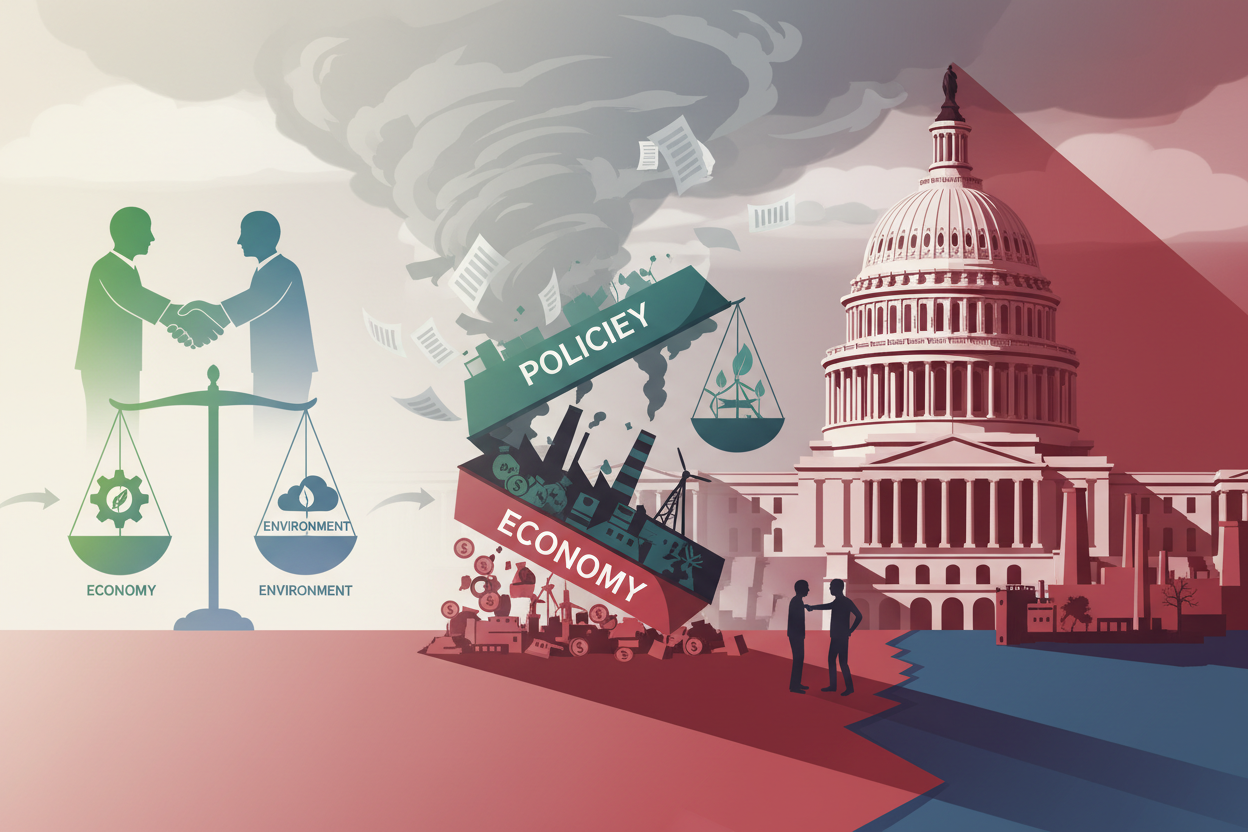
Historical Evolution of Republican Climate Policy
The Republican Party’s relationship with environmental issues hasn’t always been adversarial. In fact, some of America’s most significant environmental legislation emerged under Republican leadership. President Richard Nixon established the Environmental Protection Agency in 1970, while President George H.W. Bush championed the Clean Air Act amendments that addressed acid rain through cap-and-trade mechanisms.
However, as climate change became increasingly politicized in the 1990s and 2000s, Republican positions began to shift. The party’s stance hardened during the Obama administration, particularly in response to policies like the Clean Power Plan and the Paris Climate Agreement. This evolution reflects broader conservative concerns about government overreach and economic regulation rather than a wholesale rejection of environmental stewardship.

The Trump administration marked a significant departure from previous Republican environmental policies, withdrawing from international climate agreements and rolling back numerous environmental regulations. Yet even during this period, many Republican governors and mayors continued pursuing clean energy initiatives at the state and local levels, demonstrating the diversity of thought within the party.
Current Republican Leadership Views on Climate Science
Today’s Republican Party includes voices across the climate spectrum. While some members continue to question the extent of human influence on climate change, a growing number acknowledge the scientific consensus while focusing on solution-oriented approaches that align with conservative principles.
Senator Mitt Romney has been notably vocal about the need for climate action, supporting carbon pricing mechanisms and clean energy investment. Similarly, governors like Larry Hogan of Maryland and Charlie Baker of Massachusetts have implemented aggressive climate policies in their states. These leaders represent a pragmatic wing of the party that accepts climate science while advocating for market-driven solutions.
Conversely, other prominent Republicans maintain skeptical positions, questioning climate models and emphasizing natural climate variability. This skepticism often stems from concerns about economic impacts rather than outright denial of warming trends. The key distinction lies in how different Republican leaders weigh scientific evidence against economic and regulatory considerations.
Market-Based Solutions and Conservative Climate Approaches
Where Republicans increasingly find common ground is in supporting market-based climate solutions that minimize government intervention while promoting innovation. Carbon pricing, particularly through revenue-neutral carbon taxes or cap-and-trade systems, has gained traction among conservative economists and some Republican politicians.
The concept of “free market environmentalism” resonates strongly within Republican circles. This approach emphasizes property rights, technological innovation, and competitive markets as drivers of environmental progress. Republicans often point to America’s success in reducing sulfur dioxide emissions through market mechanisms as a model for addressing carbon emissions.
Tax incentives for clean energy development represent another area where Republican support has emerged. Many conservatives view these policies as preferable to direct government spending or regulatory mandates. The extension of wind and solar tax credits has received bipartisan support, reflecting this preference for incentive-based approaches over command-and-control regulation.
Energy Independence and National Security Considerations
Republicans consistently frame energy policy through the lens of national security and economic competitiveness. The party’s support for domestic energy production, including both fossil fuels and renewables, stems from desires to reduce dependence on potentially unstable foreign suppliers and maintain America’s global economic leadership.
This perspective has led to interesting policy positions where climate action aligns with conservative priorities. Support for nuclear power, for instance, reflects both its carbon-free nature and its potential to enhance energy security. Similarly, Republican backing for electric vehicle infrastructure often emphasizes reducing oil imports rather than emissions reductions.
The concept of “energy dominance” promoted during the Trump administration exemplified this approach, seeking to maximize domestic production across all energy sources. While critics argued this prioritized fossil fuels, supporters contended it provided a pathway to cleaner energy through technological advancement and economic growth.
State-Level Republican Climate Initiatives
Perhaps nowhere is the diversity of Republican climate positions more evident than at the state level. Red states like Texas have become leaders in wind energy development, not primarily for environmental reasons but due to economic advantages and resource availability. This pragmatic approach demonstrates how conservative principles can align with climate-friendly outcomes.
Republican governors in states facing direct climate impacts have often been more aggressive in their responses. Florida’s Ron DeSantis, despite skepticism about federal climate policies, has allocated significant funding for sea-level rise adaptation and Everglades restoration. This reflects a growing recognition that climate impacts require practical responses regardless of their underlying causes.
State-level renewable energy standards have received Republican support in numerous states, particularly when framed as economic development opportunities rather than environmental mandates. This approach allows conservative politicians to support clean energy while maintaining ideological consistency about limited government and free markets.
Economic Arguments and Job Creation Focus
Economic considerations remain central to Republican climate discussions. The party consistently emphasizes job creation, economic growth, and competitiveness in evaluating environmental policies. This focus has led to support for clean energy initiatives that demonstrate clear economic benefits, particularly in manufacturing and rural development.
Republicans often highlight the job creation potential of emerging technologies like carbon capture and storage, advanced nuclear reactors, and clean hydrogen production. These technologies appeal to conservative constituencies by promising high-paying jobs in traditional energy sectors while addressing environmental concerns.
The party’s emphasis on regulatory certainty and long-term planning has also created opportunities for climate action. Business-oriented Republicans recognize that climate risks pose long-term economic threats that require proactive management, leading to support for adaptation measures and resilience investments.
Challenges and Internal Debates
The Republican Party faces significant internal tensions on climate issues. Primary elections often reward candidates who take hardline positions against environmental regulations, creating disincentives for moderate positions. This dynamic has prevented many Republicans from publicly supporting climate action even when they privately acknowledge its necessity.
Generational differences within the party compound these challenges. Younger Republicans are more likely to accept climate science and support aggressive action, while older party members often remain skeptical. This generational divide suggests potential future shifts in party positions as demographics change.
The influence of fossil fuel industries on Republican politics also complicates climate discussions. While this relationship is often overstated by critics, it does create political pressures that can discourage climate action. However, growing clean energy industry influence is beginning to provide counterbalancing political incentives.
Future Directions and Emerging Trends
Several trends suggest potential evolution in Republican climate positions. The growing economic competitiveness of renewable energy makes it increasingly difficult to oppose on purely economic grounds. Similarly, extreme weather events affecting Republican constituencies create pressure for practical responses regardless of ideological positions.
The emergence of conservative climate organizations like the American Conservation Coalition and Citizens for Responsible Energy Solutions demonstrates growing activist pressure within the party for climate action. These groups advocate for conservative climate solutions while maintaining Republican credentials and messaging.
International competition, particularly with China in clean energy technologies, may also drive Republican support for climate action. Framing clean energy as essential for maintaining American technological leadership appeals to conservative instincts about national competitiveness and security.
Frequently Asked Questions
Do all Republicans deny climate change?
No, Republican positions on climate change vary significantly. While some members question aspects of climate science, many acknowledge warming trends and human influence. The main differences often involve policy responses rather than scientific acceptance.
What climate solutions do Republicans typically support?
Republicans generally favor market-based solutions like carbon pricing, tax incentives for clean energy, and technological innovation. They prefer approaches that minimize government regulation while promoting economic growth and competitiveness.
Why do Republicans often oppose environmental regulations?
Republican opposition typically stems from concerns about economic impacts, government overreach, and regulatory uncertainty rather than environmental indifference. They prefer incentive-based approaches over command-and-control regulations.
Are there Republican leaders who support aggressive climate action?
Yes, several Republican leaders support significant climate action, including senators like Mitt Romney and various governors who have implemented clean energy policies. However, they often frame these positions in terms of economic benefits and energy security.
How do Republican voters view climate change?
Polling shows Republican voter opinions on climate change are more nuanced than often portrayed. While skepticism remains higher than among Democrats, significant portions of Republican voters support clean energy development and acknowledge climate risks.
What role does energy independence play in Republican climate positions?
Energy independence is central to Republican thinking on climate issues. Many Republicans support clean energy development primarily for national security and economic reasons, viewing reduced fossil fuel dependence as strategically important regardless of environmental benefits.
The Republican Party’s stance on climate change continues evolving as scientific evidence accumulates, economic realities shift, and political pressures change. While the party may never embrace the aggressive government-led approaches favored by many Democrats, growing support for market-based climate solutions suggests potential for bipartisan progress on this critical issue. Understanding these nuanced positions is essential for anyone seeking to engage constructively in America’s climate policy debates.