


The Role of the Supreme Court in American Politics
The Supreme Court of the United States holds a pivotal position in the country’s political landscape. As the highest court in the land, its decisions have a profound impact on American society, influencing everything from individual rights to federal policies. Understanding the role of the Supreme Court in American politics is crucial for anyone interested in the dynamics of government and law.
The Foundation of the Supreme Court
Established by Article III of the U.S. Constitution, the Supreme Court was designed to be an independent judiciary body, free from political pressures. Its primary function is to interpret the Constitution and ensure that laws and decisions are in compliance with it. The framers envisioned it as a check on the powers of the other branches of government, safeguarding the rule of law and protecting individual liberties.

Judicial Review and Its Impact
One of the most significant powers of the Supreme Court is judicial review, the ability to invalidate laws and executive actions that it finds unconstitutional. This power was established in the landmark case Marbury v. Madison in 1803. Judicial review positions the Court as a critical arbiter in disputes over federal and state authority, making it an essential player in American politics.
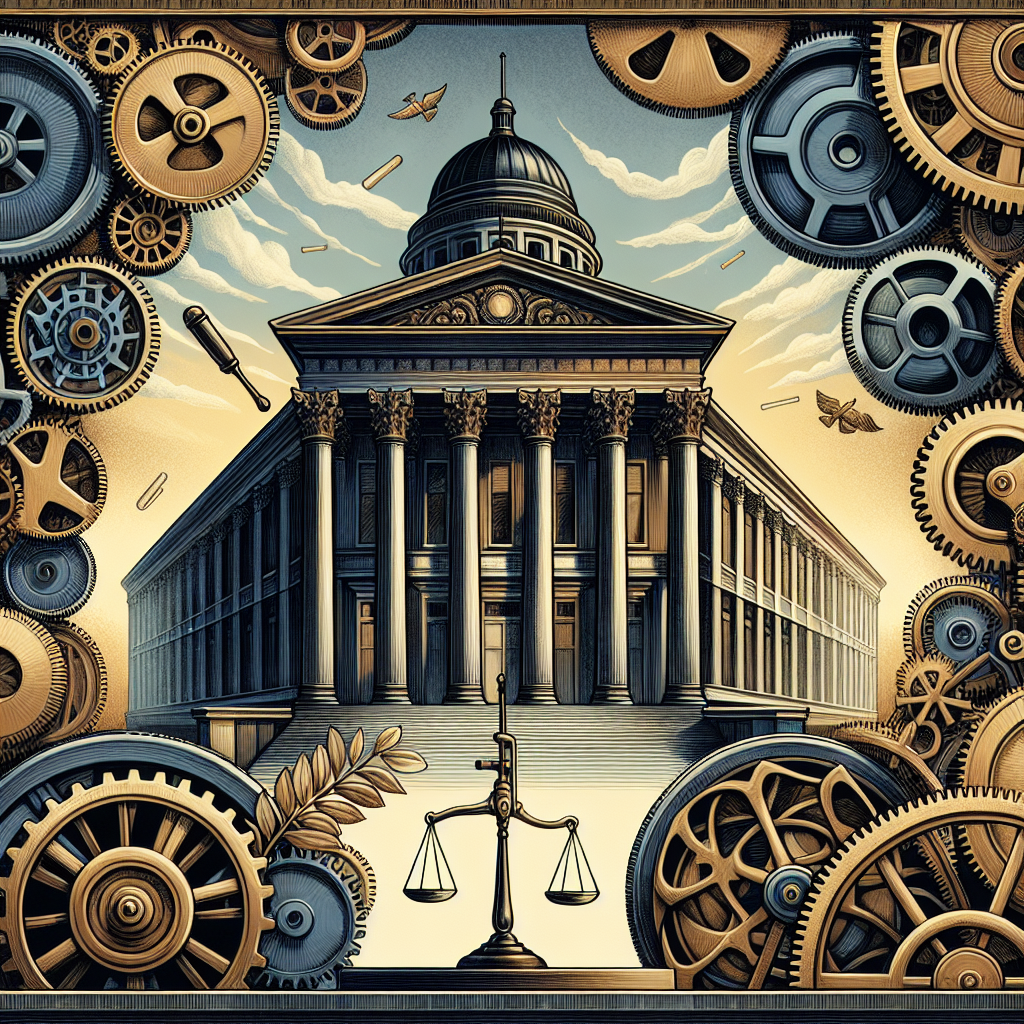
Through judicial review, the Supreme Court has addressed numerous contentious issues, ranging from civil rights and healthcare to presidential powers and immigration. Its decisions often set precedents that shape the legal landscape for decades, underscoring its influence on national policy and societal norms.
Influence on Social Change
The Supreme Court has been at the forefront of several key social changes in the United States. Landmark rulings such as Brown v. Board of Education, which declared racial segregation in public schools unconstitutional, and Obergefell v. Hodges, which legalized same-sex marriage, demonstrate the Court’s significant role in shaping societal values and norms.
These decisions illustrate how the Supreme Court can act as a catalyst for social progress. By interpreting the Constitution in light of contemporary issues, the Court helps to foster an evolving legal framework that reflects the changing attitudes and beliefs of American society.
The Supreme Court and Political Controversies
Despite its intended apolitical stance, the Supreme Court often finds itself at the center of political controversies. The process of appointing justices has become a highly politicized affair, as each new appointment can shift the ideological balance of the Court. Presidents often nominate justices whose judicial philosophies align with their own political agendas, leading to intense confirmation battles in the Senate.
Moreover, the Court’s decisions can provoke significant political debate, as seen in cases involving abortion rights, gun control, and campaign finance. These rulings can galvanize public opinion and influence electoral outcomes, highlighting the interconnectedness between the Supreme Court and American politics.
The Future of the Supreme Court
Looking ahead, the Supreme Court will continue to play a crucial role in American politics. With issues such as climate change, digital privacy, and voting rights on the horizon, the Court’s interpretations of the Constitution will be instrumental in shaping the future of American governance.
As society evolves, the Supreme Court’s responsibility to balance tradition with progress remains a challenging yet essential task. Its ability to adapt to new legal challenges while preserving fundamental rights will determine its legacy in the centuries to come.
Conclusion
The Supreme Court’s role in American politics is both complex and indispensable. As an institution, it serves as a guardian of the Constitution, an arbiter of justice, and a catalyst for social change. While its decisions are not without controversy, the Court’s influence on American life is undeniable. Understanding its role and impact is crucial for anyone seeking to comprehend the intricate dynamics of American government and society.
FAQs
Q: How are Supreme Court justices appointed?
A: Supreme Court justices are nominated by the President of the United States and must be confirmed by the Senate. This process involves background checks, hearings, and a Senate vote.
Q: Can Supreme Court decisions be overturned?
A: Supreme Court decisions can be overturned by a constitutional amendment or by a future Supreme Court ruling that reverses the precedent.
Q: How long do Supreme Court justices serve?
A: Supreme Court justices are appointed for life, serving until they retire, resign, pass away, or are impeached and removed from office.
Q: What is the significance of landmark Supreme Court cases?
A: Landmark cases set important legal precedents and often reflect or influence societal shifts. They can redefine laws and have long-lasting effects on American society.


Leave a Reply
You must be logged in to post a comment.