

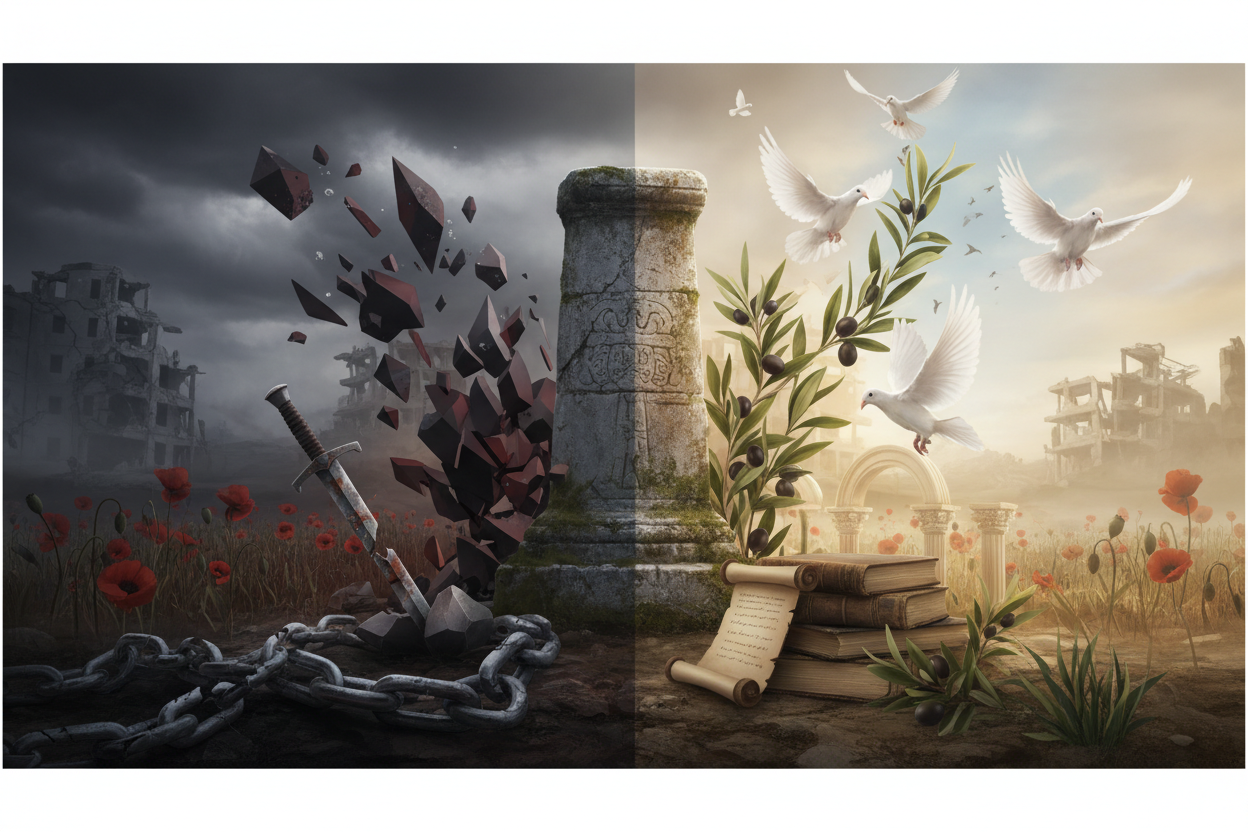
Wars and Their Consequences: Lessons from History
Throughout human history, warfare has shaped civilizations, redrawn borders, and fundamentally altered the course of our collective story. From ancient battles to modern conflicts, wars have left indelible marks on societies, economies, and the human psyche. While we often focus on the immediate tactical outcomes of these conflicts, the long-term consequences of war extend far beyond the battlefield, offering profound lessons that continue to resonate today.
Understanding these historical patterns isn’t just an academic exercise—it’s essential for comprehending our current world and making informed decisions about our future. As we examine the aftermath of major conflicts throughout history, we uncover recurring themes that reveal fundamental truths about human nature, international relations, and the true cost of warfare.
The Economic Devastation and Recovery Patterns
Wars have consistently demonstrated their capacity to both destroy and transform economic systems. The immediate impact is often catastrophic—infrastructure lies in ruins, trade routes are disrupted, and entire populations are displaced. Yet history shows us that economies can also emerge from conflict with unexpected strength and innovation.
Consider the aftermath of World War II. While Europe and Asia faced unprecedented destruction, the conflict also accelerated technological advancement and led to new international economic frameworks. The Marshall Plan’s reconstruction efforts in Europe created a model for international cooperation that influenced global development strategies for decades.
The American Civil War provides another compelling example. Despite the enormous human and material costs, the conflict ultimately accelerated industrialization in the North and forced a fundamental restructuring of the Southern economy. The war’s end brought about the transcontinental railroad, expanded manufacturing capabilities, and new financial institutions that would power America’s emergence as a global economic force.
However, not all post-war economic stories end in recovery. The punitive reparations imposed on Germany after World War I created economic conditions that contributed to political instability and eventually to another devastating conflict. This teaches us that how we handle post-war economic reconstruction can be just as important as winning the war itself.
Social and Cultural Transformations
Wars serve as powerful catalysts for social change, often accelerating transformations that might have taken generations to occur peacefully. The upheaval of conflict breaks down traditional social structures and creates opportunities for previously marginalized groups to assume new roles in society.
World War I fundamentally altered gender roles across participating nations. As men departed for the trenches, women entered the workforce in unprecedented numbers, taking on roles in factories, farms, and offices. This shift didn’t simply reverse when the war ended—it had permanently changed societal expectations and paved the way for women’s suffrage movements worldwide.
The American Civil War similarly transformed social hierarchies, formally ending slavery and beginning the long, difficult process of racial integration. While true equality remained elusive for generations, the war established legal and constitutional frameworks that civil rights movements would later use to advance their cause.
Cultural changes often prove just as significant as formal legal modifications. The shared trauma of war creates new forms of artistic expression, literature, and collective memory. The “Lost Generation” of writers following World War I, including Ernest Hemingway and F. Scott Fitzgerald, fundamentally changed American literature by grappling with the disillusionment and psychological impact of modern warfare.
Political Realignments and Governance Changes
Perhaps no aspect of society changes more dramatically during wartime than political structures. Wars have toppled empires, created new nations, and fundamentally altered the balance of global power. The consequences of these political shifts often extend far beyond the immediate participants in the conflict.
The Napoleonic Wars reshaped the entire European political landscape, contributing to the rise of nationalism and the eventual unification of both Germany and Italy. These conflicts also spread revolutionary ideals across Europe, challenging traditional monarchical systems and planting seeds for democratic movements that would flourish throughout the 19th century.
World War I proved even more transformative, ending four major empires—the Ottoman, Austro-Hungarian, German, and Russian empires. The resulting power vacuum and hastily drawn borders created instabilities that continue to influence international relations today. The arbitrary boundaries established in the Middle East, for instance, contributed to conflicts that persist more than a century later.
The aftermath of World War II established the bipolar world order that defined international relations for nearly half a century. The emergence of the United States and Soviet Union as superpowers, the creation of the United Nations, and the beginning of the Cold War all stemmed directly from how the victorious powers chose to organize the post-war world.
Technological Advancement Through Conflict
War has consistently served as a powerful driver of technological innovation, though often at a terrible human cost. The pressure of conflict accelerates research and development, leading to breakthroughs that eventually benefit civilian society.
World War II stands as perhaps the most dramatic example of wartime technological advancement. The conflict spurred developments in radar, jet engines, computers, and nuclear technology. Many innovations that we now take for granted—from microwave ovens to GPS systems—have their origins in military research conducted during this period.
The internet itself emerged from DARPANET, a project designed to create a communication network that could survive a nuclear attack. This military innovation eventually transformed global commerce, communication, and culture in ways its creators never imagined.
However, these technological advances come with ethical considerations that societies continue to grapple with. The development of nuclear weapons during World War II created a new category of threat that fundamentally altered international relations and continues to pose existential risks to humanity.
Psychological and Generational Impact
The psychological consequences of war extend far beyond individual trauma, shaping entire generations and influencing cultural attitudes for decades. Understanding these impacts helps us comprehend how societies process conflict and rebuild in its aftermath.
The concept of Post-Traumatic Stress Disorder, while only formally recognized in recent decades, reflects psychological wounds that have affected veterans throughout history. The “shell shock” of World War I, the “combat fatigue” of World War II, and the struggles of Vietnam veterans all represent society’s evolving understanding of war’s psychological toll.
These individual traumas aggregate into collective memory that influences national identity and political decision-making. Germany’s post-World War II pacifist constitution reflects a national reckoning with the consequences of aggressive militarism. Similarly, America’s reluctance to engage in prolonged ground conflicts, often called “Vietnam Syndrome,” demonstrates how traumatic military experiences can shape future policy decisions.
The children of war often carry forward their parents’ experiences, creating intergenerational effects that can persist for decades. Research on Holocaust survivors and their descendants has revealed how trauma can be transmitted across generations, affecting everything from family dynamics to political preferences.
Lessons for Modern International Relations
The historical patterns revealed through studying war’s consequences offer valuable insights for contemporary international relations. Perhaps most importantly, they demonstrate that how conflicts end often matters more than how they begin.
The contrasting approaches to post-war reconstruction after the two World Wars provide a clear example. The punitive approach following World War I contributed to conditions that enabled another devastating conflict. In contrast, the more generous and inclusive approach after World War II, including the Marshall Plan and the integration of former enemies into new international institutions, helped create a more stable international order.
Modern conflicts in Iraq, Afghanistan, and elsewhere have reinforced the importance of post-conflict planning. Military victory means little if it’s not followed by effective governance, economic reconstruction, and social reconciliation. The challenges faced in these recent conflicts echo historical patterns and remind us that winning the peace is often more difficult than winning the war.
International institutions created in response to past conflicts—from the United Nations to NATO to the European Union—represent attempts to learn from history’s lessons. While imperfect, these organizations reflect humanity’s ongoing effort to create mechanisms for preventing conflict and managing its consequences when prevention fails.
Conclusion
The study of wars and their consequences reveals that conflict’s true impact extends far beyond the battlefield. Economic systems are destroyed and rebuilt, social structures are transformed, political orders are reshaped, and entire generations bear psychological scars that influence society for decades.
Yet these historical patterns also demonstrate human resilience and our capacity to learn from tragedy. The most successful post-war recoveries have combined practical reconstruction efforts with genuine attempts at reconciliation and institutional reform. They’ve recognized that lasting peace requires not just the absence of conflict, but the presence of justice, opportunity, and hope.
As we face contemporary challenges—from regional conflicts to global terrorism to the threat of great power competition—these historical lessons remain relevant. They remind us that the choices we make in the aftermath of conflict often determine whether we break cycles of violence or perpetuate them. Understanding this history doesn’t guarantee we’ll make better decisions, but it does provide us with the wisdom of those who came before us, purchased at such a terrible price.
The ultimate lesson may be that while war has been a constant throughout human history, so too has our capacity to rebuild, reconcile, and create something better from the ashes of destruction. That capacity gives us hope that we can continue learning from the past to build a more peaceful future.
Frequently Asked Questions
How do wars typically affect economic development in the long term?
Wars often initially devastate economies through infrastructure destruction and resource depletion. However, they can also accelerate technological innovation and industrial development. Long-term economic impact largely depends on post-war reconstruction policies and international support. Countries that receive adequate reconstruction aid and implement sound economic policies often emerge stronger, while those facing punitive measures or isolation may struggle for decades.
What are the most significant social changes that result from major conflicts?
Major conflicts typically accelerate social transformations that might otherwise take generations. These include changes in gender roles, class structures, and racial relations. Wars often break down traditional social barriers by creating new roles and opportunities for previously marginalized groups. The shared experience of conflict also creates new forms of national identity and collective memory.
How do wars influence technological advancement?
Wars drive technological innovation through urgent military needs and increased research funding. Many civilian technologies, including the internet, GPS, and medical advances, originated from military research. However, this acceleration comes at a high human and financial cost, and raises ethical questions about the relationship between military and civilian technology development.
What psychological effects do wars have on entire generations?
Wars create both individual and collective trauma that can persist for generations. Veterans may suffer from PTSD and other mental health issues, while entire societies develop collective memories that influence national identity and policy decisions. Research shows that trauma can even be transmitted to children and grandchildren of war survivors, affecting family dynamics and psychological well-being across generations.
How can historical lessons about war help prevent future conflicts?
Historical analysis reveals patterns in how conflicts develop and how their consequences unfold. Understanding these patterns helps policymakers recognize warning signs, design better post-conflict reconstruction plans, and create international institutions that address root causes of war. However, applying these lessons requires political will and the ability to overcome short-term interests in favor of long-term stability.
Why is post-war reconstruction often more challenging than winning the war itself?
Military victory addresses immediate security threats but doesn’t resolve underlying political, economic, and social issues that may have caused the conflict. Reconstruction requires building new institutions, reconciling former enemies, rebuilding infrastructure, and addressing grievances—all while managing competing interests and limited resources. Success depends on long-term commitment and often requires international cooperation and support.



Leave a Reply