

Exploring Different Paths to Spiritual Enlightenment: Finding Your Unique Journey to Inner Awakening
The quest for spiritual enlightenment has captivated humanity for millennia. From ancient philosophers to modern seekers, countless individuals have embarked on transformative journeys to discover deeper meaning, inner peace, and connection with something greater than themselves. What’s fascinating about this universal human pursuit is that there isn’t just one way to reach spiritual awakening – there are numerous paths, each offering unique insights and experiences.
Whether you’re just beginning your spiritual journey or looking to deepen your existing practice, understanding the various approaches to enlightenment can help you find the path that resonates most authentically with your soul. Let’s explore the rich tapestry of spiritual traditions and modern approaches that can guide you toward greater consciousness and inner fulfillment.

Understanding Spiritual Enlightenment: What Does It Really Mean?
Before diving into specific paths, it’s essential to understand what spiritual enlightenment actually encompasses. At its core, spiritual enlightenment refers to a state of profound understanding, awareness, and connection that transcends ordinary consciousness. It’s often described as a moment or process where the boundaries between self and universe dissolve, revealing a deeper truth about existence.
Different traditions define enlightenment in various ways. In Buddhism, it’s called “nirvana” – a state of liberation from suffering and the cycle of rebirth. Hinduism speaks of “moksha,” the release from the illusion of separateness. Christian mystics describe it as union with the divine, while modern spiritual movements often frame it as awakening to one’s true nature or higher consciousness.
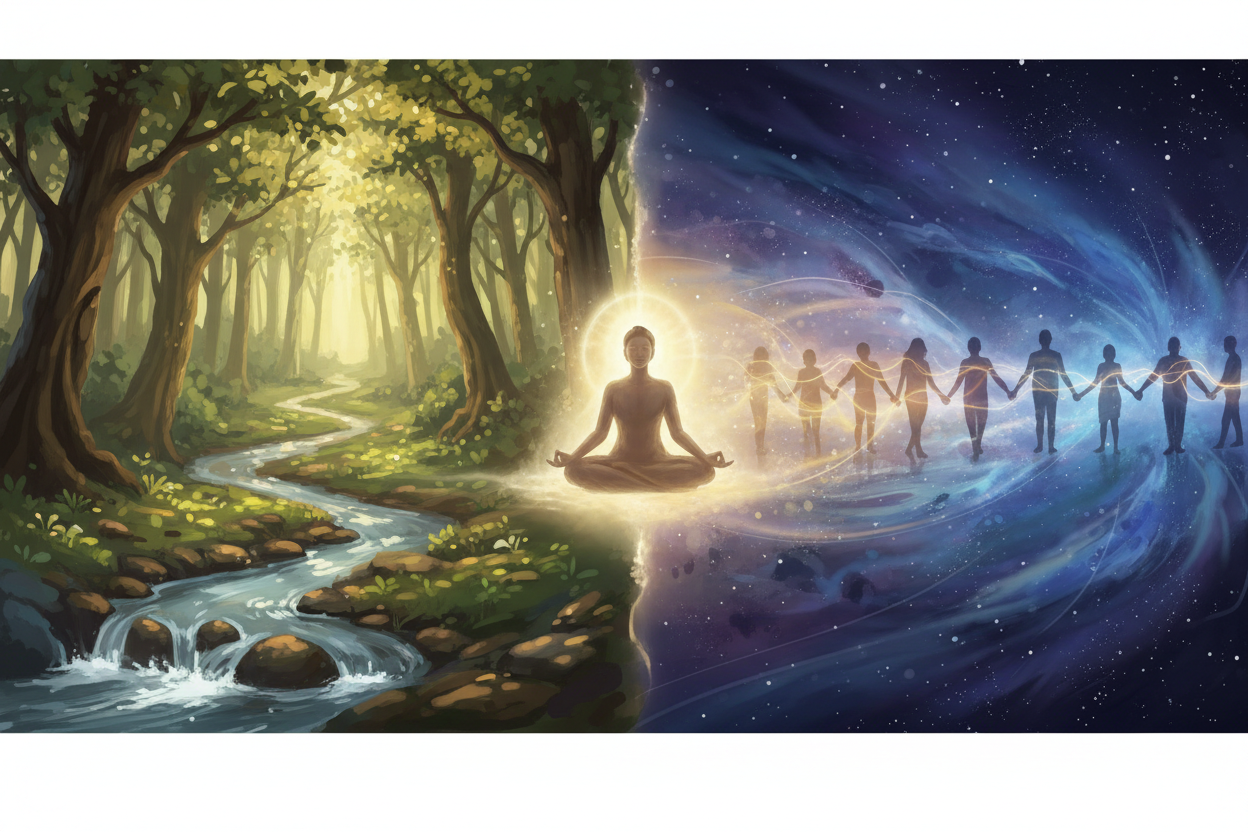
What remains consistent across these definitions is the transformative nature of the experience. Those who achieve spiritual enlightenment often report profound shifts in perspective, increased compassion, inner peace, and a sense of interconnectedness with all life.
Traditional Eastern Paths to Spiritual Awakening
Eastern spiritual traditions have developed sophisticated systems for achieving enlightenment over thousands of years. These time-tested approaches offer structured methods for transcending ordinary consciousness and achieving spiritual liberation.
Buddhism presents the Noble Eightfold Path, which includes right understanding, intention, speech, action, livelihood, effort, mindfulness, and concentration. Through meditation, ethical living, and wisdom cultivation, practitioners gradually free themselves from attachment and suffering. The practice of mindfulness meditation, in particular, has gained widespread acceptance even outside Buddhist contexts for its ability to create present-moment awareness.
Hinduism offers multiple paths, known as “yogas,” each suited to different temperaments and inclinations. Bhakti yoga emphasizes devotion and love for the divine, while Karma yoga focuses on selfless action and service. Jnana yoga pursues knowledge and self-inquiry, asking fundamental questions like “Who am I?” Raja yoga, often called the “royal path,” combines meditation, breath work, and ethical practices to achieve spiritual union.
Taoism, originating in ancient China, teaches harmony with the Tao – the fundamental principle underlying all existence. Through practices like Tai Chi, Qigong, and meditation, practitioners learn to flow with natural rhythms and achieve balance between opposing forces (yin and yang).
Western Mystical Traditions and Their Approaches
Western spiritual traditions have their own rich heritage of mystical practices designed to foster spiritual awakening. These paths often emphasize personal relationship with the divine and direct spiritual experience.
Christian mysticism has produced numerous saints and mystics who achieved profound spiritual states through prayer, contemplation, and surrender to divine will. Practices like Lectio Divina (divine reading), contemplative prayer, and the Jesus Prayer have guided seekers toward mystical union with God for centuries.
Jewish mysticism, particularly Kabbalah, offers a complex system for understanding the nature of divinity and creation. Through study of sacred texts, meditation on divine names, and ethical refinement, practitioners seek to repair the world (tikkun olam) and achieve spiritual elevation.
Sufism, the mystical dimension of Islam, emphasizes direct personal experience of divine love. Through practices like dhikr (remembrance of God), whirling meditation, and poetry, Sufi practitioners seek to dissolve the ego and merge with divine consciousness.
Modern Spiritual Movements and New Age Approaches
The 20th and 21st centuries have witnessed an explosion of new spiritual movements and approaches that often blend traditional wisdom with contemporary insights. These modern paths reflect our globalized world’s tendency to synthesize diverse spiritual traditions.
The New Age movement has popularized practices like crystal healing, chakra balancing, and channeling. While sometimes criticized for lacking depth, these approaches have introduced many people to spiritual concepts and practices they might not have encountered otherwise.
Neo-shamanism draws from indigenous traditions worldwide, emphasizing connection with nature, spirit guides, and altered states of consciousness achieved through drumming, plant medicines, or vision quests. This path appeals to those seeking direct spiritual experience and healing.
Transpersonal psychology bridges spirituality and science, studying consciousness, peak experiences, and spiritual development through a psychological lens. This approach offers a more scientific framework for understanding spiritual phenomena while maintaining respect for their transformative potential.
Meditation and Mindfulness: Universal Tools for Awakening
Regardless of which spiritual path you choose, meditation and mindfulness practices appear in virtually every tradition as fundamental tools for achieving enlightenment. These practices train the mind to become more aware, focused, and present.
Concentration meditation involves focusing attention on a single object, such as the breath, a mantra, or a visual image. This practice develops mental stability and can lead to profound states of absorption and insight.
Mindfulness meditation, popularized through Buddhist Vipassana practice, involves observing thoughts, emotions, and sensations without judgment. This approach develops clear awareness of the present moment and insight into the nature of mind and reality.
Walking meditation combines physical movement with mindful awareness, making spiritual practice accessible to those who find sitting meditation challenging. Many traditions incorporate movement-based practices like Tai Chi, yoga, or sacred dance.
The Role of Service and Compassion in Spiritual Development
A common thread running through most spiritual traditions is the emphasis on service and compassion as essential elements of spiritual growth. True enlightenment isn’t just about personal liberation – it naturally expresses itself through care for others and the world.
Karma yoga in Hinduism teaches that selfless service can be a direct path to spiritual realization. By acting without attachment to results and dedicating actions to a higher purpose, practitioners transcend ego-driven motivations.
Buddhist teachings emphasize the development of compassion (karuna) alongside wisdom. The Bodhisattva ideal in Mahayana Buddhism involves postponing one’s own final liberation to help all beings achieve enlightenment.
Many contemporary spiritual teachers emphasize that spiritual awakening naturally leads to increased empathy and desire to serve. This service might take the form of environmental activism, social justice work, healing practices, or simply being more present and kind in daily interactions.
Finding Your Personal Path to Enlightenment
With so many spiritual paths available, how do you choose the one that’s right for you? The answer lies in honest self-reflection, experimentation, and trust in your inner wisdom.
Consider your temperament and natural inclinations. Are you drawn to intellectual understanding, emotional devotion, physical practices, or service to others? Different paths emphasize different approaches, and what resonates with your personality is likely to be most effective.
Don’t be afraid to explore multiple traditions. Many modern practitioners create their own synthesis, drawing elements from various paths that speak to them. However, it’s also valuable to go deep into at least one tradition rather than skimming the surface of many.
Pay attention to the fruits of your practice. Authentic spiritual growth typically produces increased peace, compassion, wisdom, and ability to handle life’s challenges with equanimity. If a practice consistently produces anxiety, judgment, or spiritual pride, it may not be serving your highest good.
Remember that spiritual enlightenment isn’t a destination but an ongoing process. Even those who achieve profound awakening experiences continue to grow and deepen their understanding. Be patient with yourself and trust that your sincere seeking will guide you toward what you need.
Conclusion: Embracing Your Unique Spiritual Journey
The path to spiritual enlightenment is as unique as each individual who walks it. While the destination – greater consciousness, peace, and connection – may be similar, the routes we take can vary dramatically. Whether you’re drawn to ancient Buddhist meditation, Christian contemplative prayer, shamanic journeying, or a modern synthesis of practices, what matters most is your sincere commitment to growth and awakening.
The beauty of our current era is that we have access to wisdom traditions from around the world. This unprecedented spiritual buffet offers incredible opportunities for learning and growth, but it also requires discernment and dedication. Choose practices that resonate with your heart, commit to them consistently, and remain open to the transformations they bring.
Remember that the ultimate goal isn’t just personal enlightenment but the flowering of your highest potential in service to all life. As you explore different paths to spiritual awakening, may you find the practices and perspectives that help you become more fully yourself – and in doing so, contribute to the healing and awakening of our world.
Frequently Asked Questions
Q: Do I need to choose just one spiritual path, or can I combine different traditions?
A: Many modern practitioners successfully combine elements from different spiritual traditions. However, it’s often beneficial to have a primary practice or tradition as your foundation while incorporating complementary elements from other paths. This prevents spiritual confusion and provides a coherent framework for growth.
Q: How long does it typically take to achieve spiritual enlightenment?
A: Spiritual enlightenment isn’t bound by a specific timeline. Some people experience profound awakening after years of dedicated practice, while others have spontaneous realizations. More importantly, spiritual growth is an ongoing process rather than a one-time achievement. Focus on consistent practice and gradual development rather than trying to rush toward a particular goal.
Q: Can someone achieve enlightenment without following a formal spiritual tradition?
A: While formal traditions provide valuable structure and guidance, spiritual awakening can occur through various means, including nature connection, artistic expression, scientific inquiry, or life experiences. However, most people benefit from some form of structured practice and community support in their spiritual journey.
Q: What role does a spiritual teacher or guru play in achieving enlightenment?
A: A qualified spiritual teacher can provide invaluable guidance, helping you avoid common pitfalls and deepen your practice. However, it’s important to maintain discernment and remember that the ultimate authority for your spiritual journey lies within you. Look for teachers who encourage your independence and growth rather than creating dependency.
Q: Is it possible to be spiritual without believing in God or a higher power?
A: Absolutely. Many spiritual paths, including certain forms of Buddhism and secular mindfulness practices, don’t require belief in a deity. Spirituality can be understood as the cultivation of awareness, compassion, and connection with something greater than the individual ego, whether that’s nature, humanity, or consciousness itself.



Leave a Reply