

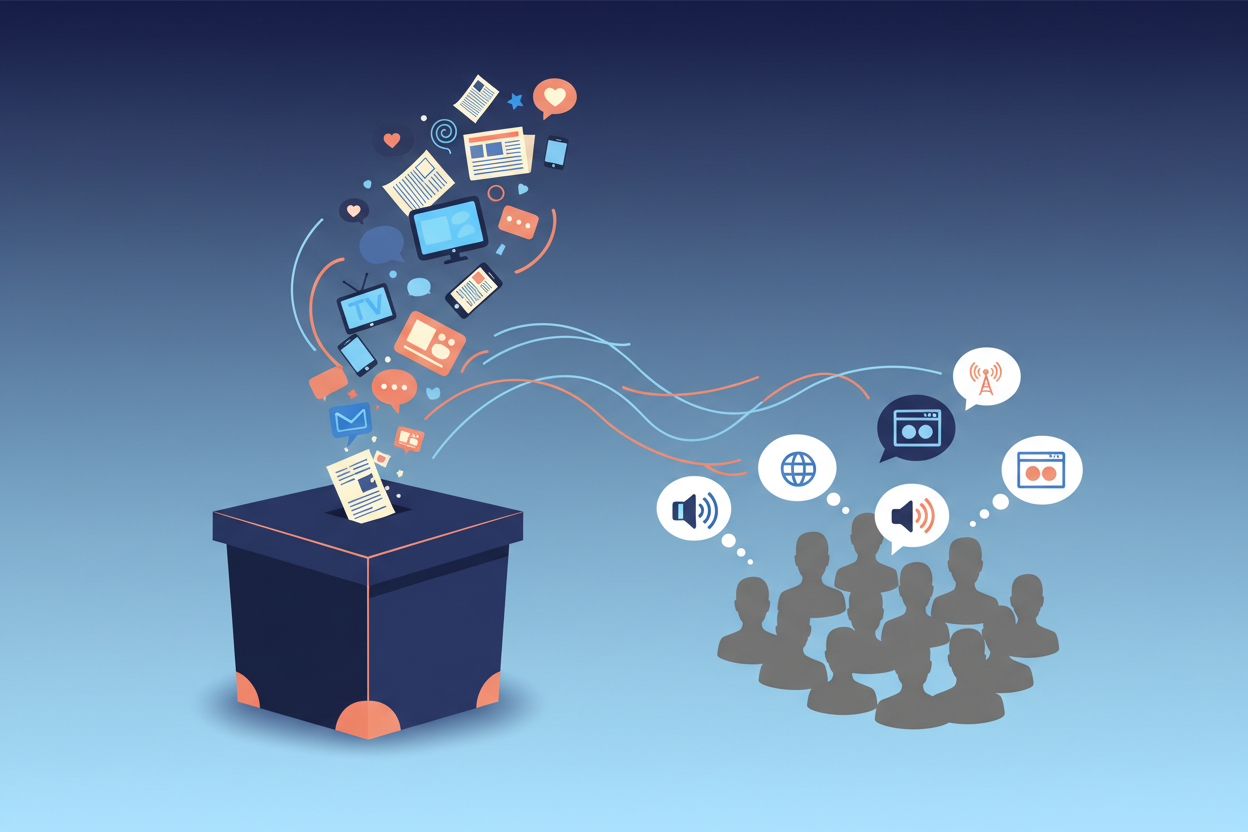
The Role of Media in Shaping Public Opinion During Elections: How Information Becomes Influence
Picture this: it’s election season, and you’re scrolling through your social media feed over morning coffee. Within minutes, you’ve seen three different news articles about the same candidate, each painting a completely different picture. One portrays them as a champion of the people, another as a corrupt politician, and the third focuses solely on their latest policy proposal. Welcome to the complex world of media influence during elections, where information isn’t just news—it’s a powerful force that shapes how millions of people think, feel, and ultimately vote.
The relationship between media and public opinion during elections has never been more intricate or consequential than it is today. With traditional news outlets competing alongside social media platforms, podcasts, and citizen journalists, voters are bombarded with information from countless sources. But here’s the thing that keeps me awake at night: not all of this information is created equal, and understanding how media shapes our political perceptions has become crucial for every voter who wants to make informed decisions.
The Evolution of Electoral Media Influence
Remember when getting election news meant waiting for the evening broadcast or reading the morning paper? Those days feel like ancient history now. The media landscape has undergone a seismic shift that would make our grandparents’ heads spin. We’ve moved from a world of three major television networks to an ecosystem where anyone with a smartphone can become a news source.
This transformation began gradually in the 1980s with the rise of cable television, accelerated with the internet boom of the 1990s, and exploded into the fragmented, always-on media environment we navigate today. The result? Voters now consume political information through dozens of different channels, each with its own perspective, agenda, and audience.
What’s particularly fascinating is how this evolution has changed the speed at which public opinion can shift. Where it once took days or weeks for a political story to gain traction, we now see viral moments that can alter the trajectory of an entire campaign in a matter of hours. The 2020 election cycle demonstrated this perfectly, with breaking news alerts, live-tweeted debates, and real-time fact-checking creating a constant stream of information that kept voters—and candidates—on their toes.
Traditional Media’s Enduring Impact on Voter Behavior
Despite all the talk about digital disruption, traditional media outlets still wield enormous influence over electoral outcomes. Newspapers, television networks, and radio stations continue to serve as trusted sources for millions of voters, particularly older demographics who turn out to vote at higher rates than younger generations.

The power of traditional media lies not just in what stories they choose to cover, but in how they frame those stories. When a major newspaper decides to run a front-page investigation into a candidate’s background, or when a television network provides extensive coverage of a particular policy issue, these editorial decisions ripple through the entire information ecosystem. Other outlets pick up the story, social media amplifies it, and suddenly a single editorial choice has influenced conversations in living rooms across the country.
Television debates remain a perfect example of traditional media’s continued relevance. These carefully orchestrated events, moderated by established journalists, still have the power to make or break campaigns. The questions asked, the time allocated to different topics, and even the camera angles chosen can subtly influence how viewers perceive the candidates. It’s a reminder that even in our digital age, the gatekeeping function of traditional media remains incredibly important.
Social Media: The New Battleground for Electoral Influence
If traditional media is the steady drumbeat of electoral coverage, social media is the wild jazz improvisation that can suddenly change the entire song. Platforms like Facebook, Twitter, Instagram, and TikTok have fundamentally altered how political information spreads and how voters engage with electoral content.
What makes social media particularly powerful—and potentially problematic—is its ability to create echo chambers. The algorithms that determine what content appears in our feeds are designed to show us more of what we already engage with. If you click on articles that support your preferred candidate, you’ll see more content supporting that candidate. If you share posts criticizing certain policies, you’ll be served more criticism of those policies. Over time, this can create a distorted view of the political landscape where our own preferences are constantly reinforced.
But social media isn’t just a passive consumption experience. It’s an active, participatory environment where voters don’t just receive information—they create it, share it, and comment on it. A single tweet from a candidate can generate thousands of responses, retweets, and spin-off conversations. A viral TikTok video can introduce political concepts to millions of young voters who might never watch a traditional news broadcast. This democratization of information creation has given ordinary citizens unprecedented power to influence electoral narratives.
The Psychology Behind Media Influence During Elections
Understanding how media shapes public opinion requires diving into the fascinating world of human psychology. Our brains aren’t neutral processing machines that objectively evaluate political information. Instead, we’re subject to a variety of cognitive biases that make us surprisingly predictable in how we respond to different types of media coverage.
Confirmation bias is perhaps the most significant factor in how voters process electoral information. We naturally seek out information that confirms what we already believe while avoiding or dismissing information that challenges our preexisting views. Media outlets, whether intentionally or not, often cater to this tendency by developing distinct editorial perspectives that appeal to specific audience segments.
The availability heuristic is another crucial psychological factor. This is our tendency to judge the importance or likelihood of events based on how easily we can remember examples of them. If media coverage makes certain issues seem more prominent or frequent than they actually are, voters may overestimate their importance when making electoral decisions. This is why the amount and type of coverage an issue receives can be just as important as the factual content of that coverage.
Repetition also plays a massive role in shaping political perceptions. When we hear the same message multiple times from different sources, we’re more likely to believe it’s true, regardless of its actual accuracy. This is why coordinated messaging across multiple media platforms can be so effective in shaping public opinion during election cycles.
Bias, Agenda-Setting, and Information Filtering
Let’s address the elephant in the room: media bias is real, and it affects electoral coverage in significant ways. But bias isn’t always the result of deliberate manipulation or partisan agenda-pushing. Sometimes it’s simply the inevitable result of human beings with their own perspectives and experiences making editorial decisions about what stories to cover and how to cover them.
Agenda-setting theory explains how media doesn’t necessarily tell us what to think, but it does tell us what to think about. By choosing which issues to prioritize in their coverage, media outlets help determine which topics become central to electoral debates. If environmental issues receive extensive coverage, they become more salient to voters. If economic policies dominate the news cycle, they become the lens through which many people evaluate candidates.
Information filtering happens at multiple levels in our media ecosystem. Editors decide which stories make it to publication, algorithms determine which posts appear in social media feeds, and we as individuals choose which sources to follow and which articles to read. Each of these filtering processes can introduce bias and shape the information environment that influences electoral decisions.
The challenge for voters is learning to recognize these filtering processes and actively seeking out diverse perspectives. This doesn’t mean consuming equal amounts of content from sources across the political spectrum—that’s neither practical nor necessary. Instead, it means being aware of the limitations and perspectives of your preferred information sources and occasionally stepping outside your comfort zone to understand how other people are interpreting the same events.
The Digital Age: Algorithms, Echo Chambers, and Information Bubbles
We’re living through the most dramatic transformation in information consumption since the invention of the printing press, and nowhere is this more evident than in how we experience election coverage. The algorithms that power our digital experiences are incredibly sophisticated, but they’re optimized for engagement, not for creating well-informed citizens.
These algorithmic systems learn from our behavior and feed us more of what keeps us clicking, sharing, and scrolling. During election seasons, this can create feedback loops where dramatic, emotional, or controversial content gets prioritized over nuanced policy discussions or balanced reporting. The result is an information environment that can feel more like entertainment than journalism.
Echo chambers and filter bubbles are often discussed as if they’re the same phenomenon, but they’re actually subtly different. Echo chambers occur when we surround ourselves with people and sources that share our views, creating an environment where our opinions are constantly echoed back to us. Filter bubbles, on the other hand, are created by algorithmic systems that automatically curate our information diet based on our past behavior.
Both phenomena can have serious implications for electoral democracy. When voters exist in completely separate information ecosystems, it becomes increasingly difficult to have productive political conversations or reach consensus on basic facts. We end up with parallel realities where different groups of people are essentially living in different versions of the same election.
Combating Misinformation in Electoral Coverage
If there’s one issue that keeps election officials, journalists, and democracy advocates up at night, it’s the spread of misinformation during election cycles. False or misleading information about candidates, voting procedures, or election results can have devastating effects on democratic processes and public trust in electoral institutions.
The challenge with combating electoral misinformation is that it often contains just enough truth to seem plausible while distorting or omitting crucial context. A candidate’s statement might be quoted accurately but stripped of the surrounding context that would change its meaning. A statistic might be technically correct but presented in a way that suggests false conclusions. These gray areas make it difficult for both fact-checkers and ordinary voters to navigate the information landscape effectively.
Social media platforms have implemented various measures to combat misinformation, including fact-checking labels, reduced distribution of disputed content, and removal of posts that violate community standards. However, these efforts face significant challenges, including the sheer volume of content being posted, the difficulty of making real-time determinations about complex political claims, and accusations of censorship from users whose content is flagged or removed.
Perhaps more importantly, we’re learning that simply labeling content as false or misleading doesn’t always reduce its influence. In some cases, these labels can actually increase engagement with the content or reinforce existing beliefs among people who distrust the fact-checking organizations. This suggests that combating misinformation requires more sophisticated approaches that address the underlying psychological and social factors that make people susceptible to false information.
The Future of Media and Electoral Democracy
As we look toward future election cycles, several trends are likely to shape how media continues to influence public opinion. Artificial intelligence is already being used to create increasingly sophisticated political content, from targeted advertisements to deepfake videos that could make it nearly impossible to distinguish between authentic and manipulated content.
The rise of personalized media experiences means that two voters could have completely different information diets even if they follow the same news sources. AI-powered systems are becoming better at tailoring content to individual preferences and psychological profiles, potentially creating even more fragmented information environments.
At the same time, there’s growing awareness among both media consumers and producers about the importance of media literacy and responsible information consumption. Educational initiatives are teaching people how to evaluate sources, identify bias, and think critically about the information they encounter during election cycles.
The future of electoral media will likely require new approaches to regulation, platform design, and civic education. This isn’t about restricting free speech or limiting access to information—it’s about creating systems that promote informed democratic participation while preserving the open exchange of ideas that’s essential to healthy democracy.
Conclusion: Navigating the Information Landscape as Informed Citizens
The role of media in shaping public opinion during elections is more complex and consequential than ever before. We’re no longer passive consumers of information delivered by a handful of trusted sources. Instead, we’re active participants in a vast, interconnected information ecosystem where the lines between producer and consumer, fact and opinion, news and entertainment have become increasingly blurred.
This new reality places greater responsibility on each of us as citizens and voters. We can’t simply rely on our preferred news sources to give us everything we need to know about electoral choices. Instead, we need to actively cultivate media literacy skills, seek out diverse perspectives, and remain skeptical of information that seems too good (or too bad) to be true.
The media’s influence on electoral outcomes isn’t inherently good or bad—it’s simply a reality of modern democratic society. What matters is how we choose to engage with that influence. By understanding how media shapes public opinion, recognizing our own biases and limitations, and actively working to stay informed from multiple sources, we can harness the power of modern media to become better, more engaged democratic participants.
The future of electoral democracy depends not just on the media we consume, but on how thoughtfully and critically we consume it. In an age of information abundance, the most valuable skill any voter can develop is the ability to navigate complexity, tolerate uncertainty, and make decisions based on the best available information rather than the most convenient or emotionally satisfying narratives.
Frequently Asked Questions
How do social media algorithms affect what political content I see during elections?
Social media algorithms analyze your past behavior—what you click, share, comment on, and spend time reading—to predict what content will keep you engaged. During elections, this means you’re more likely to see political content that aligns with your existing preferences and beliefs. The algorithms prioritize content that generates strong emotional responses or high engagement, which can sometimes favor sensational or polarizing political content over balanced reporting.
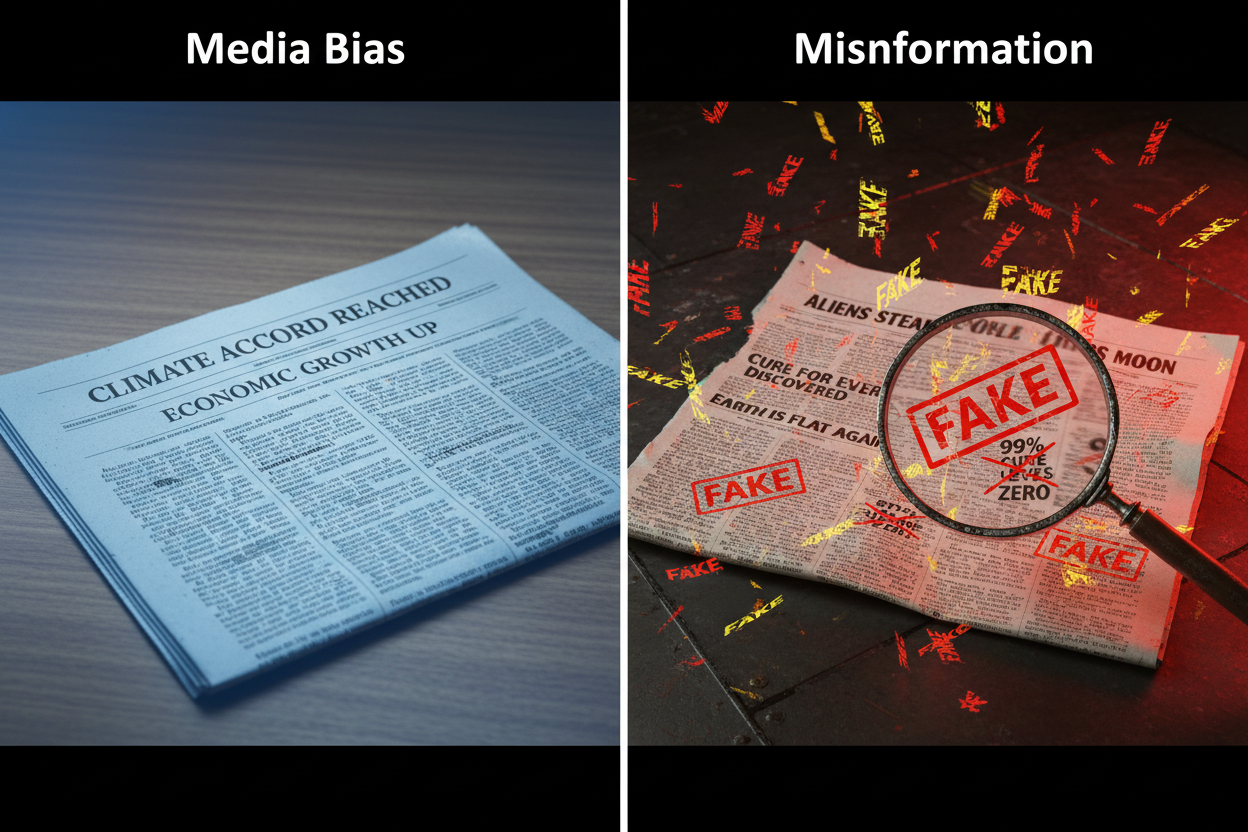
What’s the difference between media bias and misinformation in electoral coverage?
Media bias refers to the tendency of news sources to present information from a particular perspective or to emphasize certain aspects of a story over others. While bias can influence how information is presented, the underlying facts are generally accurate. Misinformation, on the other hand, involves false, misleading, or deliberately distorted information that can include fabricated quotes, manipulated statistics, or completely fictional events. Bias is often a matter of perspective and emphasis, while misinformation involves factual inaccuracy.
How can I identify reliable news sources during election season?
Look for news sources that clearly separate news reporting from opinion content, provide transparent information about their funding and ownership, cite credible sources for their claims, and issue corrections when they make mistakes. Check multiple sources for important stories, especially those that seem particularly dramatic or confirm your existing beliefs. Consider using media bias charts and fact-checking websites to understand the perspective and reliability of different sources, but remember that no source is perfectly objective.
Why do different news outlets report the same electoral events so differently?
Different news outlets serve different audiences and may have different editorial perspectives, which influences how they frame stories. They might emphasize different aspects of the same event, choose different experts to interview, or provide different amounts of context. Additionally, the constraints of different media formats—a 30-second TV news segment versus a 2,000-word newspaper article—require different approaches to storytelling. Time pressures and competitive dynamics can also lead to variations in how quickly and thoroughly different outlets cover developing stories.
How has the rise of citizen journalism affected traditional election coverage?
Citizen journalism has democratized information creation, allowing ordinary people to document and share electoral events in real-time through social media platforms. This has provided valuable on-the-ground perspectives and helped uncover stories that traditional media might miss. However, it has also contributed to information fragmentation and made it more difficult for voters to distinguish between professional journalism with editorial oversight and unverified content from individual social media users. The result is a more diverse but also more complex information landscape that requires greater media literacy skills to navigate effectively.



Leave a Reply