
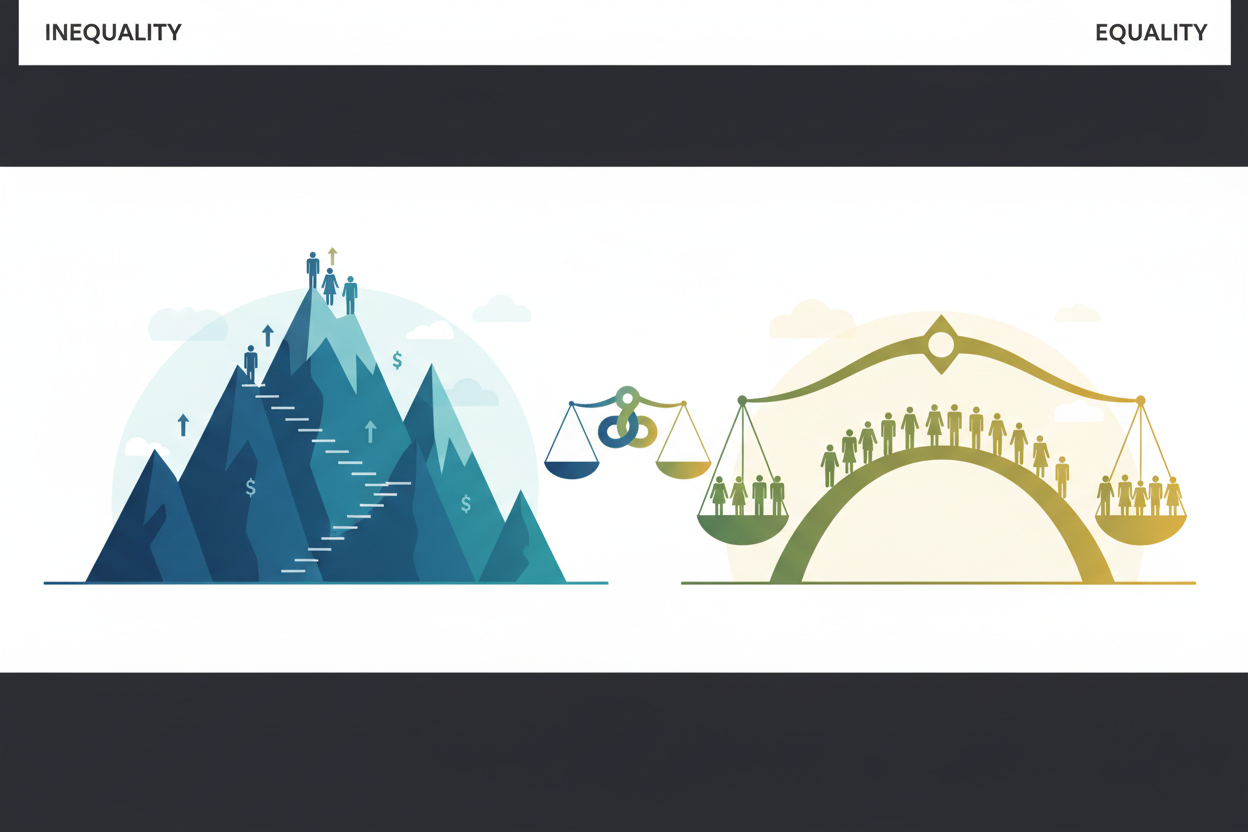
Liberal Economic Policies: Addressing Income Inequality in the Modern Economy
Income inequality has become one of the most pressing economic challenges of our time. As the gap between the wealthy and working-class families continues to widen, policymakers are turning to liberal economic policies as potential solutions. These progressive approaches aim to redistribute wealth, expand opportunities, and create a more equitable society where economic prosperity is shared more broadly.
Understanding how liberal economic policies can address income inequality isn’t just an academic exercise—it’s about real people struggling to make ends meet while others accumulate unprecedented wealth. From minimum wage increases to progressive taxation, these policies represent different philosophical approaches to creating economic fairness and social mobility.

Understanding Income Inequality: The Current Landscape
Before diving into policy solutions, it’s crucial to understand the scope of income inequality today. The wealth gap has reached levels not seen since the 1920s, with the top 1% of earners controlling a disproportionate share of total wealth. This disparity affects not just individual families but entire communities and the broader economy.
Several factors contribute to growing income inequality, including technological automation, globalization, declining union membership, and changes in educational requirements for well-paying jobs. These trends have created a two-tiered economy where high-skilled workers see substantial wage growth while others face stagnant or declining real wages.
The consequences extend beyond simple financial metrics. Income inequality affects social mobility, educational opportunities, health outcomes, and even political stability. When people feel the economic system isn’t working for them, it can undermine trust in democratic institutions and social cohesion.

Progressive Taxation: Redistributing Wealth Through Fair Tax Policy
One of the cornerstone liberal economic policies for addressing income inequality is progressive taxation. This approach involves higher tax rates for higher income brackets, ensuring that those who benefit most from economic growth contribute proportionally more to public services and infrastructure.
Progressive tax systems can take several forms. Income tax brackets that increase with earnings represent the most common approach, but wealth taxes, inheritance taxes, and capital gains taxes also play important roles. The idea isn’t to punish success but to ensure that economic gains are shared more equitably across society.
Countries like Denmark and Sweden have successfully implemented progressive tax systems while maintaining strong economies and high living standards. These nations demonstrate that higher taxes on wealthy individuals and corporations can fund robust social programs without stifling economic growth or innovation.
However, progressive taxation faces challenges, including potential capital flight, complex implementation, and political resistance. Successful progressive tax policies require careful design to balance revenue generation with economic competitiveness and administrative feasibility.
Minimum Wage Increases: Lifting Workers Out of Poverty
Raising the minimum wage represents another key liberal economic policy for reducing income inequality. When full-time workers earn wages that keep them below the poverty line, it creates a situation where taxpayers effectively subsidize profitable corporations through social safety net programs.
Research on minimum wage increases shows mixed but generally positive results. While some studies suggest potential job losses in certain sectors, others demonstrate that higher wages boost consumer spending, reduce employee turnover, and improve productivity. The net effect often depends on the size and timing of wage increases.
Cities and states that have implemented $15 minimum wages provide real-world examples of how these policies work in practice. Seattle, for instance, saw wage growth for low-income workers without the dramatic job losses that critics predicted. However, the effects vary by industry and local economic conditions.
The key to successful minimum wage policy lies in gradual implementation and regional adaptation. What works in high-cost urban areas might need adjustment for rural communities with different economic structures and living costs.
Universal Basic Income: A Revolutionary Approach to Economic Security
Universal Basic Income represents one of the most ambitious liberal economic policies for addressing income inequality. UBI provides unconditional cash payments to all citizens, regardless of employment status, creating a financial foundation that could eliminate extreme poverty and provide economic security in an increasingly automated economy.
Pilot programs in places like Finland, Kenya, and Stockton, California, have provided valuable insights into UBI’s potential effects. Participants often report reduced stress, improved health outcomes, and greater ability to pursue education or entrepreneurship. Contrary to concerns about reduced work incentives, many recipients continue working while using UBI to supplement their income.
The appeal of UBI lies in its simplicity and universality. Unlike means-tested welfare programs, UBI eliminates bureaucratic complexity and the stigma associated with receiving government assistance. It also provides flexibility for recipients to address their specific needs and circumstances.
However, UBI faces significant implementation challenges, particularly around funding and political feasibility. The cost of providing meaningful payments to entire populations would require substantial government resources and likely significant tax increases or spending reallocation.
Education and Job Training Programs: Investing in Human Capital
Liberal economic policies often emphasize education and job training as long-term solutions to income inequality. By expanding access to quality education and skills training, these programs aim to increase economic mobility and help workers adapt to changing economic conditions.
Community college programs, trade schools, and apprenticeships provide pathways to middle-class careers without requiring four-year degrees. These programs can be particularly effective when designed in partnership with local employers who understand current and future skill needs.
Government investment in education and training serves multiple purposes. It helps individual workers increase their earning potential while also addressing broader economic needs for skilled labor. Additionally, education spending often generates positive economic multiplier effects in local communities.
The challenge lies in ensuring these programs reach the workers who need them most and provide training that leads to actual job opportunities. Successful programs require ongoing evaluation and adaptation to changing economic conditions and employer needs.
Healthcare Reform: Reducing Financial Barriers to Economic Mobility
Healthcare costs represent a major source of financial stress and inequality in many countries, particularly the United States. Liberal economic policies often include healthcare reform as a component of addressing income inequality, recognizing that medical expenses can quickly devastate family finances.
Universal healthcare systems or robust public options can reduce the financial burden on families while also improving overall economic productivity. When people aren’t worried about losing health insurance, they’re more likely to start businesses, change jobs, or pursue education opportunities.
The economic benefits of healthcare reform extend beyond individual families. Businesses, particularly small ones, can benefit from reduced healthcare costs and administrative burdens. This can level the playing field between large corporations that can afford comprehensive benefits and smaller employers who struggle with healthcare costs.
Healthcare reform also addresses the inequality between workers with employer-provided insurance and those without. Gig economy workers, part-time employees, and small business owners often face significantly higher healthcare costs, creating economic disadvantages that comprehensive reform could address.
Challenges and Criticisms of Liberal Economic Policies
While liberal economic policies offer promising approaches to income inequality, they face legitimate challenges and criticisms that must be addressed. Conservative economists argue that these policies could reduce economic efficiency, discourage investment, and ultimately harm the very people they’re intended to help.
One common concern is that higher taxes and regulations might drive businesses and wealthy individuals to relocate to more business-friendly jurisdictions. This “race to the bottom” dynamic can undermine the effectiveness of progressive policies if they’re not coordinated across regions or countries.
Implementation challenges also pose significant obstacles. Complex policies require substantial administrative capacity and can create unintended consequences if not carefully designed. The political feasibility of major reforms often requires building broad coalitions and overcoming entrenched interests.
Additionally, some critics argue that focusing on redistribution rather than economic growth could reduce overall prosperity. They contend that policies promoting business investment and innovation might be more effective at raising living standards for everyone, including low-income workers.
Finding the Right Balance: Pragmatic Policy Implementation
The most effective approaches to addressing income inequality likely involve combining elements from different policy frameworks rather than pursuing ideologically pure solutions. Successful countries often blend market mechanisms with government intervention to achieve both economic growth and equitable distribution.
Policy sequencing and timing matter enormously. Implementing too many changes simultaneously can create economic disruption, while moving too slowly might fail to address urgent needs. The most successful reforms often involve gradual implementation with regular evaluation and adjustment.
Building political consensus for liberal economic policies requires demonstrating their practical benefits and addressing legitimate concerns about implementation. This often means starting with pilot programs or modest reforms that can build evidence and support for larger changes.
International cooperation can also enhance the effectiveness of liberal economic policies. Tax havens and regulatory arbitrage become less problematic when countries coordinate their approaches to progressive taxation and business regulation.
Conclusion: Building a More Equitable Economic Future
Liberal economic policies offer valuable tools for addressing income inequality, but they’re not magic solutions that can instantly solve complex economic problems. Success requires careful policy design, gradual implementation, and ongoing adaptation based on evidence and changing circumstances.
The goal isn’t to eliminate all economic differences but to ensure that everyone has genuine opportunities for economic advancement and security. This means addressing both the symptoms of inequality through redistribution and the root causes through education, healthcare, and other investments in human capital.
As we move forward, the challenge will be finding approaches that can gain broad political support while effectively addressing the real economic challenges facing working families. This likely means combining the best elements of liberal economic policies with pragmatic implementation strategies that can work in diverse political and economic contexts.
The stakes are high. Growing income inequality threatens not just individual prosperity but social cohesion and democratic governance. Addressing these challenges will require the best ideas from across the political spectrum, implemented with wisdom, patience, and commitment to evidence-based policy making.
Frequently Asked Questions
What are the main liberal economic policies for addressing income inequality?
The primary liberal economic policies include progressive taxation, minimum wage increases, universal basic income, expanded education and job training programs, and healthcare reform. These policies aim to redistribute wealth, expand opportunities, and provide economic security for working families.
Do higher minimum wages actually reduce income inequality?
Research suggests that modest minimum wage increases can reduce income inequality by raising wages for low-income workers without significant job losses. However, the effects vary by region and industry, and very large increases might have different impacts than gradual adjustments.
How do progressive tax systems work to address inequality?
Progressive tax systems apply higher tax rates to higher income brackets, ensuring that wealthy individuals and corporations contribute proportionally more to public services. The additional revenue can fund social programs, education, and infrastructure that benefit all citizens while reducing after-tax income inequality.
What is Universal Basic Income and how would it affect inequality?
Universal Basic Income provides unconditional cash payments to all citizens, creating a financial foundation that could eliminate extreme poverty. UBI could reduce inequality by providing economic security and enabling people to pursue education, entrepreneurship, or caregiving without financial desperation.
Are there successful examples of liberal economic policies reducing inequality?
Yes, several countries have successfully implemented liberal economic policies. Nordic countries like Denmark and Sweden combine progressive taxation with strong social programs and maintain both low inequality and robust economic growth. Various cities and states have also successfully implemented higher minimum wages and expanded social programs.
What are the main criticisms of liberal economic policies?
Critics argue that liberal economic policies might reduce economic efficiency, discourage investment, and lead to capital flight. Some economists contend that focusing on redistribution rather than growth could ultimately harm prosperity, while others worry about implementation challenges and unintended consequences.



Leave a Reply