Political Rights and Their Protection in Authoritarian Regimes: A Critical Analysis
In today’s interconnected world, millions of people live under authoritarian governments where basic political rights remain under constant threat. From Myanmar to Belarus, from Hong Kong to Venezuela, we witness daily struggles between citizens demanding fundamental freedoms and regimes determined to maintain absolute control. Understanding how political rights function—or fail to function—in these environments isn’t just an academic exercise; it’s essential for anyone who cares about human dignity and democratic progress worldwide.
The tension between individual liberty and state power has defined much of modern political history. While democratic societies generally protect political rights through constitutional frameworks and independent institutions, authoritarian regimes operate under entirely different rules. They view unrestricted political participation not as a fundamental human right, but as a potential threat to their survival.

Understanding Political Rights in Authoritarian Contexts
Political rights encompass the fundamental freedoms that allow individuals to participate meaningfully in their government and society. These include the right to vote in free and fair elections, freedom of speech and assembly, the right to form political parties, access to information, and protection from arbitrary detention. In healthy democracies, these rights form the bedrock of civic life.
However, authoritarian regimes systematically undermine these freedoms while often maintaining a facade of legitimacy. They might hold elections, but restrict candidate access or manipulate results. They may allow some forms of expression while criminalizing dissent. This creates a complex landscape where rights exist on paper but disappear in practice.
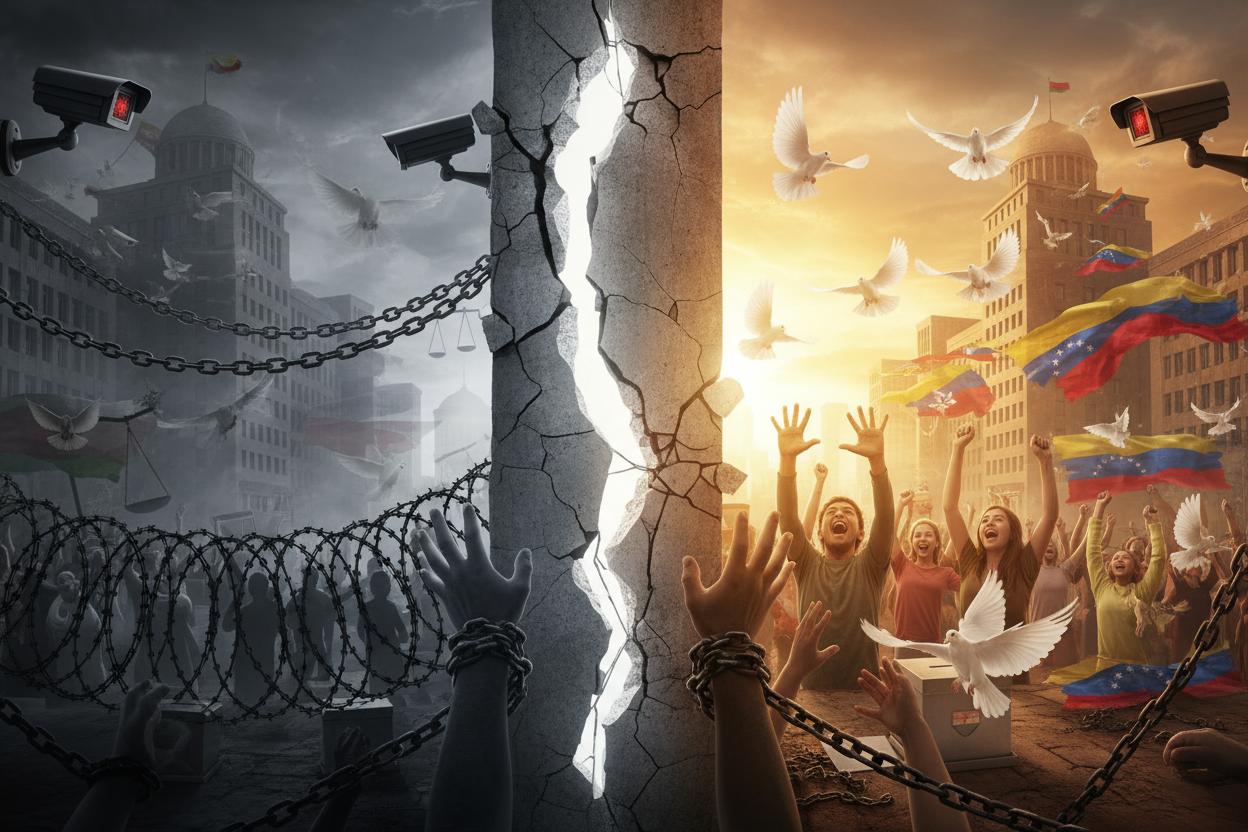
The challenge becomes even more nuanced when we consider that authoritarian leaders rarely present themselves as opponents of rights. Instead, they claim to protect their citizens from external threats, maintain social stability, or preserve cultural values. This rhetoric can resonate with populations facing economic uncertainty or security concerns, making the erosion of rights seem like a reasonable trade-off.
Common Mechanisms of Rights Suppression
Authoritarian regimes employ remarkably similar playbooks when dismantling political rights. Understanding these patterns helps us recognize early warning signs and develop more effective protection strategies.
Legal manipulation represents one of the most sophisticated approaches. Rather than openly abolishing rights, authoritarian leaders rewrite laws to create legal pretexts for suppression. Anti-terrorism legislation becomes a tool for silencing journalists. Laws against “extremism” target peaceful protesters. Foreign agent registration requirements strangle civil society organizations. These tactics provide a veneer of legality while achieving the same results as outright oppression.
Technology has become another powerful weapon in the authoritarian arsenal. Digital surveillance systems monitor citizens’ communications, movements, and associations. Social media platforms face pressure to censor content or provide user data to authorities. Internet shutdowns during protests have become increasingly common, cutting off coordination among opposition groups and limiting information flow to the outside world.
Economic pressure often proves more effective than direct repression. Authoritarian regimes target the livelihoods of activists, opposition politicians, and independent journalists. They might revoke business licenses, freeze bank accounts, or pressure employers to fire dissenting voices. This approach creates a chilling effect without generating the international attention that comes with mass arrests or violence.
International Legal Frameworks and Their Limitations
The international community has developed extensive legal frameworks designed to protect political rights globally. The Universal Declaration of Human Rights, the International Covenant on Civil and Political Rights, and various regional human rights treaties establish clear standards for government behavior. These documents represent humanity’s collective commitment to fundamental freedoms.
Yet these frameworks face significant limitations when confronting authoritarian regimes. International law depends heavily on state consent and cooperation. Countries that systematically violate political rights often simply ignore international obligations or withdraw from treaty systems altogether. Even when violations are documented and condemned, enforcement mechanisms remain weak.
Regional human rights courts and commissions can provide some recourse, but their effectiveness varies dramatically. The European Court of Human Rights has successfully challenged authoritarian practices in countries like Turkey and Russia, though implementation of its decisions remains inconsistent. In contrast, other regional systems lack similar teeth or face political interference from member states.
The United Nations Human Rights Council offers another avenue for accountability, but its politicized nature often undermines its credibility. Countries with poor human rights records regularly win seats on the council, and resolutions frequently reflect geopolitical considerations rather than genuine concern for rights protection.
Civil Society and Grassroots Resistance
Despite overwhelming odds, civil society organizations and grassroots movements continue to fight for political rights in authoritarian contexts. Their creativity and resilience often surprise outside observers and challenge regime narratives about popular support.
Independent media organizations play a crucial role in documenting rights violations and maintaining information flow. Even under severe restrictions, journalists find ways to report on government abuses, often at tremendous personal risk. Digital platforms have enabled new forms of citizen journalism, though they also create new vulnerabilities to surveillance and persecution.
Human rights organizations provide essential documentation and advocacy services. They monitor elections, investigate abuse allegations, and provide legal support to victims of persecution. Their reports often form the basis for international pressure campaigns and legal proceedings. However, these organizations face constant harassment, funding restrictions, and legal challenges designed to limit their effectiveness.
Religious institutions, labor unions, and professional associations sometimes emerge as unexpected sources of resistance. Their existing organizational structures and social legitimacy can provide protection that purely political groups lack. The Catholic Church’s role in opposing authoritarian rule in Latin America and Eastern Europe demonstrates how established institutions can become vehicles for rights advocacy.
The Role of International Support and Intervention
External support for political rights protection in authoritarian regimes remains a contentious and complex issue. Democratic governments, international organizations, and private actors all play roles in supporting local rights defenders, but their interventions can sometimes backfire or prove counterproductive.
Diplomatic pressure represents the most common form of international engagement. Sanctions, travel bans, and asset freezes target regime officials and their supporters. These measures aim to impose costs for rights violations while avoiding military intervention. However, their effectiveness remains debated, and they can sometimes harm ordinary citizens more than government officials.
Financial and technical support for civil society organizations provides another important avenue. International donors fund human rights training, legal assistance programs, and advocacy campaigns. Technology companies develop tools to help activists communicate securely and document abuses. However, authoritarian regimes increasingly restrict foreign funding and label recipients as foreign agents.
International media attention can sometimes provide protection for rights defenders by raising the costs of persecution. Social media campaigns and international reporting make it harder for regimes to operate in complete secrecy. Yet this attention can also make activists targets for increased repression or force them into exile.
Digital Age Challenges and Opportunities
The digital revolution has fundamentally transformed both the threats to political rights and the tools available for their protection. This technological shift creates new challenges that existing legal frameworks struggle to address while also opening unprecedented opportunities for resistance and documentation.
Authoritarian regimes have embraced digital surveillance with enthusiasm. Facial recognition systems track protesters. Data mining identifies potential dissidents before they act. Artificial intelligence analyzes communications patterns to predict unrest. These capabilities far exceed anything available to previous generations of authoritarian leaders, creating what some scholars call “digital authoritarianism.”
Social media platforms present particular challenges. While they enable rapid organization and information sharing among activists, they also provide governments with detailed data about opposition networks. Platform policies designed for democratic contexts often prove inadequate when dealing with sophisticated state actors who exploit these systems for surveillance and manipulation.
However, technology also empowers rights defenders in new ways. Encrypted communication tools help activists coordinate safely. Blockchain technology enables censorship-resistant information sharing. Satellite imagery and open-source intelligence help document human rights violations. These tools democratize capabilities that were once available only to governments and large organizations.
Future Prospects and Emerging Trends
The future of political rights protection in authoritarian regimes will likely depend on several emerging trends that are reshaping the global political landscape. Understanding these developments helps us prepare for new challenges while identifying potential opportunities for progress.
Generational change represents one of the most significant factors. Young people who have grown up with internet access and global connectivity often have different expectations about political participation and government accountability. Even in authoritarian contexts, these generational differences create pressure for change, though regimes are adapting their control strategies accordingly.
Climate change and environmental degradation may create new sources of political instability that could either strengthen authoritarian control or create openings for democratic change. Environmental protests have already challenged authoritarian rule in various countries, but climate-related migration and resource scarcity could also provide justifications for increased repression.
The global balance of power continues to shift in ways that affect rights protection. The rise of China as an alternative model of development and governance provides authoritarian leaders with new sources of support and legitimacy. Meanwhile, democratic powers face their own internal challenges that may limit their ability to support rights protection abroad.
Frequently Asked Questions
What are the most effective ways to protect political rights under authoritarian rule?
The most effective protection strategies typically combine multiple approaches: building strong civil society networks, maintaining international connections and support, using technology strategically while understanding its risks, documenting violations systematically, and creating broad-based coalitions that cross traditional political and social boundaries. No single approach works in isolation.
How do authoritarian regimes justify restricting political rights?
Authoritarian leaders typically frame rights restrictions as necessary for national security, social stability, economic development, or cultural preservation. They often claim that unlimited political freedoms lead to chaos, foreign interference, or moral decay. These justifications can resonate with citizens facing genuine challenges, making resistance more difficult.
Can international pressure effectively protect political rights in authoritarian countries?
International pressure can be effective when it’s sustained, targeted, and coordinated with local actors. However, it works best as part of broader strategies rather than as standalone solutions. The effectiveness varies significantly depending on the specific country context, the type of pressure applied, and the regime’s vulnerability to external influence.
What role does technology play in both threatening and protecting political rights?
Technology is a double-edged sword. It enables unprecedented surveillance and control capabilities for authoritarian governments, but also provides new tools for activists to organize, communicate, and document abuses. The key is understanding both the opportunities and risks that specific technologies present in particular contexts.
How can ordinary citizens in democratic countries support political rights protection globally?
Citizens can support rights protection by staying informed about international developments, supporting organizations that work on these issues, advocating for responsible government policies, using their consumer power to pressure companies that enable authoritarian practices, and maintaining connections with people living under authoritarian rule.
The protection of political rights in authoritarian regimes remains one of the defining challenges of our time. While the obstacles are formidable and the tools of repression continue to evolve, the human desire for freedom and dignity proves remarkably persistent. Success requires understanding both the mechanisms of oppression and the possibilities for resistance, while maintaining hope that positive change remains possible even in the darkest circumstances. The struggle for political rights is ultimately a struggle for human dignity itself—one that deserves our continued attention, support, and commitment.



Leave a Reply