

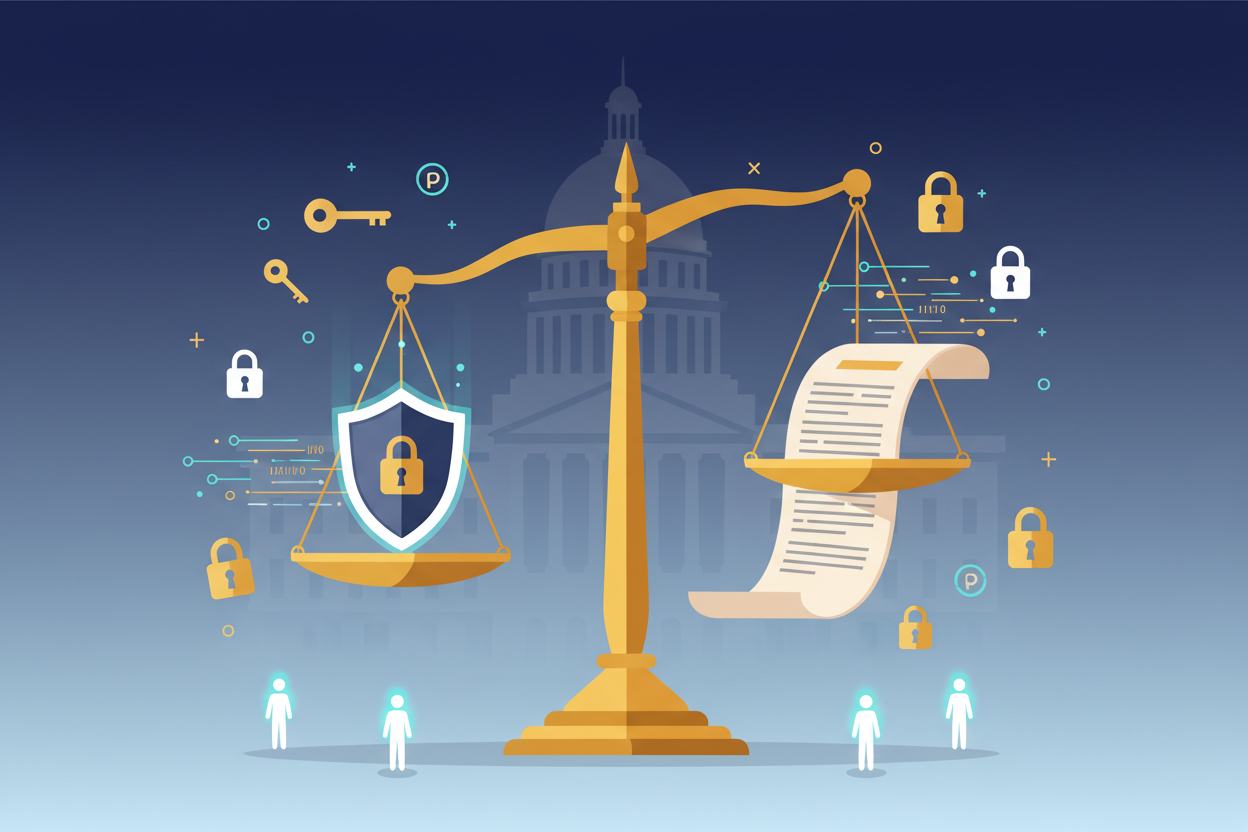
How Libertarian Philosophy Shapes Modern Privacy Laws: A Deep Dive into Individual Rights vs. Government Oversight
Privacy has become one of the most contentious battlegrounds of our digital age. Every time you scroll through social media, make an online purchase, or even walk past a security camera, questions about who has access to your personal information come into play. But have you ever wondered what philosophical principles actually drive our privacy laws? The answer might surprise you – libertarian ideology has played a far more significant role in shaping privacy legislation than most people realize.
From the Fourth Amendment’s protection against unreasonable searches to modern data protection regulations, libertarian principles of individual autonomy and limited government intervention have left their mark on how we approach privacy rights. Understanding this connection isn’t just academic curiosity; it’s essential for anyone who wants to grasp why privacy laws work the way they do and where they might be headed next.

The Philosophical Foundation: What Libertarianism Brings to Privacy Rights
At its core, libertarianism champions individual liberty and minimal government interference in personal affairs. This philosophy naturally aligns with privacy concerns because it views personal information as an extension of individual autonomy. When libertarian thinkers like John Stuart Mill wrote about the “harm principle” – the idea that individuals should be free to act as they wish unless their actions harm others – they laid groundwork that would eventually influence how we think about information privacy.
The libertarian approach to privacy rests on several key pillars. First, there’s the concept of self-ownership – the idea that individuals have ultimate authority over their own bodies, minds, and by extension, their personal data. Second, libertarians emphasize property rights, viewing personal information as a form of property that individuals should control. Finally, there’s the principle of voluntary exchange, suggesting that people should freely choose when and how to share their information.
These philosophical underpinnings create a framework where privacy isn’t just a nice-to-have convenience, but a fundamental right necessary for human flourishing. When government agencies or corporations collect personal data without explicit consent, libertarians see this as a violation of individual sovereignty – essentially a form of theft.
Historical Impact on Constitutional Privacy Protections
The influence of libertarian thinking on privacy law didn’t start with the internet age. It traces back to the very foundations of American constitutional law. The Fourth Amendment’s protection against “unreasonable searches and seizures” reflects libertarian concerns about government overreach, even though the term “libertarian” wasn’t commonly used when the Bill of Rights was drafted.
Consider the landmark case of Boyd v. United States (1886), where the Supreme Court ruled that forcing someone to produce their private papers violated both the Fourth and Fifth Amendments. The Court’s reasoning echoed libertarian principles by emphasizing that individuals have a right to be “secure in their persons, houses, papers, and effects.” This decision established the principle that privacy protections extend beyond physical spaces to include personal documents and information.
The evolution continued with cases like Olmstead v. United States (1928), where Justice Louis Brandeis’s famous dissent described privacy as “the right to be let alone” – a phrase that could have been lifted straight from libertarian literature. Although Brandeis wasn’t explicitly libertarian, his reasoning reflected the same concerns about individual autonomy that drive libertarian philosophy.
Fast-forward to Griswold v. Connecticut (1965), which established a constitutional right to privacy in matters of contraception. The Court’s decision drew on libertarian-influenced concepts of personal autonomy and limited government authority over private decisions. This case became a cornerstone for later privacy rights, including reproductive rights and marriage equality.
Digital Age Challenges and Libertarian Responses
The digital revolution has created privacy challenges that earlier libertarian thinkers never could have imagined. When every click, purchase, and location check-in generates data, traditional concepts of privacy need updating. Modern libertarian scholars and activists have risen to meet these challenges, often finding themselves in the unlikely position of advocating for stronger regulations – something that might seem contradictory for a philosophy that typically opposes government intervention.
The key insight from contemporary libertarian privacy advocates is that in our current digital ecosystem, true privacy often requires government action to protect individual liberty from corporate overreach. Organizations like the Electronic Frontier Foundation, while not explicitly libertarian, employ libertarian-influenced arguments when fighting for digital privacy rights. They argue that without strong privacy protections, individuals lose their autonomy to make free choices about their digital lives.
This evolution in libertarian thinking recognizes that privacy threats don’t only come from government surveillance. When tech giants collect vast amounts of personal data and use it to manipulate behavior or limit choices, they’re effectively restricting individual freedom just as much as any government agency might. Smart libertarian privacy advocates understand that sometimes you need rules to preserve freedom.
The European Union’s General Data Protection Regulation (GDPR) provides an interesting case study. While the EU isn’t known for libertarian policies, GDPR’s emphasis on individual consent and data portability reflects libertarian principles of personal autonomy and voluntary exchange. Users must explicitly agree to data collection, and they maintain rights to access, correct, and delete their information – all concepts that align with libertarian views of individual control over personal property.
Corporate Surveillance vs. Government Oversight: The Libertarian Dilemma
One of the most fascinating aspects of libertarian influence on privacy law is how it creates tension between different types of surveillance. Traditional libertarian thought focuses primarily on limiting government power, but the rise of corporate data collection has forced a more nuanced approach.
Companies like Google, Facebook, and Amazon collect far more detailed information about individuals than most government agencies ever have. They track browsing habits, purchasing patterns, social connections, and even emotional states through sophisticated algorithms. From a pure libertarian perspective, this should be acceptable as long as users voluntarily agree to these terms. But what happens when that “voluntary” agreement isn’t really voluntary at all?
This is where modern libertarian privacy thinking gets sophisticated. Scholars like Julie Cohen argue that meaningful privacy requires genuine choice, and genuine choice requires transparency and viable alternatives. When a few tech giants control essential digital infrastructure, users don’t have real options to opt out without significant lifestyle changes. In this context, privacy regulations become tools for preserving rather than restricting individual liberty.
The libertarian approach to this dilemma typically involves supporting regulations that enhance transparency and promote competition rather than directly controlling corporate behavior. For example, data portability requirements make it easier for users to switch between services, while mandatory privacy disclosures help people make informed decisions about their data.
Current Privacy Legislation Through a Libertarian Lens
Today’s privacy laws reflect a complex mixture of influences, but libertarian principles remain clearly visible in their structure and goals. The California Consumer Privacy Act (CCPA), for instance, emphasizes individual control over personal information – a core libertarian value. Users gain rights to know what data companies collect, delete their information, and opt out of data sales.
Similarly, federal legislation like the Health Insurance Portability and Accountability Act (HIPAA) protects medical privacy by requiring explicit consent for most uses of health information. This approach aligns with libertarian principles by treating medical data as personal property that individuals control.
However, libertarian influence on privacy law isn’t always straightforward. The Patriot Act, passed after 9/11, expanded government surveillance powers in ways that many libertarians strongly opposed. This legislation shows how crisis situations can override libertarian-influenced privacy protections, often with support from politicians who otherwise champion limited government.
The ongoing debate over encryption provides another example of libertarian influence on privacy policy. Libertarian-leaning organizations consistently argue that strong encryption protects individual liberty by ensuring private communications remain private. They oppose government efforts to mandate “backdoors” in encrypted systems, viewing such requirements as fundamental violations of privacy rights.
Future Implications and Emerging Trends
Looking ahead, libertarian philosophy will likely continue shaping privacy law in several key areas. Artificial intelligence and machine learning create new privacy challenges that will require policy responses balancing individual autonomy with technological innovation. Libertarian approaches to AI privacy tend to emphasize transparency and user control rather than blanket prohibitions on AI development.
Biometric data collection represents another frontier where libertarian principles will influence policy development. Fingerprints, facial recognition data, and genetic information are uniquely personal and irreplaceable, making their protection especially important from a libertarian perspective. Expect future legislation to treat biometric data as requiring the highest levels of consent and security.
The Internet of Things (IoT) also presents privacy challenges that will test libertarian approaches to regulation. When everyday objects collect and transmit personal data, traditional concepts of consent become complicated. Libertarian-influenced solutions will likely focus on requiring clear disclosure and easy opt-out mechanisms rather than prohibiting IoT devices entirely.
Blockchain technology and cryptocurrency create interesting tensions for libertarian privacy advocates. While these technologies can enhance privacy and reduce dependence on traditional financial institutions, they also create permanent records that could compromise privacy in unexpected ways. Future privacy laws will need to address these trade-offs while preserving the liberty-enhancing aspects of decentralized technologies.
Conclusion: Balancing Liberty and Protection in the Digital Age
The influence of libertarian philosophy on privacy laws reveals a fundamental truth about how we approach individual rights in democratic societies. Privacy isn’t just about keeping secrets or avoiding embarrassment – it’s about preserving the autonomy that makes free choice possible. When libertarian principles shape privacy legislation, the result is laws that emphasize individual control, voluntary consent, and limited government interference.
But as we’ve seen, applying libertarian principles to modern privacy challenges requires sophistication and nuance. Sometimes protecting individual liberty requires rules that limit what powerful organizations can do with personal data. Sometimes preserving choice means ensuring people have real alternatives and genuine information about their options.
The ongoing evolution of privacy law will continue to reflect this balance between liberty and protection. As new technologies create new privacy challenges, libertarian principles will provide valuable guidance for crafting solutions that enhance rather than restrict individual freedom. The key is remembering that the goal isn’t ideological purity, but practical policies that help real people maintain control over their personal information in an increasingly connected world.
Understanding libertarian influence on privacy law isn’t just an academic exercise – it’s essential for anyone who wants to participate effectively in privacy policy debates. Whether you agree with libertarian principles or not, recognizing their role in shaping current laws helps explain why privacy legislation works the way it does and where it might be headed next. In our digital age, that understanding is more valuable than ever.
Frequently Asked Questions
What is the main libertarian principle that influences privacy laws?
The core libertarian principle affecting privacy law is individual autonomy – the idea that people should have ultimate control over their personal information and decisions. This translates into privacy laws that emphasize user consent, data ownership rights, and limitations on how organizations can collect and use personal information without explicit permission.
Do libertarians support all privacy regulations?
Not necessarily. Libertarians typically support privacy regulations that enhance individual choice and control while opposing those that simply expand government power. They favor laws requiring transparency and consent over blanket prohibitions, and they’re more likely to support regulations that protect individuals from corporate overreach than those that restrict voluntary information sharing.
How does libertarian influence on privacy law differ from other political philosophies?
Libertarian-influenced privacy law emphasizes individual control and voluntary consent, while other approaches might prioritize collective benefits or social values. For example, a communitarian approach might support privacy restrictions that benefit society overall, even if individuals would choose differently. Libertarian influence tends to trust individual decision-making over paternalistic protections.
What are some examples of libertarian-influenced privacy laws?
The California Consumer Privacy Act (CCPA), which gives individuals rights to control their personal data, reflects libertarian principles. So does the “right to be forgotten” concept in European law, HIPAA’s consent requirements for medical data, and Fourth Amendment protections against unreasonable government searches. These laws all emphasize individual control over personal information.
How do libertarians view the conflict between privacy and national security?
Libertarians generally prioritize privacy rights over broad national security claims, arguing that security measures should be targeted and subject to judicial oversight rather than allowing mass surveillance. They tend to oppose programs like bulk data collection, favoring approaches that require specific warrants and probable cause before accessing personal information.
Will libertarian influence on privacy law increase or decrease in the future?
Libertarian influence will likely remain significant as digital privacy concerns grow and people become more aware of how their data is collected and used. However, this influence may evolve to address new challenges like AI and IoT devices, potentially supporting more sophisticated regulations that preserve individual autonomy in complex technological environments.