
Constitutional Rights: Freedom of Speech vs. Hate Speech – Finding Balance in Modern Democracy
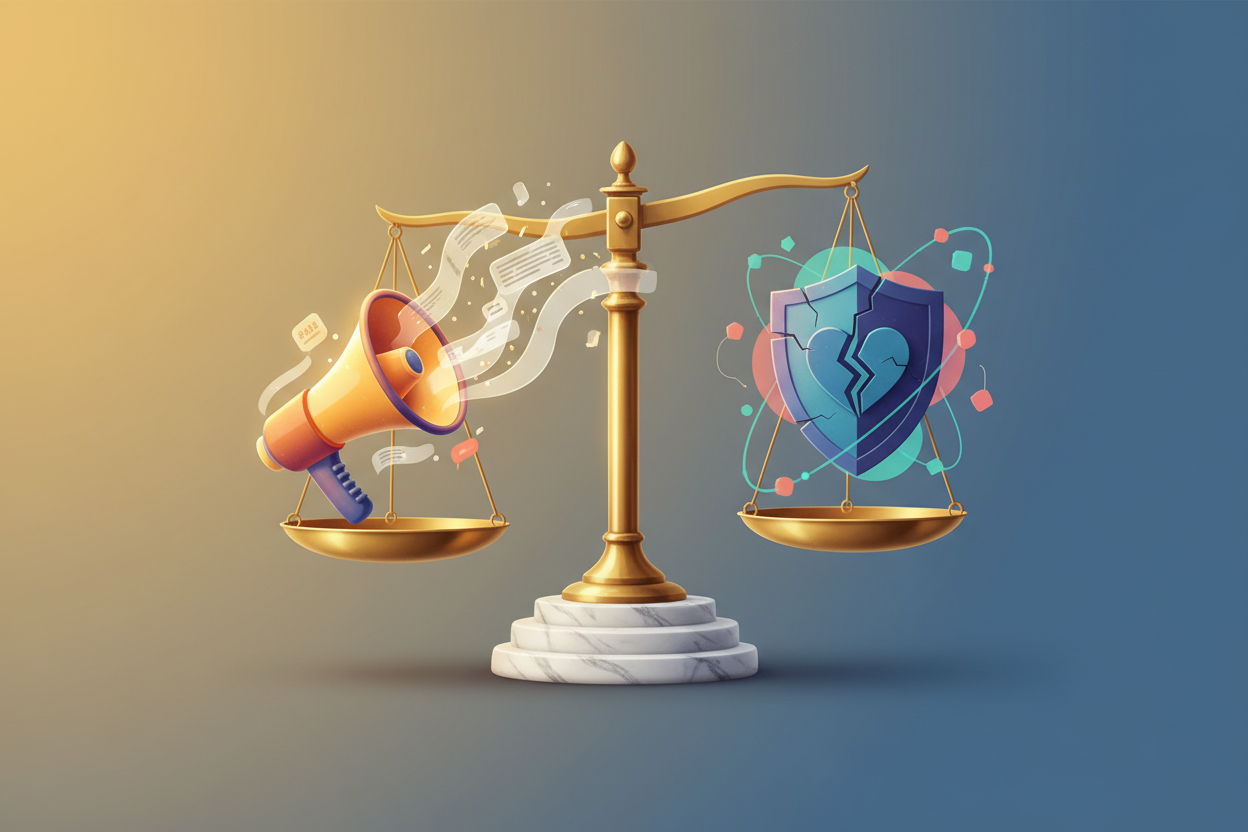
In today’s increasingly polarized world, the tension between protecting free speech and preventing hate speech has become one of the most contentious debates in constitutional law. As we scroll through social media feeds filled with heated exchanges or witness public demonstrations that sometimes cross uncomfortable lines, we’re forced to grapple with a fundamental question: Where do we draw the line between constitutional rights and protecting vulnerable communities from harm?
This isn’t just an abstract legal debate happening in courtrooms and law schools. It’s a real-world challenge that affects how we interact online, what we can say at work, and how we express our political views in public spaces. The balance between freedom of speech and hate speech regulation touches every aspect of our democratic society, from college campuses to corporate boardrooms to family dinner tables.
Understanding Freedom of Speech: The Foundation of Democracy
The First Amendment to the U.S. Constitution seems straightforward enough: “Congress shall make no law… abridging the freedom of speech.” Yet this seemingly simple statement has generated centuries of legal interpretation and debate. Freedom of speech isn’t just about the right to voice popular opinions – it’s fundamentally about protecting unpopular, controversial, and even offensive speech from government censorship.
The Supreme Court has consistently held that the purpose of free speech protection is to ensure a “marketplace of ideas” where different viewpoints can compete for public acceptance. This principle recognizes that suppressing speech, even speech we find objectionable, can be a slippery slope toward broader censorship that ultimately undermines democratic discourse.

However, constitutional scholars and legal experts have long recognized that free speech isn’t absolute. Even the most ardent free speech advocates acknowledge that certain categories of speech – like direct incitement to violence, true threats, and defamation – fall outside constitutional protection. The challenge lies in determining where exactly these boundaries should be drawn, particularly when it comes to hate speech.
Defining Hate Speech: More Complex Than It Appears
One of the biggest challenges in the freedom of speech versus hate speech debate is that there’s no universally accepted legal definition of hate speech in the United States. Unlike many other democratic countries that have specific hate speech laws, American jurisprudence has been reluctant to create broad categories of prohibited speech based on content alone.
Generally speaking, hate speech refers to abusive or threatening speech that expresses prejudice against a particular group, especially based on race, religion, gender, sexual orientation, or other characteristics. But this definition immediately raises difficult questions: Who decides what constitutes “abusive” language? How do we distinguish between legitimate criticism and harmful prejudice? What about speech that some find offensive but others consider protected political or religious expression?
The subjective nature of what constitutes “hateful” speech makes regulation particularly challenging. What one person considers hate speech, another might view as protected political commentary, religious expression, or even satirical humor. This subjectivity has led American courts to generally err on the side of protecting speech, even when that speech causes emotional harm or offense.
The Legal Landscape: How Courts Navigate This Tension
American courts have developed several key principles for handling conflicts between free speech and hate speech concerns. The most important is the “clear and present danger” test, which requires that speech pose an immediate and serious threat before it can be restricted. This standard sets a high bar for limiting speech, requiring more than just the potential for future harm or general offense.
The Supreme Court’s decision in Brandenburg v. Ohio established that speech can only be prohibited when it is “directed to inciting or producing imminent lawless action and is likely to incite or produce such action.” This means that even inflammatory rhetoric about racial or religious groups is generally protected unless it directly calls for immediate violence and is likely to result in such violence.
More recently, courts have grappled with how these principles apply to online speech and social media platforms. The rise of digital communication has created new challenges, as harmful speech can now reach massive audiences instantly and can be preserved and amplified in ways that weren’t possible in the pre-internet era. Yet courts have generally maintained that the medium doesn’t change the constitutional analysis – online speech receives the same protection as offline speech.
International Perspectives: How Other Democracies Handle the Balance
While the United States takes a relatively permissive approach to hate speech, many other democratic countries have chosen different paths. Canada, Germany, France, and the United Kingdom all have specific hate speech laws that criminalize certain forms of expression that would be protected in the United States.
Germany’s approach is particularly instructive, given its historical experience with Nazi propaganda. German law prohibits Holocaust denial, the display of Nazi symbols, and speech that incites hatred against particular groups. These restrictions reflect a judgment that some forms of speech are so harmful to democratic values and human dignity that they warrant prohibition, even at the cost of some restrictions on expression.
Canada’s approach focuses on speech that is likely to breach the peace or expose protected groups to hatred in circumstances likely to lead to violence. The Canadian Supreme Court has upheld hate speech laws while acknowledging the tension with free expression, arguing that such laws are necessary to protect the dignity and equality of all citizens.
These international examples highlight that the American approach – prioritizing free speech protection even at the cost of allowing harmful expression – is just one way to balance these competing values. Other democracies have made different choices about where to draw the line, suggesting that there’s no single “correct” answer to this dilemma.
Digital Age Challenges: Social Media and Online Platforms
The rise of social media has fundamentally transformed the free speech versus hate speech debate. Platforms like Facebook, Twitter, and YouTube have become the primary venues for public discourse, yet they’re private companies with their own terms of service rather than government entities bound by the First Amendment.
This creates a complex dynamic where constitutional free speech protections don’t directly apply to private platform decisions about content moderation. Companies can – and do – prohibit speech that would be constitutionally protected if the government tried to ban it. At the same time, these platforms face enormous pressure from users, advertisers, and governments to remove harmful content while also maintaining their role as forums for free expression.
The challenge is compounded by the global nature of these platforms. A post that’s legal in the United States might violate hate speech laws in Germany or Canada, forcing companies to navigate different legal standards across jurisdictions. This has led to inconsistent enforcement and ongoing debates about whether platforms should adopt the most restrictive standards globally or try to tailor their policies to local laws.
Recent years have seen increased calls for government regulation of social media platforms, with some arguing that these companies have become so central to public discourse that they should be treated more like public utilities subject to First Amendment constraints. Others worry that such regulation would stifle innovation and private enterprise while potentially exposing users to more harmful content.
Real-World Impacts: When Theory Meets Practice
The abstract legal and philosophical debates about free speech and hate speech have very real consequences for people’s daily lives. On college campuses, students and faculty grapple with questions about trigger warnings, safe spaces, and whether controversial speakers should be allowed to present their views. In workplaces, employers must balance protecting employees from harassment while avoiding overly broad speech restrictions that might chill legitimate expression.
For members of minority communities, the impact of hate speech can be profound and lasting. Research shows that exposure to hate speech can cause psychological harm, contribute to social isolation, and even affect physical health. Critics of strong free speech protections argue that allowing hate speech effectively silences marginalized voices by creating hostile environments where they feel unsafe participating in public discourse.
Conversely, those who prioritize free speech protection worry that expanding hate speech restrictions could be used to silence legitimate political dissent or religious expression. They point to examples where hate speech laws have been used to prosecute people for expressing unpopular but arguably legitimate viewpoints about immigration, religion, or social issues.
Finding Common Ground: Practical Approaches to Balance
Despite the deep philosophical differences underlying this debate, there are some areas where people across the political spectrum might find common ground. Most Americans agree that direct threats of violence should not be protected speech, and most also agree that the government shouldn’t be able to silence political criticism or religious expression.
One promising approach focuses on expanding counter-speech rather than restricting harmful speech. This strategy emphasizes responding to hate speech with more speech – education, dialogue, and advocacy that challenges harmful ideas while preserving the principle of free expression. Many universities and communities have adopted this approach, organizing counter-demonstrations, educational programs, and community dialogues in response to hate speech incidents.
Another area of potential agreement involves improving digital literacy and platform design to help users better navigate online discourse. This might include better tools for users to control their own exposure to harmful content, improved fact-checking and context-providing features, and design changes that encourage more thoughtful engagement rather than inflammatory responses.
There’s also growing interest in restorative justice approaches that focus on repairing harm and building understanding rather than simply punishing offensive speech. Some communities have experimented with programs that bring together people who have engaged in hate speech with members of targeted communities to promote dialogue and understanding.
The Path Forward: Evolving Standards for a Changing Society
As American society continues to evolve and diversify, the tension between freedom of speech and hate speech regulation is unlikely to disappear. New technologies, changing social norms, and emerging forms of harmful expression will continue to challenge existing legal frameworks and social conventions.
The key to navigating this challenge may be maintaining flexibility and nuance rather than seeking absolute rules. Different contexts – from university campuses to social media platforms to public demonstrations – may require different approaches to balancing free expression with protecting vulnerable communities from harm.
What seems clear is that this debate reflects deeper questions about what kind of society we want to live in and how we balance individual rights with collective responsibilities. Finding the right balance will require ongoing dialogue, experimentation, and a willingness to adapt our approaches as we learn more about the real-world impacts of different policies.
Ultimately, the goal should be creating a society where all people feel safe to participate in public discourse while preserving the robust exchange of ideas that democracy requires. This won’t be easy, and there will inevitably be disagreements about where exactly to draw the lines. But by engaging thoughtfully with these challenges and remaining committed to both free expression and human dignity, we can work toward solutions that serve our democratic values and protect all members of our diverse society.
Frequently Asked Questions
Q: Is hate speech protected by the First Amendment?
A: In the United States, most forms of hate speech are constitutionally protected under the First Amendment. The Supreme Court has ruled that speech cannot be restricted simply because it’s offensive or promotes hatred toward particular groups. However, speech that directly incites imminent violence or constitutes true threats is not protected.
Q: Can private companies like social media platforms ban hate speech?
A: Yes, private companies are not bound by the First Amendment and can establish their own content policies. Social media platforms regularly remove content they consider hate speech, even if that same content would be constitutionally protected from government censorship.
Q: How do other countries handle hate speech differently than the United States?
A: Many democratic countries, including Canada, Germany, and the UK, have specific hate speech laws that criminalize certain forms of expression. These countries generally place greater emphasis on protecting dignity and preventing harm to minority groups, even at the cost of some restrictions on free speech.
Q: What’s the difference between hate speech and fighting words?
A: Fighting words are a narrow category of speech that directly provoke an immediate violent response from the person they’re directed toward. Hate speech is a broader concept referring to expression that promotes hatred or prejudice against particular groups. Fighting words are not constitutionally protected, while most hate speech is.
Q: Can schools and universities restrict hate speech?
A: Public schools and universities, as government entities, are generally bound by First Amendment protections and cannot restrict speech simply because it’s offensive or hateful. However, they can regulate the time, place, and manner of speech and can prohibit speech that substantially disrupts the educational environment. Private institutions have more flexibility to restrict speech through their own policies.
Q: What should I do if I encounter hate speech online or in person?
A: Options include reporting the content to platform administrators if it’s online, engaging in counter-speech to challenge harmful ideas, supporting targeted individuals or communities, and contacting law enforcement if the speech constitutes a direct threat or incites imminent violence. The best response often depends on the specific context and your own safety considerations.