
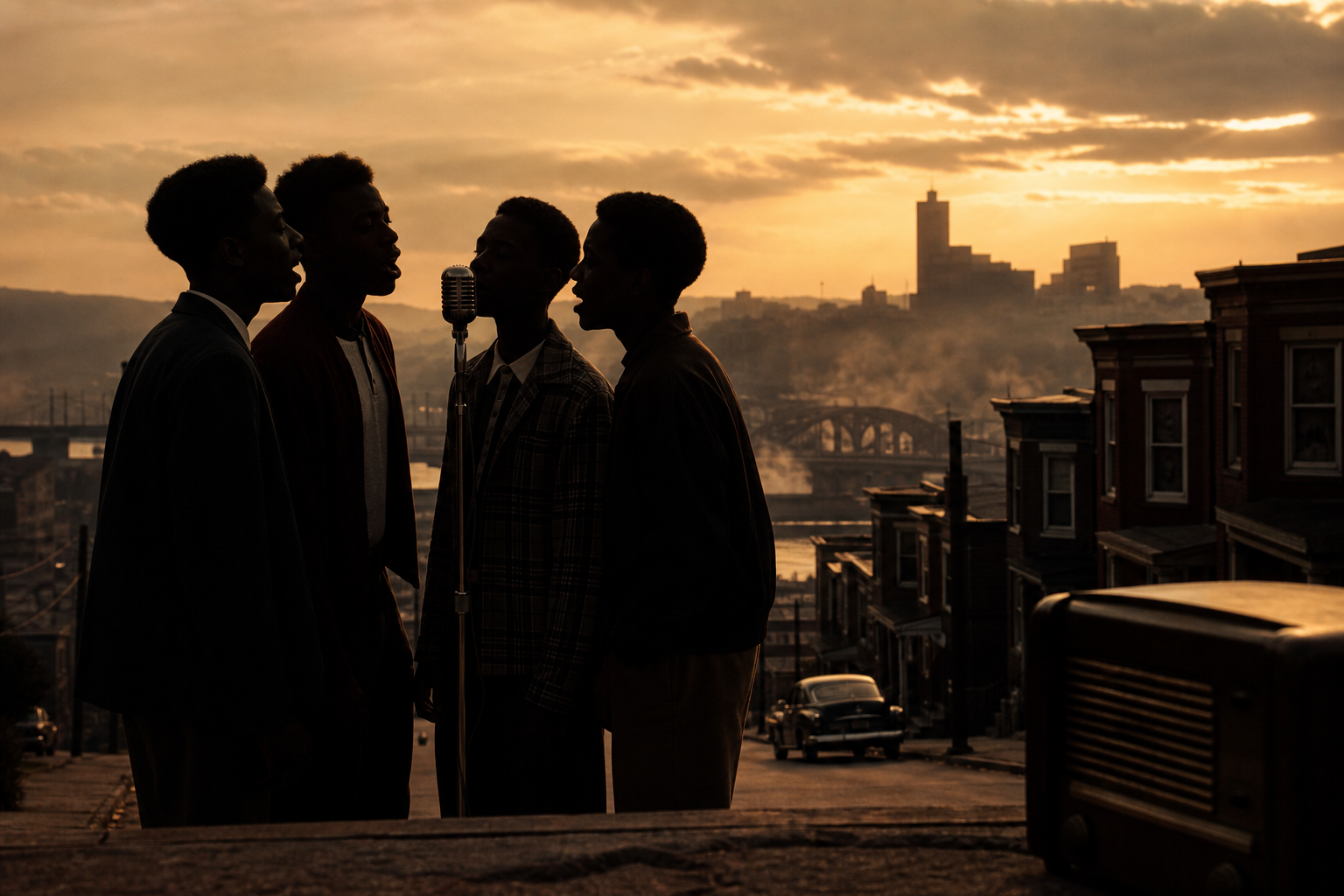
Look across Pittsburgh right now and the skyline tells only part of the story. The cranes are obvious around Oakland and Downtown, but some of the most consequential changes are happening inside old office towers, on former industrial ground, and around public spaces that Pittsburghers use every day.
As of September 2, 2026, the region’s biggest development stories are not one giant skyscraper replacing the last one. They are a series of bets about what Pittsburgh needs next: more housing, stronger public spaces, better connections between neighborhoods, and institutions large enough to anchor the next generation of jobs and visitors.
Here are the projects worth watching most closely.
Downtown’s $600 million reset is moving from promise to construction
The largest coordinated development story inside the city remains the state-backed Downtown revitalization plan. Announced in 2024, the ten-year effort has gathered nearly $600 million in public and private investment for housing, public spaces, safety, and economic activity in the Golden Triangle.
Some of the most visible pieces are already finished. Market Square reopened in April 2026 after a $15 million redesign focused on accessibility, flexibility, and connections to surrounding streets. Arts Landing, the Pittsburgh Cultural Trust’s new outdoor entertainment space along the Allegheny River, also opened this year. Point State Park has received major upgrades, including work around its fountain and public areas.
The next question is whether the public-space improvements can be matched by a meaningful increase in residents. Seven residential projects connected to the plan are expected to add close to 1,000 units, with roughly one-third intended to be affordable.
At 100 First Avenue, construction is converting an office building into 93 affordable apartments for older residents. At 4 Smithfield Street, the $30 million Smithfield Lofts project broke ground in May. It will create 46 apartments, 39 of them affordable to households earning no more than 60 percent of the area median income, with completion expected in fall 2027.
The most dramatic conversion is the Gulf Tower at 707 Grant Street. The 44-story Art Deco landmark is planned as a mixed-use building with apartments, a boutique hotel, ground-floor retail, and public-facing streetscape improvements. It is the kind of project that could change Downtown after business hours, not just during the workday.
That distinction matters. Pittsburgh’s Downtown recovery cannot be measured only by office occupancy or weekend event attendance. It will depend on whether places such as Market Square, Liberty Avenue, Grant Street, and the Cultural District become part of a daily neighborhood rhythm. For a city that has always listened closely to the relationship between streets and gathering places, this is a development story with a cultural consequence. RadioPGH’s Pittsburgh listening guide starts from that same idea: the city’s identity is shaped by where people gather and what they hear there.
UPMC’s Oakland tower is the region’s biggest institutional build
On Fifth Avenue near De Soto Street, the new UPMC Presbyterian Tower is impossible to miss. UPMC describes it as the organization’s largest construction project ever and the largest current health care construction project in Pennsylvania.
The 17-story, 1.2 million-square-foot tower is designed to include 636 private patient rooms along with new clinical, surgical, and support spaces. Construction is scheduled to conclude in late 2026, with the building’s grand opening anticipated in 2027.
This is more than another hospital expansion. The project will reshape one of Pittsburgh’s busiest institutional neighborhoods, where Oakland already has the University of Pittsburgh, Carnegie Mellon University, UPMC Children’s Hospital, the Petersen Events Center, and a steady stream of buses, ambulances, students, patients, and workers. Construction impacts have already included traffic reroutes and pressure on parking, and those effects will continue as the building moves toward opening.
The long-term question is how the tower changes Oakland beyond its footprint. A major hospital project brings jobs and specialized care, but it also increases demand for housing, transit, food, retail, and public space. The tower’s success will be measured partly inside the hospital and partly on the surrounding sidewalks.
The Lower Hill is finally back in public hands — and back under scrutiny
The Lower Hill District remains Pittsburgh’s most politically charged development site. The 28-acre area beside PPG Paints Arena has spent years tied to a plan for offices, housing, retail, entertainment, and public space. But in October 2025, development rights held by Pittsburgh Arena Real Estate Redevelopment expired and reverted to the Urban Redevelopment Authority and the Sports & Exhibition Authority of Pittsburgh and Allegheny County.
That change gives the URA and SEA more direct control over what happens next. In 2026, the URA moved toward a new housing solicitation for about 6.82 acres of unused surface parking. The agency has also been working on guidelines for a Lower Hill Development Fund and advancing a potential mixed-income housing project connected to Bedford Dwellings and the broader Hill District redevelopment effort.
The Lower Hill is not simply another available parcel. It sits on ground cleared during the Civic Arena era, a project that displaced a large Black neighborhood and fractured the Hill District’s connection to Downtown. That history is why every new plan is judged not only by its architecture or tax revenue, but by who gets to live there, who gets contracts, and whether Centre Avenue and Wylie Avenue benefit from the investment.
The FNB Financial Center already stands as a major anchor at the edge of the site. The next phase will determine whether the Lower Hill becomes a genuinely connected extension of the Hill District or another isolated development beside Downtown.
Hazelwood Green is testing Pittsburgh’s post-steel future
Along the Monongahela River, Hazelwood Green is turning a former Jones & Laughlin and LTV steel site into one of the city’s largest long-term development experiments. The 178-acre riverfront property now includes streets, utilities, stormwater systems, public space, and the Mill 19 research and manufacturing building.
For years, Hazelwood Green was discussed primarily as a technology and robotics district. In 2026, housing is becoming a larger part of the picture. The site’s first residential development is a 125-unit apartment building, and the city has approved another five-story project at Blair and Eliza streets with 46 units. Other nearby housing projects are also moving through construction or approval.
The site’s future will depend on whether those buildings connect to Hazelwood rather than functioning as a separate enclave. The city approved a rezoning change in June 2026 affecting riverfront parcels, allowing a broader mix of industrial and mixed-use activity. That decision matters because Hazelwood Green is being asked to support research, manufacturing, housing, public access, and environmental remediation on the same former mill ground.
In other words, this is where Pittsburgh’s redevelopment language meets physical reality. The land has been cleaned, but cleanup is not the same as a finished neighborhood. Watch the streets, trails, transit connections, and relationship to Hazelwood Avenue as closely as the next building announcement. The official Hazelwood Green site remains the clearest place to track the master-planned district’s changing mix of uses.
The convention center hotel could change Downtown’s visitor economy
In May 2026, Loews Hotels signed a letter of intent for a 500-room hotel attached to the David L. Lawrence Convention Center, on the parking lots near Penn Avenue and 10th Street. The proposal includes a restaurant and is intended to strengthen Pittsburgh’s ability to host large conventions and events.
This is not yet the same thing as a completed construction project. It is an announced development moving through the next stages of planning, financing, and approvals. But its size makes it important. A convention-center hotel could keep more visitors in the Downtown core, increase foot traffic for the Strip District and Cultural District, and make the city more competitive for events that currently require shuttle buses or dispersed hotel blocks.
It also raises familiar Pittsburgh questions about traffic, labor, public subsidies, and whether visitor growth translates into benefits for existing businesses. The city’s Strip District Mobility Plan was created precisely because new housing, restaurants, offices, and institutional projects are arriving faster than the neighborhood’s streets can comfortably absorb them.
That tension — growth versus connection — runs through nearly every major project on this list. Pittsburgh is building, converting, cleaning up, and reimagining at the same time. The best developments will not just add square footage. They will give people more reasons to move through neighborhoods, stay awhile, and recognize themselves in the future being built.
For more Pittsburgh reporting, music context, and neighborhood stories, browse Pittsburgh Stories & Takes, check the RadioPGH Schedule, and Listen Live as the city’s next chapter takes shape.
The Revolution Is Live
You found the story. Now hear the station — independent Pittsburgh radio, live 24/7.
Meet RadioPGH.
Stay Tuned to Pittsburgh
New local music, RadioPGH stories, station updates, shows and events—straight to your inbox.