
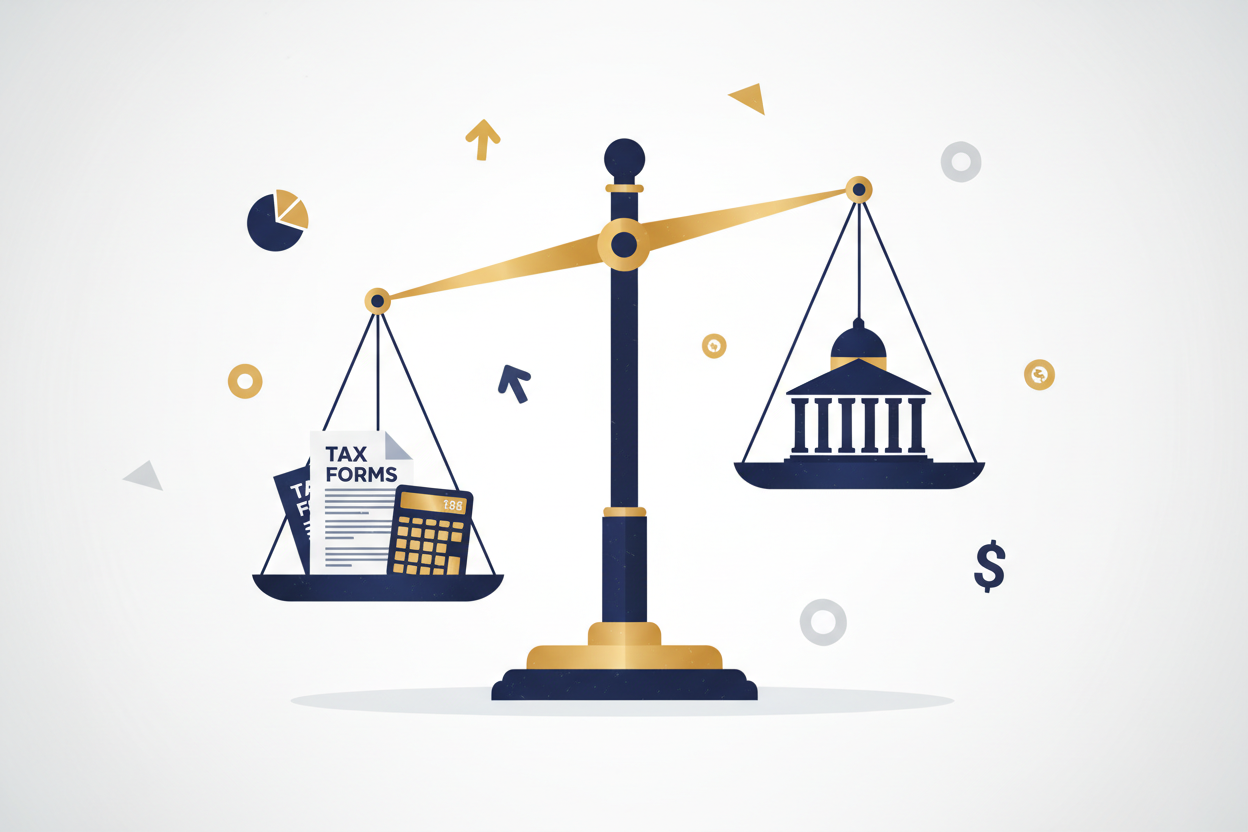
Conservative Approaches to Tax Reform: Building a Stronger Economic Foundation
Tax reform remains one of the most hotly debated topics in modern politics, with conservatives and progressives offering vastly different visions for how our tax system should function. While some advocate for higher taxes on the wealthy and expanded government programs, conservative approaches to tax reform focus on principles that have historically driven economic growth: lower rates, simplified structures, and reduced government interference in the free market.
Understanding conservative tax reform isn’t just about politics—it’s about grasping fundamental economic principles that affect every working American. Whether you’re a small business owner struggling with complex tax codes or a middle-class family looking to keep more of your hard-earned money, these approaches offer practical solutions that prioritize economic freedom and individual prosperity.
The Foundation of Conservative Tax Philosophy
Conservative tax reform rests on several core principles that distinguish it from liberal approaches. At its heart, this philosophy believes that individuals and businesses, not government bureaucrats, are best positioned to make decisions about how to spend and invest money. This fundamental belief shapes every aspect of conservative tax policy.
The primary goal isn’t simply to collect revenue for government operations—it’s to create conditions where economic growth can flourish naturally. Conservative economists argue that when people keep more of what they earn, they’re more likely to spend, save, and invest in ways that benefit the entire economy. This creates a positive cycle where increased economic activity generates more tax revenue even at lower rates.

Another cornerstone of conservative tax philosophy is the belief in fairness through proportionality rather than redistribution. Instead of using the tax code as a tool for social engineering, conservatives prefer systems where everyone contributes according to their ability while maintaining incentives for success and upward mobility.
Lower Tax Rates: The Engine of Economic Growth
Perhaps no aspect of conservative tax reform generates more discussion than the push for lower tax rates across all income levels. This approach, often called supply-side economics, operates on the principle that reducing tax burdens stimulates economic activity more effectively than government spending programs.
Historical evidence supports this approach in many instances. The Kennedy tax cuts of the 1960s, the Reagan reforms of the 1980s, and more recent reductions have often coincided with periods of robust economic growth. When businesses face lower corporate tax rates, they’re more likely to expand operations, hire additional workers, and invest in new equipment or technology.
For individual taxpayers, lower rates mean more disposable income that flows directly into the economy through consumer spending. A family that saves $2,000 annually through tax cuts doesn’t just benefit personally—they contribute to economic growth by spending that money on goods and services, creating demand that supports jobs throughout the economy.
Critics often argue that lower taxes primarily benefit the wealthy, but conservative economists point out that high earners already contribute a disproportionate share of total tax revenue. Even with lower rates, these individuals continue to pay substantial amounts while having greater incentives to engage in productive economic activities rather than seeking tax shelters or moving assets offshore.
Simplifying the Tax Code for Everyone
Anyone who has struggled through tax preparation knows firsthand how unnecessarily complex our current system has become. Conservative approaches to tax reform prioritize simplification, recognizing that complexity itself acts as a hidden tax on productivity and economic growth.
The current tax code spans thousands of pages and requires countless hours of professional assistance for many taxpayers to navigate properly. This complexity doesn’t just inconvenience individuals—it creates enormous compliance costs for businesses that could otherwise invest those resources in growth and job creation.
Conservative reform proposals often center around flatter, simpler tax structures. Some advocate for a flat tax where everyone pays the same percentage, while others support simplified progressive systems with fewer brackets and deductions. The key is eliminating the maze of special provisions, credits, and exemptions that currently favor those wealthy enough to hire teams of tax professionals.
Simplification also reduces opportunities for tax avoidance and ensures that the system treats similar taxpayers equally. When the rules are straightforward and transparent, compliance becomes easier and more consistent across all income levels.
Reducing Corporate Tax Burden to Boost Competitiveness
In today’s global economy, countries compete not just through trade but through their tax policies. High corporate tax rates can drive businesses to relocate operations to more tax-friendly jurisdictions, taking jobs and economic activity with them. Conservative tax reform recognizes this reality and seeks to make domestic markets more attractive to both domestic and international investment.
Lowering corporate tax rates isn’t about giving handouts to big business—it’s about creating conditions where companies want to establish and expand operations domestically. When businesses face lower tax burdens, they have more capital available for research and development, equipment purchases, and workforce expansion.
This approach has shown measurable results in various contexts. Countries like Ireland and Singapore have used competitive tax rates to attract significant foreign investment, creating jobs and economic growth that benefits their entire populations. Similarly, states within the US that maintain business-friendly tax environments often see stronger job growth and economic development.
The benefits extend beyond large corporations to small and medium-sized businesses that form the backbone of most local economies. These enterprises often operate on thin margins, and reduced tax burdens can mean the difference between expansion and stagnation, between hiring new employees and maintaining the status quo.
Eliminating Double Taxation and Economic Distortions
Conservative tax reform also addresses structural problems in the current system that create unfair burdens and economic inefficiencies. Double taxation—where the same income gets taxed multiple times through different mechanisms—represents one of the most significant issues requiring attention.
Corporate dividends provide a clear example of this problem. Companies pay corporate income tax on their profits, then shareholders pay additional taxes when those profits are distributed as dividends. This double taxation reduces the attractiveness of equity investment and can distort capital allocation decisions throughout the economy.
Similarly, estate taxes can force family businesses to liquidate assets or take on debt simply to pay tax obligations when ownership transfers between generations. This doesn’t just affect wealthy families—it impacts family farms, small businesses, and other enterprises that provide employment and economic stability in communities across the country.
Addressing these distortions helps create a more neutral tax system that doesn’t artificially favor some economic activities over others. When tax policy stops picking winners and losers, market forces can operate more efficiently to allocate resources where they create the most value.
Real-World Benefits and Economic Outcomes
Conservative tax reform isn’t just theoretical—we can observe its effects in real-world applications. The Tax Cuts and Jobs Act of 2017 provides a recent example of these principles in action, reducing both individual and corporate tax rates while simplifying certain aspects of the tax code.
Following implementation, the US economy experienced historically low unemployment rates, increased business investment, and rising wages for workers across income levels. While multiple factors influence economic performance, the correlation between tax reduction and economic growth proved consistent with conservative predictions.
State-level examples also demonstrate these principles effectively. States like Texas and Florida, which maintain no state income tax, consistently rank among the fastest-growing economies in the nation. They attract businesses and residents from higher-tax states, creating virtuous cycles of growth and opportunity.
These outcomes aren’t coincidental—they reflect the natural response of economic actors to improved incentives. When people and businesses face lower tax burdens, they have both the means and motivation to engage in productive activities that benefit everyone.
Addressing Common Concerns and Criticisms
Critics of conservative tax reform often raise legitimate concerns about revenue adequacy and distributional effects. These concerns deserve serious consideration, even as conservative approaches offer compelling responses to most objections.
The revenue question typically focuses on whether lower tax rates can generate sufficient government funding. Historical evidence suggests that dynamic economic effects often offset much of the static revenue loss from rate reductions. When economic growth accelerates due to improved tax incentives, the larger economic base generates more total revenue even at lower rates.
Regarding distributional concerns, conservative reforms typically benefit all income levels, though the absolute dollar amounts may vary. A middle-class family saving $1,500 annually through tax cuts experiences a meaningful improvement in their financial situation, even if higher earners save larger absolute amounts.
The key insight is that economic growth benefits everyone through job creation, wage increases, and improved opportunities for advancement. Rather than viewing the economy as a zero-sum game where one group’s gain requires another’s loss, conservative approaches recognize that expanding the overall economic pie creates more opportunities for everyone to prosper.
Conclusion
Conservative approaches to tax reform offer a proven pathway toward stronger economic growth, increased individual prosperity, and a more efficient allocation of resources throughout society. By focusing on lower rates, simplified structures, and reduced economic distortions, these policies create conditions where both individuals and businesses can thrive.
The evidence supporting these approaches spans decades and crosses international boundaries. Countries and states that embrace conservative tax principles consistently outperform their higher-tax counterparts in measures of economic growth, job creation, and overall prosperity.
As policymakers continue debating tax reform, the conservative approach provides a clear framework for creating policies that benefit all Americans. Rather than using the tax code as a tool for redistribution or social engineering, these reforms focus on unleashing the productive capacity of free markets and individual initiative.
The choice isn’t between helping the wealthy or the middle class—it’s between policies that expand opportunity for everyone versus those that constrain economic growth through excessive taxation and regulation. Conservative tax reform offers a path forward that honors both fiscal responsibility and economic freedom, creating conditions where American prosperity can flourish for generations to come.
Frequently Asked Questions
Q: Don’t lower tax rates primarily benefit wealthy individuals and corporations?
A: While wealthy individuals may save more in absolute dollar terms, lower tax rates benefit all income levels proportionally. Additionally, the economic growth generated by these policies creates jobs and opportunities that benefit middle and lower-income Americans through higher wages and increased employment opportunities.
Q: How can the government fund essential services with lower tax revenue?
A: Conservative tax reform often generates increased revenue through economic growth, even at lower rates. A larger, more dynamic economy produces more taxable income and activity. Additionally, simplified tax systems reduce compliance costs and improve collection efficiency.
Q: Won’t eliminating deductions hurt middle-class families who depend on them?
A: Most conservative reform proposals offset the elimination of deductions with lower overall rates and increased standard deductions. This approach typically benefits middle-class families by simplifying their tax situation while maintaining or improving their after-tax income.
Q: What evidence supports the effectiveness of conservative tax policies?
A: Historical examples include the Kennedy tax cuts of the 1960s, Reagan reforms of the 1980s, and more recent reductions that coincided with periods of strong economic growth. International comparisons also show that countries with competitive tax rates often attract more investment and experience faster growth.
Q: How do conservative tax reforms affect small businesses differently than large corporations?
A: Small businesses often benefit more proportionally from tax reforms because they typically lack the resources to navigate complex tax codes or utilize sophisticated tax planning strategies. Simplified, lower-rate systems level the playing field and allow small businesses to compete more effectively.