The American Dream: Is It Still Alive in 2024?
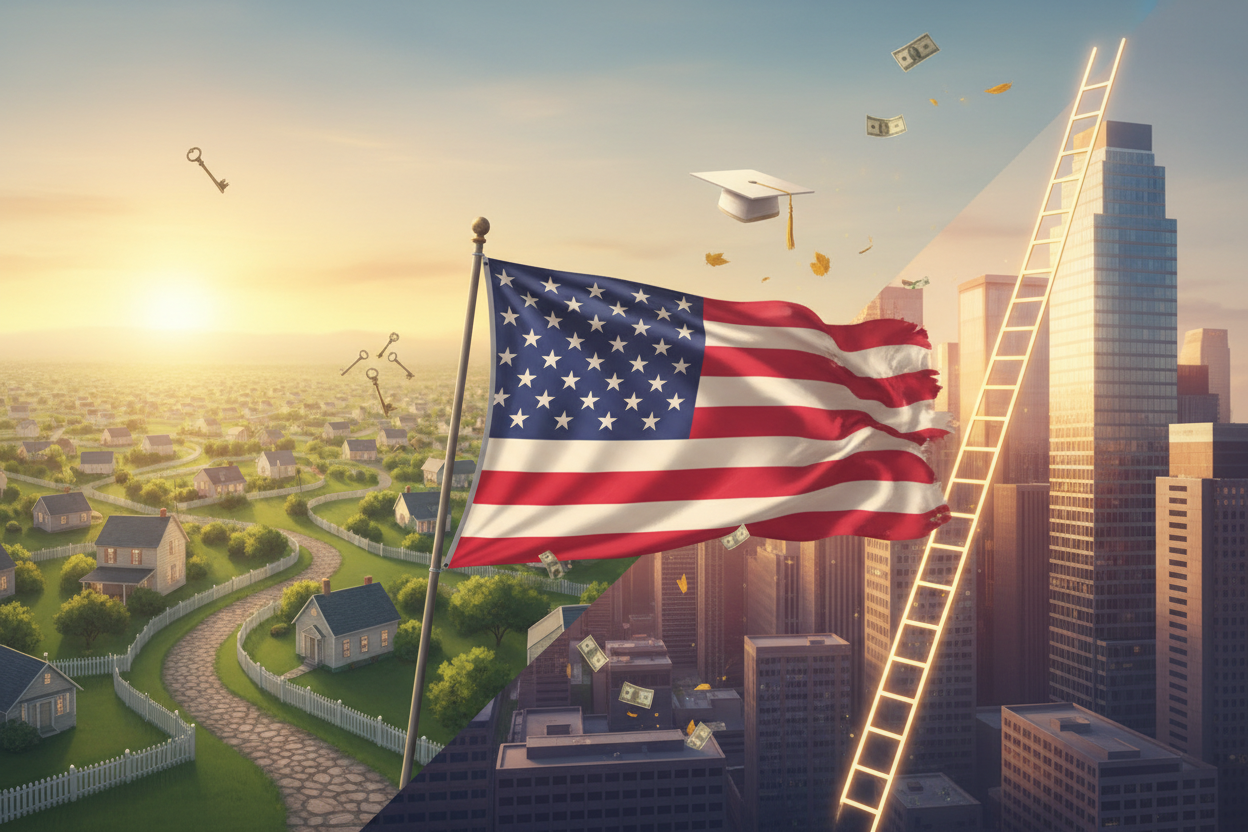
For generations, the American Dream has served as a beacon of hope, promising that anyone willing to work hard could achieve prosperity, homeownership, and upward mobility. But as we navigate through 2024, many Americans are questioning whether this foundational promise still holds true. Rising costs of living, stagnant wages, and increasing inequality have left countless people wondering: is the American Dream still alive, or has it become an outdated concept?
The answer isn’t black and white. While traditional markers of the American Dream have become more challenging to achieve, new opportunities and definitions of success continue to emerge. Let’s explore the current state of this enduring ideal and examine whether it’s evolving rather than disappearing.
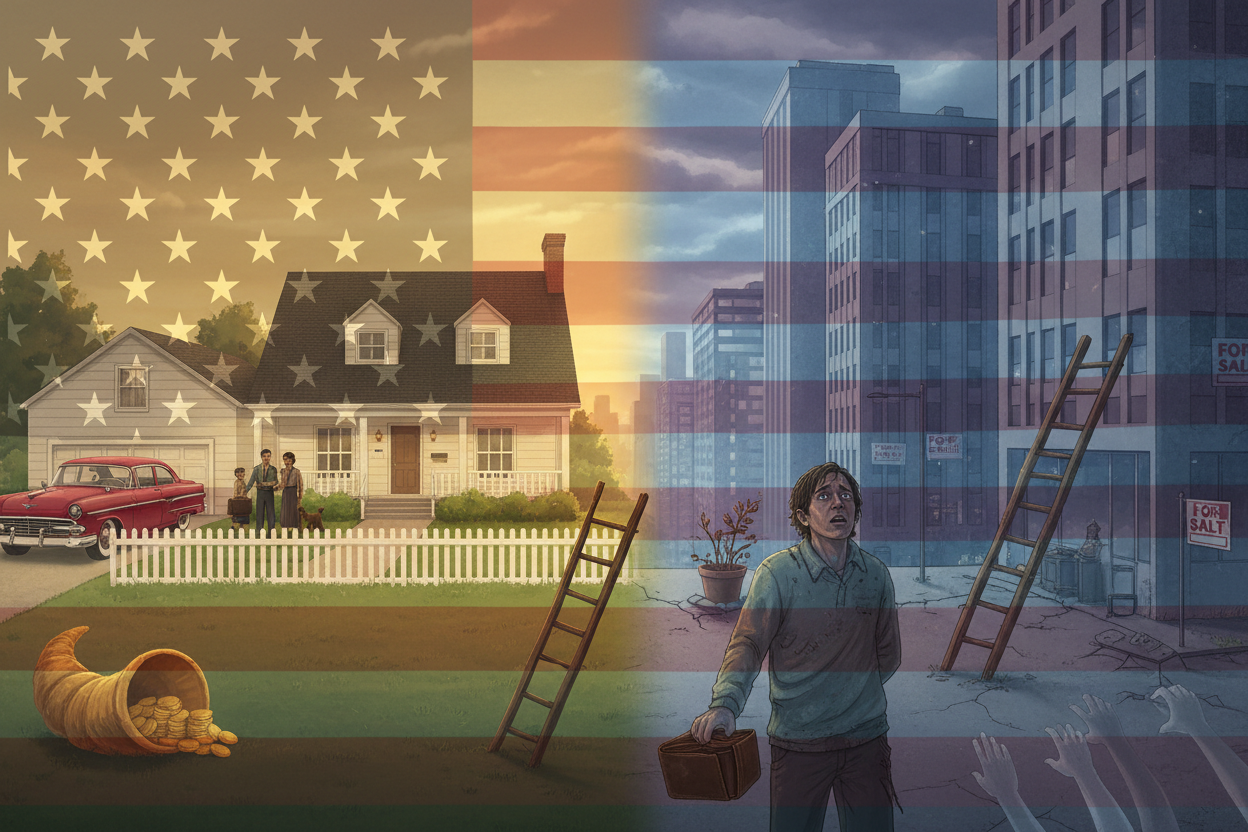
What the American Dream Originally Meant
The term “American Dream” was coined by historian James Truslow Adams in 1931, describing it as “a dream of a land in which life should be better and richer and fuller for everyone.” Traditionally, this dream encompassed several key elements: homeownership, steady employment, financial security, and the belief that each generation would be better off than the last.
For decades, this vision seemed attainable for many Americans. The post-World War II economic boom created unprecedented opportunities for middle-class prosperity. A single income could support a family, buy a house, and fund a college education. The suburbs flourished, and social mobility felt within reach for those willing to work for it.
However, the economic landscape has dramatically shifted since those halcyon days. Today’s workers face challenges their grandparents never imagined, forcing us to reconsider what the American Dream means in the modern era.
Current Challenges Facing the American Dream
Housing Affordability Crisis
Perhaps nowhere is the strain on the American Dream more evident than in the housing market. Homeownership, once considered the cornerstone of middle-class life, has become increasingly elusive. According to recent data, the median home price has far outpaced wage growth, making it nearly impossible for many families to save for a down payment.
In major metropolitan areas, the situation is even more dire. Young professionals earning decent salaries find themselves priced out of neighborhoods their parents could easily afford decades ago. The dream of owning a white picket fence house has been replaced by the reality of perpetual renting or moving to less desirable areas with longer commutes.
Student Debt and Education Costs
Education has long been viewed as the pathway to achieving the American Dream, but skyrocketing college costs have turned this opportunity into a financial burden. Student loan debt has reached crisis levels, with many graduates entering the workforce already saddled with payments that can last decades.
This debt burden affects major life decisions. Young adults delay homeownership, postpone starting families, and struggle to build wealth because significant portions of their income go toward loan payments. The very education meant to secure their future has, in many cases, compromised it.
Income Inequality and Wage Stagnation
While productivity has increased dramatically over the past few decades, wages for middle and lower-income workers have remained relatively flat when adjusted for inflation. Meanwhile, executive compensation and returns on capital have soared, creating a widening gap between the wealthy and everyone else.
This growing inequality means that hard work alone may not be sufficient to achieve upward mobility. The connection between effort and reward, fundamental to the American Dream’s promise, has weakened considerably.
Signs That the Dream Is Adapting, Not Dying
The Gig Economy and Entrepreneurship
While traditional employment may not offer the same security it once did, new opportunities have emerged. The gig economy has created unprecedented flexibility for workers to control their schedules and income streams. Many Americans are building successful businesses from their laptops, creating wealth through e-commerce, content creation, and digital services.
Technology has democratized entrepreneurship in ways previous generations couldn’t imagine. A teenager can now build a million-dollar business from their bedroom, and innovative ideas can reach global markets with minimal startup costs. This represents a new form of the American Dream – one based on creativity and adaptability rather than traditional career paths.
Redefining Success and Priorities
Younger generations are challenging traditional definitions of success. Rather than focusing solely on material wealth and homeownership, many Americans now prioritize work-life balance, experiences over possessions, and social impact over pure profit.
This shift represents an evolution of the American Dream rather than its death. The core promise – that individuals can create better lives for themselves through their choices and efforts – remains intact, even if the specific goals have changed.
Geographic Mobility and Remote Work
The COVID-19 pandemic accelerated the adoption of remote work, suddenly making it possible for people to access high-paying jobs while living in lower-cost areas. This development has revitalized the American Dream for many who can now afford homeownership and comfortable lifestyles by relocating to more affordable regions.
Cities like Austin, Nashville, and Boise have experienced population booms as workers flee expensive coastal areas. This geographic arbitrage allows people to maintain their income while dramatically reducing their cost of living, making traditional markers of success more attainable.
The Role of Government and Policy
The future of the American Dream isn’t solely in individual hands – policy decisions play a crucial role. Issues like healthcare costs, education funding, infrastructure investment, and tax policy all impact whether ordinary Americans can achieve upward mobility.
Some proposed solutions include expanding access to affordable healthcare, investing in job training programs, addressing housing supply constraints, and reforming the tax code to reduce inequality. However, political polarization has made comprehensive reform challenging, leaving many families to navigate these challenges on their own.
Success Stories and Modern Examples
Despite the challenges, countless Americans continue to achieve remarkable success through determination and innovation. Consider the immigrant family that builds a thriving restaurant chain, the single mother who earns her degree while working full-time and eventually starts her own consulting business, or the high school dropout who becomes a successful YouTuber and buys his parents a house.
These stories remind us that while the path to success may have changed, the fundamental opportunity for transformation remains. The American Dream may require more creativity and resilience than in previous generations, but it’s far from extinct.
Looking Forward: The Future of the American Dream
The American Dream of 2024 looks different from that of 1954, and the version in 2054 will likely differ again. Rather than mourning the loss of a specific historical moment, we should focus on preserving the core principle: that in America, your circumstances at birth don’t have to determine your destiny.
This may mean embracing new definitions of success, supporting policies that expand opportunity, and recognizing that the dream must evolve to remain relevant. The question isn’t whether the American Dream is dead, but whether we’re willing to adapt it to serve new generations facing new challenges.
Ultimately, the American Dream remains alive because it represents something deeper than specific economic outcomes – it embodies the belief that individuals have the power to shape their own futures. As long as that fundamental optimism and opportunity exist, the dream will continue, even if it takes new forms we can’t yet imagine.
Frequently Asked Questions
What is the traditional American Dream?
The traditional American Dream includes homeownership, financial security, steady employment, and the belief that each generation will be better off than the previous one. It represents the idea that hard work and determination can lead to upward mobility and prosperity.
Why do people say the American Dream is dead?
Critics point to rising income inequality, unaffordable housing, student debt burdens, and wage stagnation as evidence that traditional paths to middle-class prosperity have become much more difficult to achieve than in previous generations.
How has the American Dream changed for younger generations?
Younger Americans often prioritize experiences over material possessions, value work-life balance more highly, and are more likely to pursue non-traditional career paths. They may define success differently than previous generations, focusing on personal fulfillment alongside financial security.
Can you still achieve the American Dream without a college degree?
Yes, though the paths may be different. The gig economy, skilled trades, entrepreneurship, and technology-based careers offer opportunities for success without traditional four-year degrees. However, these paths often require continuous learning and adaptation.
What role does location play in achieving the American Dream today?
Location has become increasingly important due to varying costs of living and job opportunities. Remote work has made it possible for some people to access high-paying jobs while living in lower-cost areas, effectively making the American Dream more attainable through geographic arbitrage.
Is the American Dream still possible for immigrants?
Many immigrants continue to achieve remarkable success in America, often showing higher rates of entrepreneurship than native-born Americans. However, they face additional challenges including language barriers, credential recognition, and immigration policy restrictions that can impact their opportunities.