


The Legacy of the Civil Rights Act: Ongoing Challenges and Triumphs
Sixty years have passed since President Lyndon B. Johnson signed the Civil Rights Act of 1964 into law, marking a watershed moment in American history. This groundbreaking legislation promised to end segregation and discrimination based on race, color, religion, sex, or national origin. Yet as we reflect on its legacy today, we find ourselves navigating a complex landscape where remarkable progress coexists with persistent challenges.
The Civil Rights Act didn’t just change laws—it transformed the very fabric of American society. From workplaces to schools, from restaurants to voting booths, this legislation opened doors that had been firmly shut for generations. But understanding its true impact requires us to look beyond the headlines and examine both the victories won and the battles still being fought.

Understanding the Civil Rights Act of 1964: A Foundation for Change
When President Johnson put pen to paper on July 2, 1964, he was signing more than legislation—he was codifying a promise of equality that had been denied to millions of Americans. The Act’s eleven titles addressed everything from public accommodations to employment discrimination, creating a comprehensive framework for civil rights protection.
The legislation emerged from years of grassroots activism, peaceful protests, and tragic violence that shocked the nation’s conscience. Images of police dogs attacking peaceful demonstrators in Birmingham and the brutal beating of marchers on Selma’s Edmund Pettus Bridge had galvanized public opinion. The Act represented not just political achievement but moral awakening.
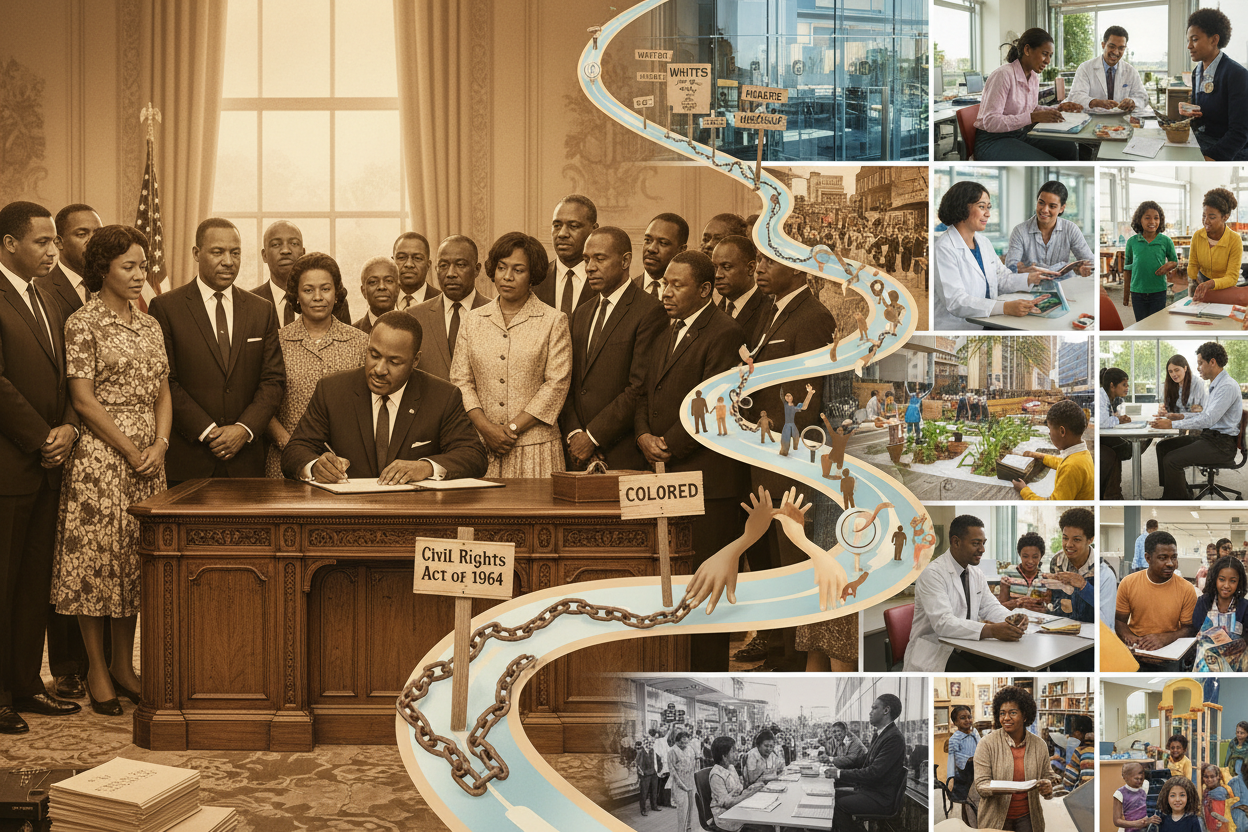
Perhaps most significantly, the law established the Equal Employment Opportunity Commission (EEOC), giving federal authorities real teeth to enforce anti-discrimination measures. For the first time, businesses couldn’t simply ignore complaints of racial discrimination—there were actual consequences.
Major Triumphs: How the Civil Rights Act Changed America
Breaking Down Workplace Barriers
The transformation of American workplaces stands as one of the Act’s most visible successes. Before 1964, “Help Wanted” ads routinely specified race and gender preferences. Today, such practices seem not just illegal but unthinkable. The percentage of African Americans in professional and managerial positions has increased dramatically, rising from less than 5% in 1964 to over 17% today.
Women have seen even more dramatic gains. Title VII’s prohibition on sex discrimination, added almost as an afterthought, became a powerful tool for gender equality. The number of women in law, medicine, and business leadership has skyrocketed. When Ruth Bader Ginsburg graduated from law school in 1959, she struggled to find employment despite her stellar academic record. By contrast, today’s law school classes are majority female.
Educational Integration and Opportunity
The Act’s impact on education extends far beyond the famous images of the Little Rock Nine or Ruby Bridges walking into previously all-white schools. Federal funding requirements tied to non-discrimination policies accelerated integration across the South. Between 1964 and 1972, the percentage of Black students attending majority-white schools in the South jumped from 2% to 46%.
Higher education saw equally dramatic changes. Historically Black Colleges and Universities (HBCUs) remained vital institutions while predominantly white universities opened their doors wider. The result? College enrollment among African Americans increased by over 500% between 1964 and 1994.
Political Participation and Representation
While the Voting Rights Act of 1965 more directly addressed electoral participation, the Civil Rights Act created a foundation for political engagement. The number of Black elected officials has grown from fewer than 500 in 1965 to over 10,000 today. We’ve witnessed African Americans serving as governors, Supreme Court justices, and, of course, President of the United States.
Persistent Challenges: Where Progress Has Stalled
Economic Inequality and the Wealth Gap
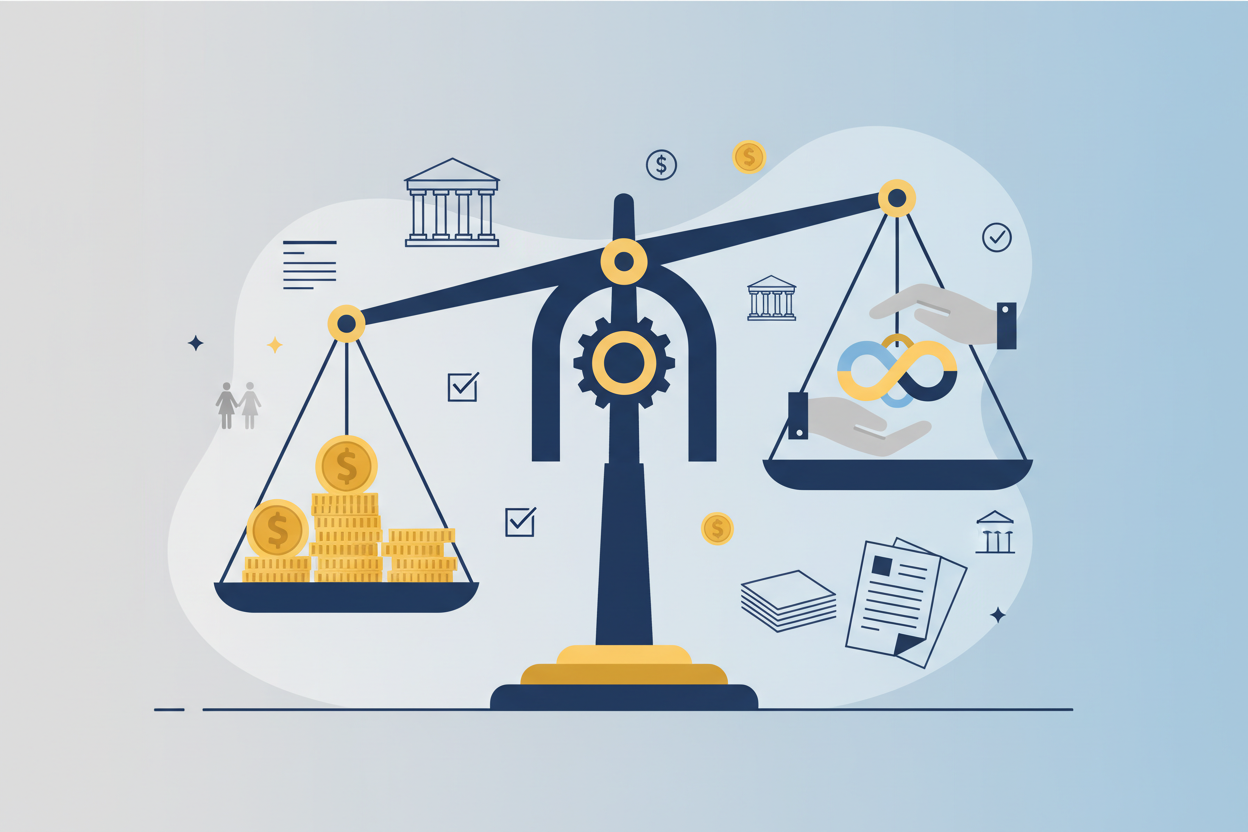
Despite workplace gains, economic disparities remain stubbornly persistent. The median wealth of white families is roughly ten times that of Black families—a gap that has barely budged since the 1960s. This disparity reflects the cumulative effects of decades of exclusion from homeownership, business ownership, and wealth-building opportunities.
The 2008 financial crisis hit minority communities particularly hard, wiping out years of progress. Many Black and Hispanic families lost homes to foreclosure at disproportionate rates, while recovery has been slower in communities of color. The COVID-19 pandemic further exposed these vulnerabilities, with minority-owned businesses closing at higher rates and communities of color experiencing greater health and economic impacts.
Criminal Justice Disparities
Perhaps nowhere are the limitations of the Civil Rights Act more apparent than in criminal justice. While the Act prohibited discrimination in public accommodations and employment, it didn’t address law enforcement practices or sentencing disparities. Today, African Americans are incarcerated at roughly five times the rate of whites, often for similar crimes.
The rise of mass incarceration since the 1970s has created what some scholars call a “new Jim Crow”—a system that disproportionately impacts communities of color. Drug laws, in particular, have created stark disparities. Despite similar usage rates across racial groups, Black Americans are nearly four times more likely to be arrested for marijuana possession.
Housing Segregation and Neighborhood Inequality
While the Fair Housing Act of 1968 prohibited housing discrimination, residential segregation remains a defining feature of American life. Many metropolitan areas are as segregated today as they were in 1968. This segregation isn’t just about where people live—it affects school quality, job access, environmental health, and wealth accumulation.
Redlining practices may be illegal, but their effects persist. Neighborhoods that were denied investment decades ago continue to struggle with underfunded schools, limited business development, and lower property values. Meanwhile, exclusionary zoning in many suburban communities effectively maintains economic and racial barriers.
Modern Civil Rights Movements: Carrying the Torch Forward
Black Lives Matter and Police Reform
The Black Lives Matter movement, emerging after Trayvon Martin’s death in 2012, represents a new chapter in civil rights activism. Unlike the centralized leadership of the 1960s movement, BLM operates as a decentralized network of activists using social media to organize and amplify their message.
The movement has achieved remarkable success in changing public opinion about police brutality and systemic racism. Polls show dramatic shifts in white Americans’ awareness of racial discrimination. Corporate America has responded with unprecedented commitments to diversity and inclusion, while cities across the nation have implemented police reforms.
Expanding the Definition of Civil Rights
Today’s civil rights landscape extends beyond the racial justice focus of the 1960s. LGBTQ+ rights advocates have successfully argued that Title VII’s prohibition on sex discrimination covers sexual orientation and gender identity discrimination. The Supreme Court’s 2020 decision in Bostock v. Clayton County marked a major victory, though many states continue to push back with restrictive legislation.
Immigration rights have also emerged as a major civil rights issue. Advocates argue that comprehensive immigration reform is the civil rights challenge of our time, affecting millions of undocumented immigrants who live in the shadows despite contributing to American society.
The Role of Technology in Modern Civil Rights
Technology has fundamentally changed how civil rights movements organize and operate. Smartphones allow real-time documentation of police encounters, while social media enables rapid mobilization and awareness-raising. The viral video of George Floyd’s murder sparked global protests precisely because technology allowed millions to witness injustice firsthand.
However, technology also presents new challenges. Algorithmic bias in hiring, lending, and criminal justice systems can perpetuate discrimination in subtle but powerful ways. Facial recognition technology has shown significant accuracy problems for people of color, raising concerns about its use in law enforcement.
Digital divides also create new forms of inequality. Students without reliable internet access fell further behind during COVID-19 remote learning, while adults without digital literacy skills face employment barriers in an increasingly connected economy.
Looking Forward: The Future of Civil Rights in America
The Civil Rights Act of 1964 established a framework, but each generation must recommit to its principles and adapt them to new challenges. Today’s activists face different obstacles than their predecessors—some more subtle, others starkly familiar.
Climate justice has emerged as a civil rights issue, as communities of color disproportionately bear the burden of environmental degradation. Economic inequality requires new approaches that address wealth gaps, not just income disparities. Educational equity demands solutions that go beyond integration to address funding disparities and opportunity gaps.
The path forward requires both policy changes and cultural shifts. Laws can prohibit discrimination, but they cannot mandate acceptance or understanding. Building a more equitable society requires ongoing dialogue, education, and the courage to confront uncomfortable truths about our shared history.
Conclusion: An Unfinished Revolution
The Civil Rights Act of 1964 launched a revolution that transformed American society in ways its authors could hardly have imagined. The legal barriers that once seemed insurmountable have largely fallen, creating opportunities that previous generations could only dream of achieving.
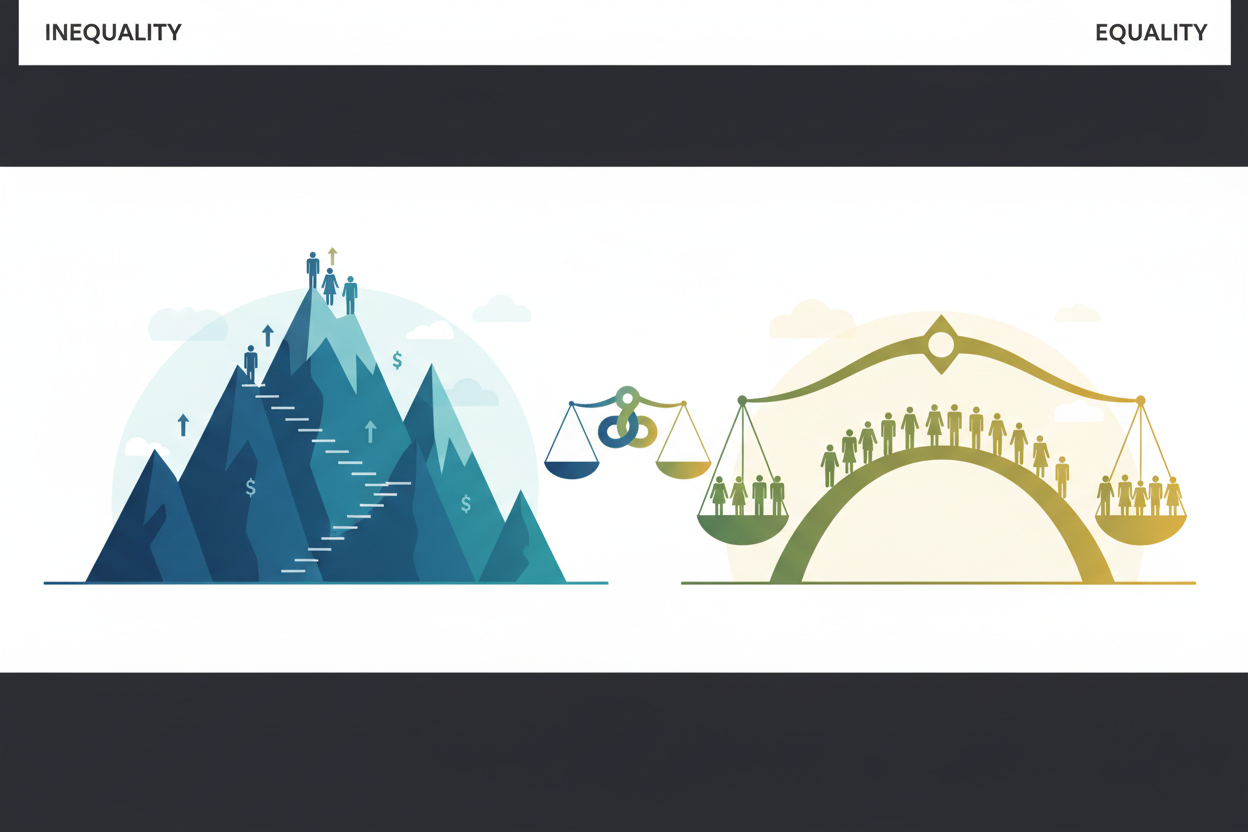
Yet the work remains unfinished. Economic disparities, criminal justice inequities, and persistent segregation remind us that legal equality and true equality are not the same thing. The Act provided tools for change, but each generation must decide how to use them.
As we face new challenges—from algorithmic bias to climate justice—the Act’s core principle remains relevant: that all Americans deserve equal treatment under the law. The methods may evolve, the movements may look different, but the fundamental struggle for human dignity and equality continues.
The legacy of the Civil Rights Act isn’t just about what happened sixty years ago—it’s about what we choose to do today. Every time someone speaks up against discrimination, every time a barrier falls, every time justice prevails, we honor that legacy and move closer to the promise of equality for all.
Frequently Asked Questions
What was the most important provision of the Civil Rights Act of 1964?
While all provisions were significant, Title VII, which prohibited employment discrimination and created the EEOC, is often considered the most impactful. It gave the federal government enforcement power and opened workplace opportunities for millions of Americans.
How did the Civil Rights Act affect women’s rights?
The inclusion of sex discrimination in Title VII, though added at the last minute, became a powerful tool for gender equality. It provided the legal foundation for challenging workplace discrimination against women and helped launch the modern women’s rights movement.
Why do racial disparities persist despite the Civil Rights Act?
The Act prohibited legal discrimination but couldn’t immediately address the cumulative effects of centuries of exclusion. Factors like residential segregation, wealth gaps, and institutional practices continue to create disparities that require ongoing attention and new solutions.
How has the interpretation of the Civil Rights Act evolved over time?
Courts have gradually expanded the Act’s scope, most notably extending Title VII’s sex discrimination provisions to cover sexual orientation and gender identity. However, interpretation has also varied with changing political climates and court compositions.
What role does the Civil Rights Act play in current social movements?
Modern movements like Black Lives Matter build on the Act’s foundation while addressing issues it didn’t fully resolve. The Act provides legal tools for challenging discrimination, but activists continue pushing for broader reforms in areas like criminal justice and economic inequality.
Leave a Reply
You must be logged in to post a comment.