


The Libertarian Perspective on Drug Policy and Legalization: Freedom, Responsibility, and Individual Choice
When it comes to drug policy, few political philosophies offer as clear-cut a position as libertarianism. While mainstream political parties often dance around the issue with half-measures and political calculations, libertarians have consistently advocated for a radical departure from the current system: complete drug legalization. But what exactly drives this perspective, and how do libertarians justify such a controversial stance?
The libertarian approach to drug policy isn’t born from a desire to promote drug use or dismiss the real harms that addiction can cause. Instead, it stems from fundamental principles about individual liberty, personal responsibility, and the proper role of government in society. Understanding this perspective requires diving deep into libertarian philosophy and examining how these core beliefs translate into practical policy positions.

The Foundation of Libertarian Drug Policy: Individual Liberty and Self-Ownership
At the heart of libertarian thinking lies the principle of self-ownership – the idea that individuals have absolute sovereignty over their own bodies and minds. From this perspective, what a person chooses to consume, whether it’s alcohol, marijuana, cocaine, or any other substance, is fundamentally their own business. The government, according to libertarian philosophy, has no legitimate authority to dictate what consenting adults can or cannot put into their own bodies.
This isn’t a position taken lightly. Libertarians recognize that drug use can lead to serious personal and social consequences. However, they argue that the potential for harm doesn’t justify government intervention when that harm is primarily self-inflicted. Just as we don’t ban extreme sports, unhealthy foods, or dangerous hobbies, libertarians contend that we shouldn’t criminalize drug use simply because it might be harmful to the user.
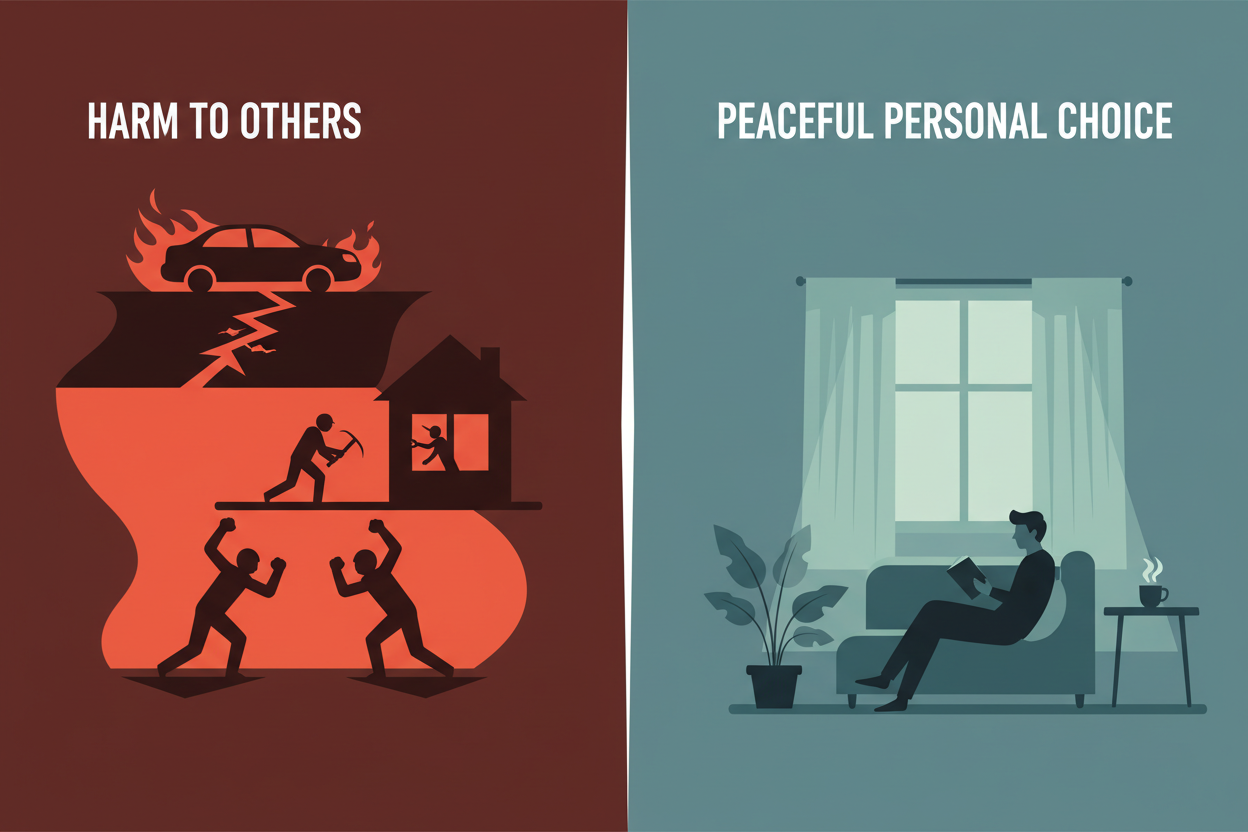
The distinction here is crucial: libertarians draw a sharp line between actions that harm others and those that primarily affect the individual making the choice. While they strongly support laws against driving under the influence, theft to support drug habits, or violence committed while intoxicated, they see the mere possession and use of drugs as victimless crimes that fall outside the government’s legitimate scope of authority.
The War on Drugs: A Libertarian Critique
Libertarians have been among the most vocal critics of America’s War on Drugs since its inception. From their perspective, this decades-long campaign represents everything wrong with government overreach: massive spending, civil liberties violations, and counterproductive outcomes that have made the problems they were meant to solve significantly worse.
The statistics supporting this critique are sobering. The United States spends over $50 billion annually on drug enforcement, has the world’s highest incarceration rate largely due to drug offenses, and yet drug use rates remain stubbornly high. Libertarians point to these figures as evidence that prohibition simply doesn’t work – much like alcohol prohibition in the 1920s, it has created a massive black market while failing to achieve its stated goals.
Perhaps more troubling from a libertarian standpoint is how drug prohibition has eroded constitutional protections. Asset forfeiture laws allow law enforcement to seize property without proving guilt. No-knock warrants have led to tragic mistakes and deaths. The militarization of police forces has transformed community policing into something resembling an occupying army in many neighborhoods.
These concerns aren’t merely theoretical. Real families have been torn apart, real communities have been devastated, and real constitutional rights have been trampled in the name of keeping drugs off the streets. For libertarians, this represents a cure that has proven far worse than the disease.
Economic Arguments for Drug Legalization
Beyond philosophical objections, libertarians make compelling economic arguments for drug legalization. The current system represents a massive misallocation of resources that could be better used addressing genuine crimes with actual victims.
Consider the opportunity costs: every police officer arresting someone for marijuana possession is an officer not investigating burglaries, assaults, or frauds. Every prosecutor handling drug cases is one not pursuing cases against violent criminals. Every prison cell occupied by a drug offender is one unavailable for someone who has actually harmed others.
Legalization would also create significant economic opportunities. A legal drug market would generate tax revenue, create legitimate jobs, and eliminate the enormous profits that currently flow to criminal organizations. Countries and states that have experimented with drug decriminalization or legalization have generally seen positive economic outcomes alongside reduced crime rates.
The black market premium created by prohibition also drives much of the violence associated with drugs. When disputes can’t be resolved through courts and contracts, they’re often settled through violence. Remove the artificial scarcity created by prohibition, and you eliminate much of the economic incentive for drug-related violence.
Public Health and Harm Reduction Through Legalization
Contrary to what critics might expect, libertarians argue that legalization would actually improve public health outcomes. The current system drives drug use underground, making it impossible to regulate quality, provide accurate information about risks, or offer help to those struggling with addiction without fear of legal consequences.
In a legal market, drugs could be subject to quality controls similar to those governing alcohol or prescription medications. Users would know what they’re consuming and in what concentrations, dramatically reducing overdoses caused by contaminated or unexpectedly potent substances. The recent epidemic of fentanyl-related deaths, largely caused by users unknowingly consuming the powerful synthetic opioid, exemplifies how prohibition can make drug use far more dangerous than it needs to be.
Legalization would also remove the stigma and legal barriers that prevent many people from seeking treatment for addiction. When drug use is criminal, addicts often avoid medical care or honest conversations with healthcare providers about their substance use. This isolation makes recovery more difficult and can lead to dangerous drug interactions or untreated health complications.
Portugal’s experience with drug decriminalization provides real-world evidence supporting these arguments. Since decriminalizing personal drug use in 2001, Portugal has seen dramatic reductions in drug-related deaths, HIV infections, and drug-related crime, while treatment rates have increased significantly.
Addressing Common Concerns About Drug Legalization
Critics of drug legalization often raise legitimate concerns that libertarians take seriously. The most common worry is that legalization would lead to increased drug use, particularly among young people. However, evidence from jurisdictions that have liberalized drug laws suggests this fear is largely unfounded.
In places like Portugal, the Netherlands, and several U.S. states that have legalized marijuana, usage rates have either remained stable or increased only slightly, while problematic use has generally declined. This suggests that legal status is less important in determining drug use patterns than factors like education, social support, and economic opportunity.
Libertarians also emphasize that legalization doesn’t mean deregulation. A legal drug market could include age restrictions, licensing requirements for sellers, and regulations governing advertising and marketing – similar to how we currently regulate alcohol and tobacco. The goal isn’t to make drugs more accessible to children, but to create a rational, evidence-based regulatory framework that respects adult autonomy while protecting vulnerable populations.
Another common concern involves impaired driving and workplace safety. Libertarians support strong enforcement of laws against driving under the influence of any substance and believe employers should have the right to establish drug-free workplace policies. The question isn’t whether society can set reasonable boundaries around drug use, but whether criminal prohibition is the most effective way to establish and enforce those boundaries.
The Moral Case for Personal Responsibility
Perhaps the most compelling aspect of the libertarian position on drugs is its emphasis on personal responsibility and human dignity. The current system treats adults as children incapable of making informed decisions about their own lives. It assumes that government bureaucrats and politicians are better positioned to determine what’s best for individuals than those individuals themselves.
This paternalistic approach undermines the fundamental respect for human autonomy that should be the foundation of any free society. When we criminalize consensual adult behavior that primarily affects the individual making the choice, we’re essentially saying that some people don’t deserve the same rights to self-determination that we claim for ourselves.
Libertarians argue that true compassion means trusting people to make their own decisions while providing support and resources for those who need help. This might include education about drug risks, treatment programs for those struggling with addiction, and social support networks for recovery. But it doesn’t include throwing people in cages for making choices we disagree with.
Implementation and Practical Considerations
While libertarians generally support complete drug legalization, many recognize that practical implementation might require a gradual approach. Starting with decriminalization – removing criminal penalties while maintaining civil violations – could be a first step toward full legalization.
Different drugs might also require different regulatory approaches based on their risk profiles and potential for abuse. The regulatory framework for marijuana, which has a relatively low risk profile, might look quite different from regulations governing more dangerous substances like heroin or methamphetamine.
The key principle throughout any transition should be moving away from criminal justice responses toward public health approaches. This means treating addiction as a medical issue rather than a moral failing, focusing resources on treatment and harm reduction rather than punishment, and respecting individual autonomy while providing accurate information about risks.
Some libertarians also advocate for allowing different jurisdictions to experiment with different approaches, creating a natural laboratory for drug policy reform. This federalist approach could help identify the most effective regulatory frameworks while respecting local preferences and values.
Looking Forward: A More Rational Drug Policy
The libertarian perspective on drug policy offers a coherent alternative to the failed prohibition model that has dominated American policy for decades. By prioritizing individual liberty, personal responsibility, and evidence-based approaches over moral panic and political posturing, this philosophy points toward a more rational and humane drug policy.
This doesn’t mean ignoring the real challenges posed by drug abuse and addiction. Rather, it means addressing these challenges through education, treatment, and support rather than criminalization and punishment. It means respecting the dignity and autonomy of all individuals while creating social structures that help people make informed decisions about their own lives.
As more states experiment with marijuana legalization and other jurisdictions explore drug decriminalization, we’re beginning to see real-world evidence that supports many libertarian arguments. Lower crime rates, reduced incarceration, stable or declining usage rates, and improved public health outcomes all suggest that the libertarian approach deserves serious consideration.
The conversation about drug policy is far from over, but the libertarian perspective provides valuable insights that could help guide us toward more effective and just policies. By focusing on individual rights, personal responsibility, and practical outcomes rather than moral judgments and political calculations, we might finally develop a drug policy that actually works for everyone involved.
Frequently Asked Questions
Q: Do libertarians want to make all drugs easily available to everyone?
A: No. Most libertarians support age restrictions and reasonable regulations similar to those governing alcohol. The goal is to end criminal prohibition while maintaining appropriate safeguards, particularly for minors.
Q: Wouldn’t drug legalization lead to more addiction and social problems?
A: Evidence from places that have liberalized drug laws suggests usage rates remain stable or increase only slightly, while problematic use often decreases due to better access to treatment and harm reduction services.
Q: How would libertarians handle impaired driving and workplace safety?
A: Libertarians strongly support laws against impaired driving and believe employers should have the right to establish drug-free workplace policies. Legalization doesn’t mean eliminating all rules around drug use.
Q: What about drugs that are extremely dangerous, like fentanyl?
A: Even dangerous drugs could be better managed through regulated markets than prohibition. Quality controls, accurate labeling, and medical supervision could dramatically reduce overdose deaths compared to the current black market.
Q: Isn’t this just about wanting to use drugs without consequences?
A: The libertarian position is based on principles of individual liberty and evidence about policy effectiveness, not personal desire to use drugs. Many libertarian advocates don’t use illegal drugs themselves but oppose prohibition on philosophical and practical grounds.
Q: How would drug legalization be implemented practically?
A: Most libertarians support a gradual approach, possibly starting with decriminalization and moving toward regulated markets. Different drugs might require different regulatory frameworks based on their risk profiles and social impacts.


Leave a Reply