
Analyzing Recent Supreme Court Decisions and Their Implications: Understanding the Court’s Impact on American Society
The Supreme Court of the United States stands as the final arbiter of constitutional interpretation, wielding immense power to shape the legal landscape of our nation. Recent decisions from the highest court have sent ripples through American society, affecting everything from reproductive rights to environmental policy. As we navigate an increasingly polarized political climate, understanding these landmark rulings and their far-reaching implications has never been more crucial for informed citizens.
The Court’s recent term has been particularly consequential, delivering decisions that will influence American law and society for generations to come. From overturning decades-old precedents to establishing new constitutional interpretations, these rulings demonstrate the profound impact that nine justices can have on the lives of millions of Americans.
The Current Composition of the Supreme Court
Before diving into specific decisions, it’s essential to understand the current makeup of the Supreme Court. The Court’s conservative majority, solidified during the Trump administration with the appointments of Justices Gorsuch, Kavanaugh, and Barrett, has fundamentally altered the judicial landscape. This 6-3 conservative majority has proven willing to reconsider long-standing precedents and take bold steps in reshaping constitutional law.
Chief Justice John Roberts, once considered a swing vote, now finds himself in a position where his preference for incremental change sometimes conflicts with his more conservative colleagues’ appetite for sweeping reforms. Meanwhile, the liberal wing, consisting of Justices Breyer, Sotomayor, and Kagan, often finds itself in dissent on the most contentious issues.
Dobbs v. Jackson Women’s Health Organization: Reshaping Reproductive Rights
Perhaps no recent decision has generated more controversy than Dobbs v. Jackson Women’s Health Organization, which overturned Roe v. Wade and eliminated the constitutional right to abortion. This seismic shift in American jurisprudence has had immediate and profound implications across the country.
The Court’s decision effectively returned the question of abortion regulation to individual states, creating a patchwork of laws that vary dramatically depending on geographic location. Some states have implemented near-total bans, while others have strengthened protections for reproductive rights. This fragmentation has led to what many describe as a “tale of two Americas,” where access to reproductive healthcare depends entirely on one’s zip code.
The implications extend far beyond the immediate question of abortion access. Legal scholars argue that the reasoning in Dobbs could potentially threaten other privacy-based rights, including contraception access and same-sex marriage. The decision has also energized both sides of the political spectrum, influencing election outcomes and legislative priorities across the nation.
Environmental Law and Regulatory Authority: West Virginia v. EPA
The Supreme Court’s decision in West Virginia v. EPA represents another significant shift in the balance between federal regulatory authority and state sovereignty. The Court limited the Environmental Protection Agency’s ability to regulate greenhouse gas emissions from power plants, dealing a substantial blow to federal climate change initiatives.
This ruling established what many legal experts call a “major questions doctrine,” requiring clear congressional authorization for agencies to make decisions of vast economic and political significance. The implications of this doctrine extend well beyond environmental law, potentially affecting how federal agencies regulate everything from healthcare to financial markets.
For businesses and environmental advocates alike, this decision creates both opportunities and challenges. While some industries may benefit from reduced federal oversight, the ruling also creates uncertainty about the future of climate policy and America’s ability to meet international environmental commitments.
Religious Freedom and Public Education: Kennedy v. Bremerton School District
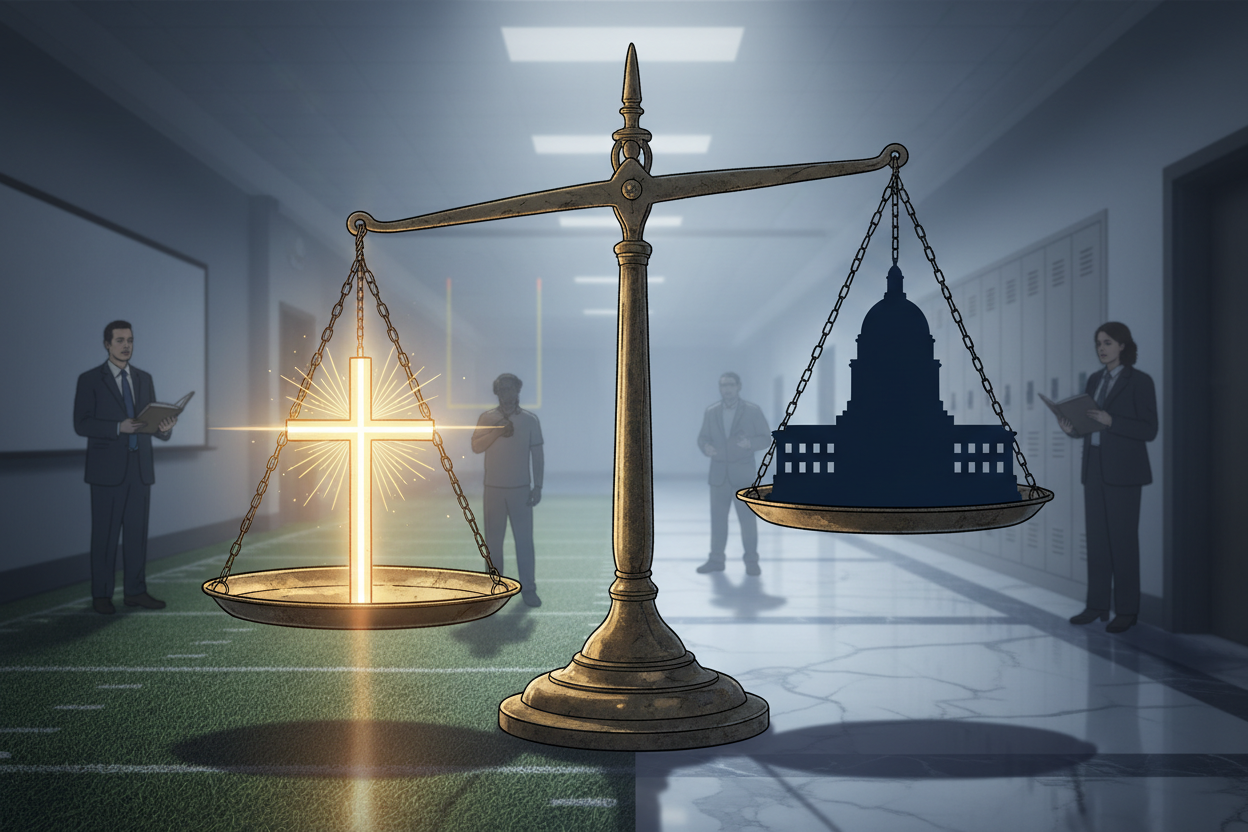
The intersection of religious freedom and public education received significant attention in Kennedy v. Bremerton School District, where the Court ruled in favor of a high school football coach who was disciplined for praying on the field after games. This decision marked another victory for religious liberty advocates and demonstrated the Court’s willingness to expand protections for religious expression in public settings.
The ruling has implications that extend far beyond football fields. Public school administrators across the country are now grappling with questions about how to balance religious expression with the Establishment Clause’s prohibition on government endorsement of religion. The decision may embolden other public employees to engage in religious practices while on duty, potentially leading to new conflicts between individual religious liberty and institutional neutrality.
Gun Rights and Public Safety: New York State Rifle & Pistol Association v. Bruen
The Supreme Court’s decision in New York State Rifle & Pistol Association v. Bruen significantly expanded Second Amendment protections, striking down New York’s restrictive concealed carry law and establishing a new standard for evaluating gun regulations. The Court ruled that gun laws must be consistent with the nation’s historical tradition of firearm regulation, a standard that has proven difficult for many existing regulations to meet.
This decision has triggered a wave of legal challenges to gun laws across the country, with lower courts struggling to apply the new historical standard. States with strict gun laws are scrambling to revise their statutes, while gun rights advocates are emboldened to challenge previously settled regulations. The ruling has also intensified the national debate over gun policy, particularly in the wake of continued mass shooting incidents.
The Broader Implications for American Democracy
These recent Supreme Court decisions collectively represent more than just changes in specific areas of law; they signal a fundamental shift in the Court’s approach to constitutional interpretation and its role in American society. The current Court has shown a willingness to overturn long-standing precedents and make sweeping changes that previous Courts might have approached more incrementally.
This judicial activism has raised important questions about the Court’s legitimacy and its role in a democratic society. Public confidence in the Supreme Court has declined significantly, with polling showing that many Americans now view the Court as primarily a political institution rather than an impartial arbiter of law.
The politicization of the Court has also intensified calls for structural reforms, including proposals to expand the number of justices, implement term limits, or establish a mandatory retirement age. While such reforms would require significant political consensus that currently seems unlikely, the ongoing debate reflects deeper concerns about the Court’s outsized influence on American policy.
Looking Ahead: Future Cases and Continuing Controversies
As we look to the future, several cases on the Court’s docket promise to continue reshaping American law. Issues such as affirmative action in higher education, voting rights, and immigration policy are likely to receive significant attention from the current Court majority.
The Court’s approach to these upcoming cases will provide further insight into how far the conservative majority is willing to go in implementing its constitutional vision. Legal observers are particularly watching for signs of whether the Court will continue its pattern of bold, transformative rulings or whether it might adopt a more cautious approach in response to public criticism.
Conclusion
The Supreme Court’s recent decisions have fundamentally altered the American legal landscape, touching virtually every aspect of public policy and private life. From reproductive rights to environmental regulation, from religious freedom to gun rights, the Court’s conservative majority has demonstrated a willingness to make sweeping changes that will influence American society for decades to come.
Understanding these decisions and their implications is crucial for anyone seeking to comprehend the current state of American law and politics. As citizens, we must grapple with the reality that the Supreme Court’s influence extends far beyond the courthouse, shaping the very fabric of our democratic society.
The ongoing debates surrounding these decisions reflect deeper questions about the role of the judiciary in American democracy and the balance between majority rule and constitutional rights. As we move forward, it will be essential to continue monitoring the Court’s decisions and engaging in thoughtful dialogue about their implications for our shared future.
Frequently Asked Questions
Q: How often does the Supreme Court overturn its own precedents?
A: Historically, the Supreme Court has been reluctant to overturn its own precedents, doing so only about 150 times in its entire history. However, the current Court has shown greater willingness to reconsider established precedents, particularly in cases involving constitutional interpretation.
Q: Can Congress override Supreme Court decisions?
A: Congress cannot directly override Supreme Court decisions that interpret the Constitution, but it can pass new legislation that addresses the Court’s concerns or propose constitutional amendments. For decisions based on statutory interpretation, Congress can simply pass new laws.
Q: How do Supreme Court decisions affect state laws?
A: Supreme Court decisions establish binding precedent for all lower courts and government entities. When the Court strikes down a law or establishes a new constitutional principle, states must comply with that ruling or risk having their laws invalidated by federal courts.
Q: What happens when states refuse to comply with Supreme Court decisions?
A: While states cannot legally ignore Supreme Court decisions, enforcement can be complex. Federal courts can issue injunctions, and the federal government can withhold funding or take other enforcement actions. Ultimately, sustained defiance of Supreme Court rulings would constitute a constitutional crisis.
Q: How long do Supreme Court justices serve?
A: Supreme Court justices serve life tenure, meaning they can remain on the Court until they choose to retire, die, or are impeached and removed by Congress. This lifetime appointment is designed to insulate justices from political pressure and ensure judicial independence.
Q: Can the size of the Supreme Court be changed?
A: Yes, Congress has the constitutional authority to change the number of Supreme Court justices. The Court has had nine justices since 1869, but this number has varied throughout history. Any change would require legislation passed by both houses of Congress and signed by the President.



Leave a Reply