
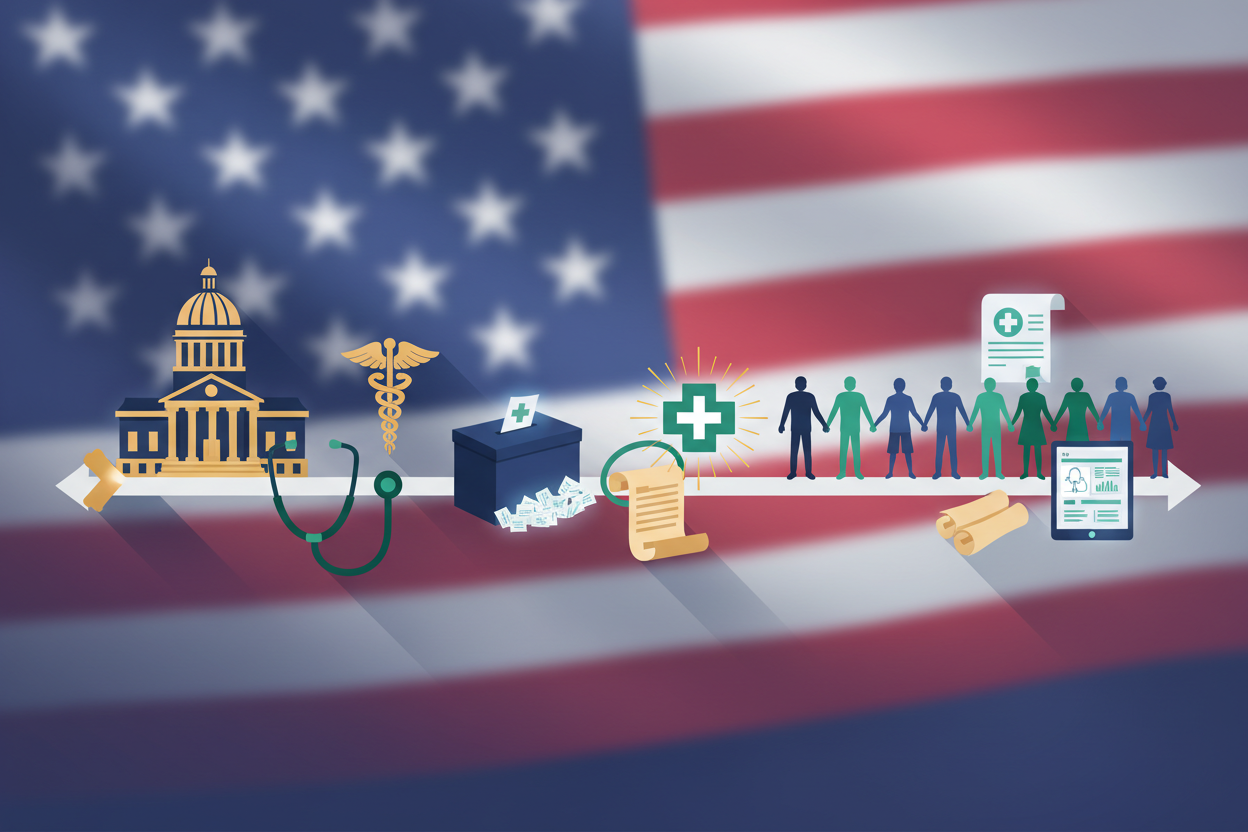
Democrats and Healthcare Reform: A Historical Overview – From FDR to Biden’s America
Healthcare reform has been a cornerstone of Democratic policy for nearly a century, shaping the political landscape and touching millions of American lives. From Franklin D. Roosevelt’s ambitious New Deal programs to Joe Biden’s current healthcare initiatives, the Democratic Party has consistently championed the cause of accessible, affordable healthcare for all Americans. This journey hasn’t been without its challenges, setbacks, and remarkable victories that have fundamentally transformed how we approach healthcare in the United States.
Understanding this rich history isn’t just an academic exercise—it’s essential for grasping where American healthcare policy might head next. As we face ongoing debates about Medicare expansion, prescription drug costs, and healthcare accessibility, the lessons from past Democratic healthcare initiatives provide valuable insights into both the possibilities and pitfalls of reform efforts.

The Foundation Years: FDR and the Seeds of Healthcare Reform
The story of Democratic healthcare reform begins during one of America’s darkest economic periods. Franklin D. Roosevelt, elected in 1932 during the Great Depression, understood that economic security and health security were inextricably linked. While his initial focus was on immediate economic relief, FDR planted the seeds for what would become decades of healthcare reform efforts.
The Social Security Act of 1935 represented the first major federal foray into social insurance, though it notably excluded health insurance—a decision that would have lasting implications. Roosevelt’s Committee on Economic Security had actually recommended including health insurance, but fierce opposition from the American Medical Association forced its removal from the final legislation. This early defeat established a pattern that would repeat throughout Democratic healthcare reform efforts: ambitious proposals met with organized resistance from medical professionals and insurance interests.
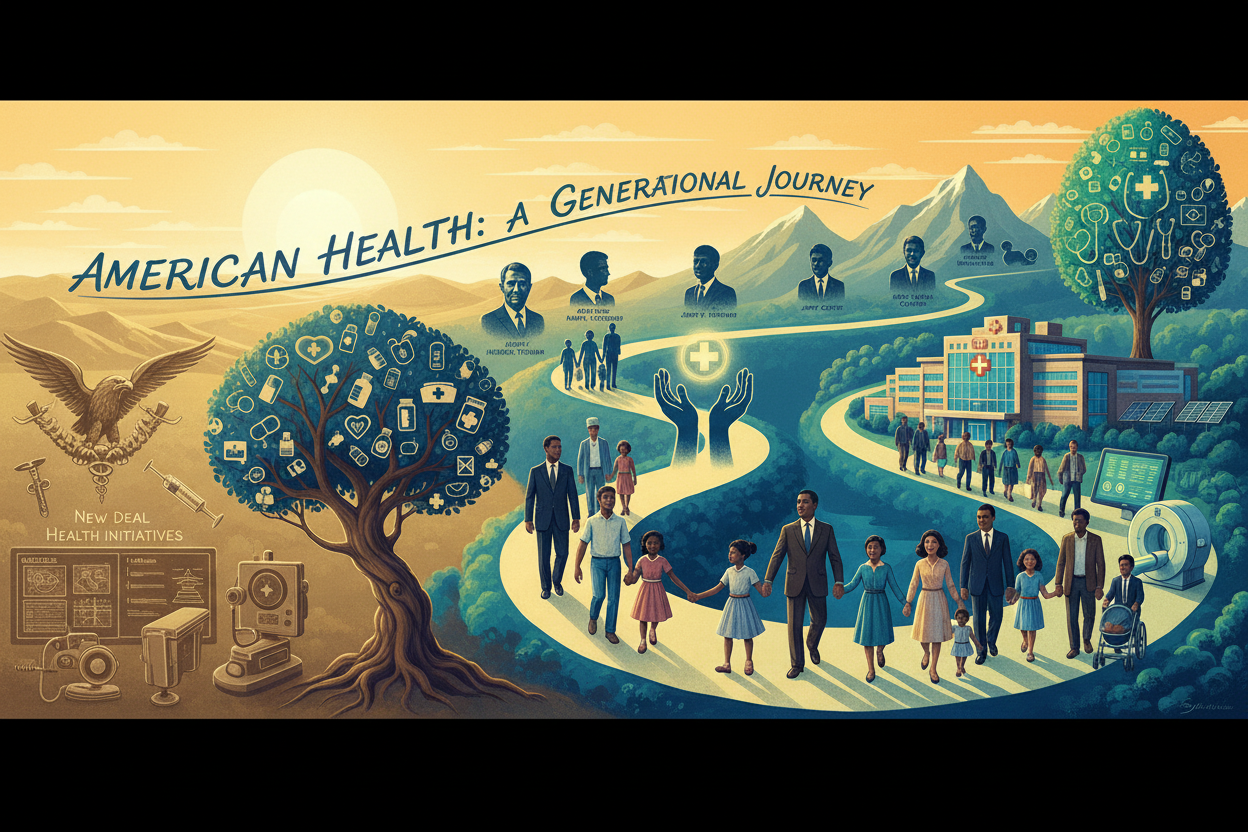
What’s fascinating about this period is how Roosevelt’s team recognized healthcare as a fundamental component of economic security, even if they couldn’t achieve comprehensive reform immediately. The groundwork laid during the New Deal era established the precedent for federal involvement in healthcare, setting the stage for future Democratic initiatives.
Truman’s Bold Vision: The First Push for Universal Healthcare
Harry Truman deserves recognition as the first president to seriously advocate for universal healthcare coverage. In 1945, just months after assuming the presidency, Truman presented Congress with a comprehensive healthcare plan that would have created a national health insurance program funded through payroll taxes—remarkably similar to proposals we hear today.
Truman’s plan was revolutionary for its time, proposing to cover all Americans regardless of employment status or pre-existing conditions. The program would have provided medical, hospital, nursing, and laboratory services, along with dental and eye care. It’s striking how modern these proposals sound nearly 80 years later, highlighting both the consistency of Democratic healthcare goals and the persistent challenges in achieving them.
The opposition Truman faced was fierce and well-organized. The American Medical Association launched what was then the most expensive lobbying campaign in American history, branding Truman’s plan as “socialized medicine”—a term that would haunt Democratic healthcare proposals for decades. Despite Truman’s passionate advocacy and his surprising 1948 election victory, the plan never gained sufficient congressional support.
The Johnson Revolution: Medicare and Medicaid Transform America
After decades of failed attempts, the breakthrough finally came under Lyndon B. Johnson’s administration. The passage of Medicare and Medicaid in 1965 represents perhaps the most significant healthcare achievement in American history, fundamentally altering the relationship between government and healthcare delivery.
Johnson’s approach was politically brilliant—rather than attempting universal coverage, he focused on the most vulnerable populations: the elderly and the poor. This strategy made the programs harder to oppose while establishing the principle of government-provided healthcare. The signing ceremony at the Truman Presidential Library, with the former president by Johnson’s side, symbolically connected these achievements to decades of Democratic advocacy.
Medicare’s impact was immediate and transformative. Before 1965, nearly half of Americans over 65 lacked health insurance. Within a year of Medicare’s implementation, that figure dropped dramatically. The program didn’t just provide healthcare access—it helped establish standards for medical care and hospital administration that improved quality across the entire healthcare system.
Medicaid’s story is equally compelling, though more complex due to its state-federal partnership structure. By providing healthcare coverage for low-income families, Medicaid addressed a critical gap in the American healthcare system. The program’s expansion over the decades to cover pregnant women, children, and eventually, under the Affordable Care Act, all low-income adults, demonstrates the evolutionary nature of Democratic healthcare policy.
The Clinton Era: Ambition Meets Reality
Bill Clinton’s presidency marked the most ambitious attempt at comprehensive healthcare reform since Truman’s era. The Health Security Act of 1993, developed under Hillary Clinton’s leadership, proposed universal coverage through a complex system of regional health alliances and employer mandates.
The Clinton plan’s failure offers crucial lessons about healthcare reform politics. Despite Democratic control of both houses of Congress and initial public support, the plan collapsed under the weight of its own complexity and coordinated opposition. The insurance industry’s “Harry and Louise” advertisements effectively framed the debate around choice and government bureaucracy, while the plan’s 1,342-page length became a symbol of governmental overreach.
What’s particularly instructive about the Clinton experience is how it shaped subsequent Democratic approaches to healthcare reform. The failure led to a more incremental strategy, focusing on specific improvements rather than comprehensive overhaul. The Children’s Health Insurance Program (CHIP), passed in 1997 with bipartisan support, exemplified this new approach and provided coverage for millions of children whose families earned too much for Medicaid but couldn’t afford private insurance.
Obama’s Historic Achievement: The Affordable Care Act
Barack Obama’s election in 2008 created the most favorable conditions for healthcare reform since the Johnson administration. With Democratic majorities in both houses of Congress and a president committed to comprehensive reform, the stage was set for another historic attempt at expanding healthcare access.
The Affordable Care Act, signed into law in 2010, represents the most significant expansion of healthcare coverage since Medicare and Medicaid. Learning from Clinton’s experience, Obama’s team pursued a more pragmatic approach, building on the existing system rather than replacing it entirely. The individual mandate, insurance market reforms, and Medicaid expansion created a three-legged stool designed to achieve near-universal coverage while maintaining the employer-based insurance system.
The ACA’s passage required extraordinary political maneuvering, including the use of budget reconciliation to overcome Republican opposition. The process highlighted both the possibilities and limitations of Democratic healthcare reform—even with favorable political conditions, achieving comprehensive change required significant compromises and creative legislative strategies.
The law’s implementation faced numerous challenges, from the disastrous Healthcare.gov rollout to ongoing Republican repeal efforts. However, its core achievements are undeniable: over 20 million Americans gained health insurance coverage, pre-existing condition protections became standard, and the uninsured rate reached historic lows.
Biden’s Continuation: Building on Democratic Healthcare Legacy
Joe Biden’s approach to healthcare reform reflects both continuity with Democratic traditions and adaptation to contemporary challenges. Rather than pursuing another comprehensive overhaul, Biden has focused on strengthening and expanding the ACA while addressing specific issues like prescription drug costs and mental health coverage.
The American Rescue Plan’s ACA subsidies and the Inflation Reduction Act’s Medicare prescription drug provisions demonstrate how incremental reform can achieve significant results. Biden’s team has also prioritized healthcare equity, recognizing that access alone doesn’t guarantee equal outcomes across racial and socioeconomic lines.
The COVID-19 pandemic has added new dimensions to Democratic healthcare priorities, highlighting the importance of public health infrastructure and the interconnection between healthcare and economic security—themes that echo back to FDR’s original vision.
Lessons Learned: Patterns in Democratic Healthcare Reform
Examining nearly a century of Democratic healthcare reform efforts reveals several consistent patterns. First, successful reforms often focus on specific populations or problems rather than attempting universal solutions. Medicare, Medicaid, and CHIP all succeeded by targeting particular groups, while comprehensive plans like Truman’s and Clinton’s failed.
Second, timing and political conditions matter enormously. Major healthcare expansions have occurred during periods of Democratic strength, but even favorable conditions don’t guarantee success. The interplay between presidential leadership, congressional composition, and public opinion creates narrow windows for transformative change.
Third, opposition to Democratic healthcare reforms has remained remarkably consistent over time. The “socialized medicine” arguments used against Truman’s plan resurface with each new reform effort, suggesting that ideological opposition to government involvement in healthcare represents a fundamental divide in American politics.
The Road Ahead: Future Challenges and Opportunities
Looking forward, Democratic healthcare reform faces both familiar challenges and new opportunities. Rising healthcare costs continue to burden families and businesses, while technological advances offer new possibilities for care delivery and cost control. The growing support for Medicare expansion among younger Democrats suggests that more ambitious reforms may gain traction in the future.
Climate change and environmental health concerns are also emerging as Democratic priorities, potentially expanding the traditional healthcare reform agenda. The COVID-19 pandemic has similarly highlighted the importance of public health infrastructure and pandemic preparedness.
The ongoing debate over Medicare for All versus more incremental approaches reflects the tension between Democratic idealism and pragmatism that has characterized healthcare reform efforts since FDR’s time. This tension isn’t necessarily negative—it reflects the party’s commitment to both ambitious goals and practical governance.
The historical record suggests that successful Democratic healthcare reforms build on existing programs while addressing specific gaps or problems. Future reforms will likely follow this pattern, gradually expanding coverage and improving quality while working within political and economic constraints.
As we look toward the future, the lessons from nearly a century of Democratic healthcare reform efforts remain relevant. Change is possible, but it requires sustained political commitment, strategic thinking, and the ability to learn from both successes and failures. The Democratic Party’s healthcare legacy provides both inspiration and instruction for the ongoing effort to ensure that all Americans have access to quality, affordable healthcare.
Frequently Asked Questions
Q: When did Democrats first propose universal healthcare?
A: Harry Truman was the first president to propose comprehensive universal healthcare in 1945, though FDR’s administration had considered including health insurance in the original Social Security Act in 1935.
Q: What was the most successful Democratic healthcare reform?
A: The creation of Medicare and Medicaid in 1965 under Lyndon Johnson is widely considered the most successful Democratic healthcare reform, providing coverage to millions of elderly and low-income Americans.
Q: Why did the Clinton healthcare plan fail?
A: The Clinton plan failed due to its complexity, organized opposition from insurance companies and medical associations, and political miscalculations, despite initial public support and Democratic control of Congress.
Q: How many people gained coverage under the Affordable Care Act?
A: The ACA provided health insurance coverage to over 20 million previously uninsured Americans and significantly reduced the national uninsured rate.
Q: What is the current Democratic position on Medicare for All?
A: Democrats are divided between supporting Medicare for All as a long-term goal and pursuing more incremental reforms to strengthen and expand the current system, with the Biden administration focusing on the latter approach.
Q: How has Republican opposition affected Democratic healthcare reforms?
A: Republican opposition has consistently challenged Democratic healthcare initiatives, from the AMA’s campaign against Truman’s plan to ongoing efforts to repeal the ACA, often forcing Democrats to pursue more incremental approaches or seek bipartisan compromises.