
Republicans and Fiscal Policy: Balancing Budgets and Growth
When it comes to managing America’s finances, few topics generate as much debate as fiscal policy. For decades, Republican lawmakers have championed a particular approach to government spending, taxation, and debt management that emphasizes fiscal responsibility while promoting economic growth. But what exactly does this mean in practice, and how do Republicans balance the sometimes competing goals of maintaining balanced budgets and fostering a thriving economy?
Understanding Republican fiscal policy isn’t just about partisan politics – it’s about grasping fundamental economic principles that affect every American’s wallet. From tax cuts to spending priorities, these policies shape everything from your paycheck to the roads you drive on. Let’s dive deep into the Republican approach to fiscal policy and explore how they navigate the delicate balance between fiscal discipline and economic expansion.
The Foundation of Republican Fiscal Philosophy
At its core, Republican fiscal policy rests on several key principles that have remained remarkably consistent over time. The party generally advocates for limited government spending, lower taxes, reduced regulation, and free-market solutions to economic challenges. This philosophy stems from the belief that private sector growth drives prosperity more effectively than government intervention.
The Republican approach to fiscal policy draws heavily from supply-side economics, which suggests that reducing taxes on businesses and high earners stimulates investment, job creation, and overall economic growth. This theory, popularized during the Reagan administration, continues to influence Republican fiscal strategies today.
Another cornerstone of Republican fiscal thinking is the emphasis on personal responsibility and self-reliance. This translates into policies that encourage work, savings, and entrepreneurship while limiting government dependency programs. Republicans often argue that excessive government spending creates unsustainable debt burdens and crowds out private investment.
Tax Policy as a Growth Engine
Perhaps no aspect of Republican fiscal policy receives more attention than taxation. Republicans consistently advocate for lower tax rates across the board, viewing taxation as a necessary evil that should be minimized to maximize economic growth and individual freedom.
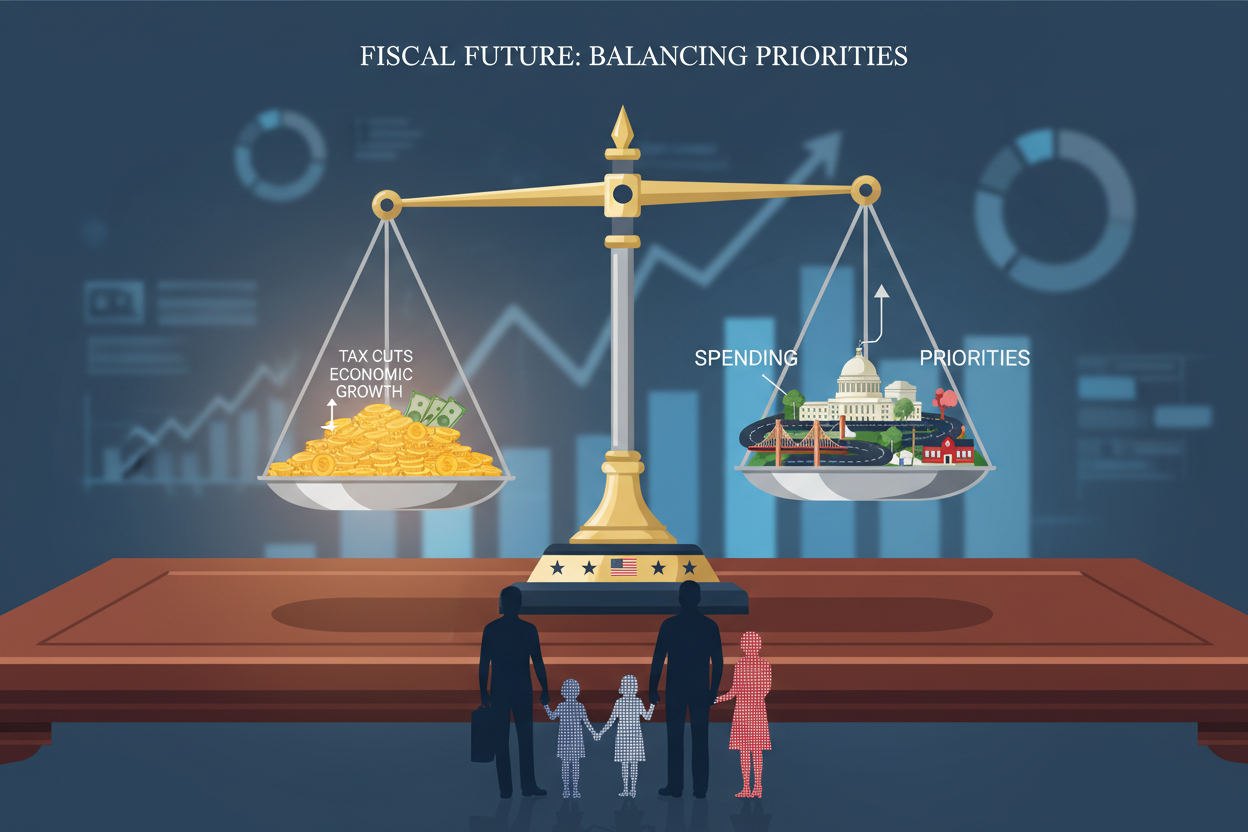
The Tax Cuts and Jobs Act of 2017 serves as a prime example of Republican tax philosophy in action. This legislation reduced corporate tax rates from 35% to 21% and lowered individual tax rates for most income brackets. Supporters argued these cuts would stimulate business investment, increase wages, and boost economic growth – ultimately generating enough additional revenue to offset the initial tax reductions.
Republicans also favor simplifying the tax code, arguing that complex regulations burden taxpayers and businesses with unnecessary compliance costs. They often propose flatter tax structures and the elimination of various deductions and credits that they view as government picking winners and losers in the economy.
Capital gains tax reduction represents another key Republican priority. By lowering taxes on investment returns, Republicans argue they encourage savings, investment, and risk-taking that drives innovation and job creation. This approach reflects their broader belief that policies benefiting investors and entrepreneurs ultimately benefit all Americans through increased economic opportunity.
Government Spending and Budget Priorities
While Republicans advocate for lower taxes, they face the ongoing challenge of managing government spending to avoid unsustainable deficits. The party generally supports reducing discretionary spending while protecting essential functions like national defense.
Defense spending occupies a unique position in Republican fiscal policy. Unlike other areas where they seek cuts, Republicans typically support robust military budgets, viewing national security as a fundamental government responsibility. This creates tension with deficit reduction goals, requiring careful prioritization of other spending areas.
Republicans often target entitlement programs for reform, though this remains politically challenging. They argue that programs like Social Security and Medicare face long-term sustainability issues that require structural changes rather than simply increased funding. Proposed reforms typically focus on means testing, raising retirement ages, or transitioning to market-based alternatives.
Infrastructure spending presents another area where Republicans must balance competing priorities. While recognizing the need for modern infrastructure, they prefer private sector solutions and public-private partnerships over large government spending programs. This approach aims to leverage private efficiency and innovation while limiting government debt accumulation.
Debt Management and Fiscal Responsibility
The national debt represents perhaps the greatest long-term fiscal challenge facing Republican policymakers. With debt levels reaching historic highs, Republicans emphasize the need for fiscal discipline to prevent future economic crises and protect intergenerational equity.
Republican debt reduction strategies typically focus on spending cuts rather than tax increases. They argue that higher taxes harm economic growth, ultimately reducing government revenue and making debt problems worse. Instead, they advocate for eliminating wasteful spending, reducing government bureaucracy, and reforming inefficient programs.
Balanced budget amendments have long been a Republican priority, though implementing such measures proves challenging in practice. These constitutional amendments would require the federal government to balance its budget annually, preventing the accumulation of additional debt except in extraordinary circumstances.
Republicans also emphasize the importance of economic growth in managing debt burdens. By expanding the economy faster than debt accumulation, they argue the debt-to-GDP ratio can be reduced without painful spending cuts or tax increases. This approach requires maintaining policies that promote sustained economic expansion.
Regulatory Reform and Economic Growth
Beyond taxation and spending, Republicans view regulatory reform as crucial to fiscal policy success. They argue that excessive regulations impose hidden taxes on businesses and consumers, reducing economic efficiency and growth potential.
Financial regulations receive particular scrutiny from Republican policymakers. While acknowledging the need for basic oversight, they oppose regulations they view as unnecessarily restrictive or complex. The Dodd-Frank Act, passed after the 2008 financial crisis, remains a frequent target for Republican reform efforts.
Environmental regulations also factor into Republican fiscal calculations. While supporting reasonable environmental protection, they oppose regulations they view as economically destructive. Republicans often argue that market-based solutions and technological innovation can address environmental challenges more effectively than government mandates.
Healthcare regulations represent another significant area of Republican focus. They advocate for market-based healthcare reforms that increase competition, reduce costs, and limit government involvement. These policies aim to reduce both government spending on healthcare and the regulatory burden on healthcare providers.
Challenges and Criticisms
Republican fiscal policy faces several ongoing challenges and criticisms that complicate implementation. Critics argue that tax cuts primarily benefit wealthy individuals and corporations while providing limited benefits to middle and lower-income Americans.
The effectiveness of supply-side economics remains hotly debated among economists. While supporters point to periods of strong growth following tax cuts, critics argue that other factors drive economic expansion and that tax cuts rarely pay for themselves through increased revenue.
Balancing deficit reduction with economic growth presents ongoing challenges. Spending cuts can reduce economic activity in the short term, potentially undermining growth objectives. Similarly, tax cuts may increase deficits if they don’t generate sufficient additional economic activity.
Political realities also constrain Republican fiscal policy implementation. Popular programs prove difficult to cut, and tax increases remain unpopular even when necessary for fiscal balance. This creates pressure to rely on economic growth to solve fiscal problems, which may not always materialize as expected.
Future Directions and Adaptations
As economic conditions evolve, Republican fiscal policy continues adapting to new challenges and opportunities. Rising income inequality has prompted some Republicans to focus more on middle-class tax relief and policies that broaden economic opportunity.
Technological change creates both opportunities and challenges for Republican fiscal policy. While innovation drives economic growth, it also disrupts traditional industries and employment patterns. Republicans increasingly focus on policies that help workers adapt to technological change while maintaining their commitment to free-market principles.
Global economic competition influences Republican fiscal policy priorities. With other nations implementing competitive tax and regulatory policies, Republicans argue that America must maintain attractive business conditions to retain and attract investment.
Infrastructure modernization represents an area where Republican fiscal policy may evolve. While maintaining their preference for private sector solutions, Republicans increasingly recognize that strategic infrastructure investments can boost long-term economic competitiveness.
Conclusion
Republican fiscal policy represents a comprehensive approach to government finances that prioritizes economic growth, fiscal responsibility, and limited government intervention. By emphasizing lower taxes, controlled spending, and regulatory reform, Republicans aim to create conditions for sustained prosperity while maintaining long-term fiscal sustainability.
The challenge lies in balancing these sometimes competing objectives. Reducing taxes may boost economic growth but can increase deficits in the short term. Similarly, cutting spending may improve fiscal balance but could reduce economic activity. Successfully navigating these trade-offs requires careful policy design and favorable economic conditions.
As America faces evolving economic challenges, Republican fiscal policy will likely continue adapting while maintaining its core principles. The ultimate test of any fiscal policy approach lies not in theoretical elegance but in practical results – sustained economic growth, broad-based prosperity, and fiscal sustainability for future generations.
Understanding Republican fiscal policy helps citizens make informed decisions about economic policy directions. Whether you agree or disagree with specific approaches, recognizing the underlying principles and trade-offs involved enables more productive discussions about America’s economic future.
Frequently Asked Questions
What is the main goal of Republican fiscal policy?
The primary goal is to promote economic growth while maintaining fiscal responsibility through lower taxes, controlled government spending, and reduced regulation. Republicans believe this approach creates jobs, increases prosperity, and ensures long-term economic sustainability.
How do Republicans plan to reduce the national debt?
Republicans typically focus on spending cuts, economic growth, and government efficiency improvements rather than tax increases. They argue that reducing wasteful spending and growing the economy faster than debt accumulation will improve the debt-to-GDP ratio over time.
Do Republican tax cuts actually pay for themselves?
This remains a subject of economic debate. While some tax cuts have generated increased economic activity and revenue, most economists agree that tax cuts rarely generate enough additional revenue to completely offset the initial revenue loss, especially in the short term.
Why do Republicans oppose higher taxes on wealthy individuals?
Republicans argue that wealthy individuals and businesses are key drivers of investment, job creation, and economic growth. They believe higher taxes on these groups reduce incentives for productive economic activity, ultimately harming overall prosperity and government revenue.
How do Republicans balance defense spending with fiscal responsibility?
Republicans view national defense as a core government responsibility and typically support robust military budgets. They seek to balance this priority by reducing spending in other areas and improving defense spending efficiency rather than cutting overall defense budgets.
What role does deregulation play in Republican fiscal policy?
Republicans view excessive regulation as a hidden tax that reduces economic efficiency and growth. By reducing regulatory burdens, they aim to lower business costs, increase competitiveness, and stimulate economic activity that generates additional tax revenue and reduces the need for government spending.