

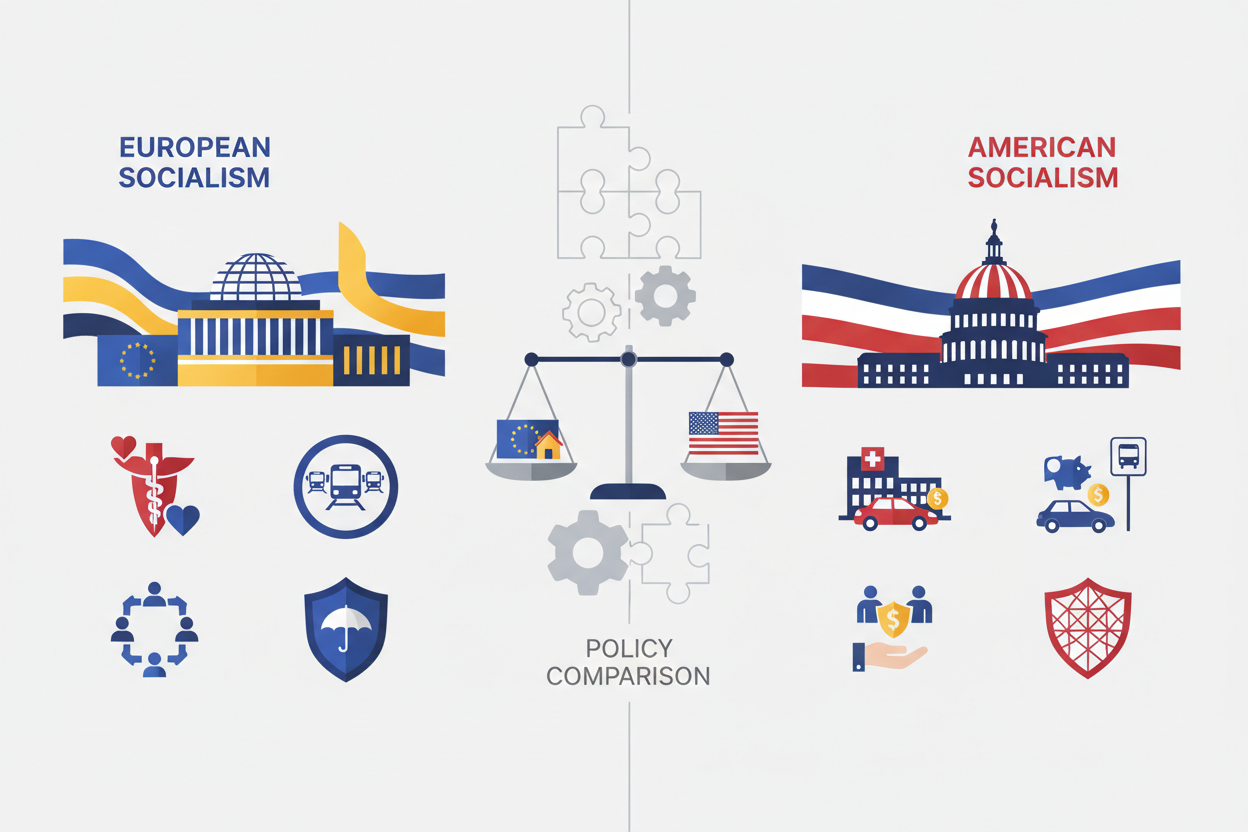
Socialism in Europe vs. America: Key Differences That Shape Two Continents
When you mention socialism in a crowded room, you’ll likely witness an immediate divide. Some people’s eyes light up with enthusiasm, while others shift uncomfortably in their seats. This reaction becomes even more pronounced when comparing how socialism is perceived and implemented across the Atlantic. The stark differences between European and American approaches to socialist policies have shaped entire generations and continue to influence political discourse today.
Understanding these differences isn’t just an academic exercise – it’s essential for anyone trying to make sense of modern politics, economics, and social policy. Whether you’re a student, a policy enthusiast, or simply someone curious about why healthcare works differently in Germany than in Georgia, this exploration will shed light on the fascinating contrasts between European and American socialism.
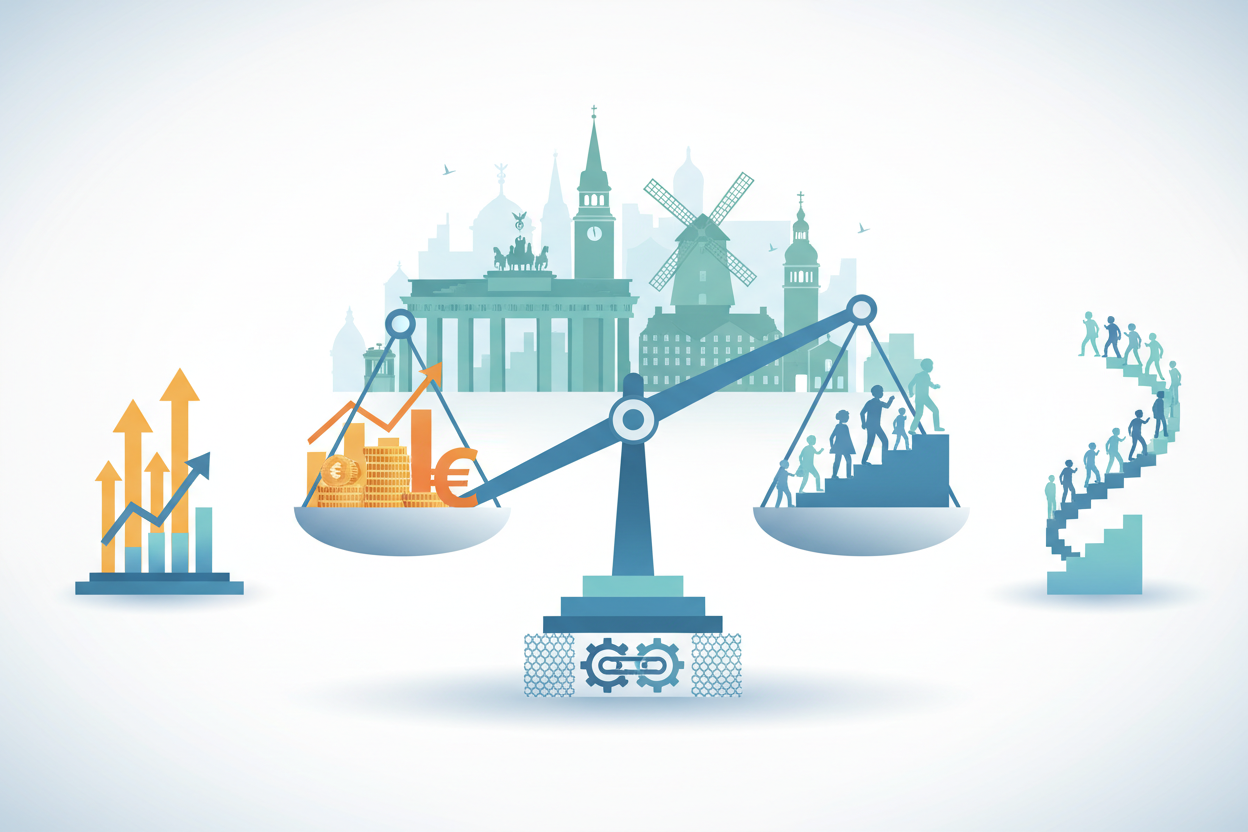
Historical Foundations: How the Past Shaped Present Attitudes
The roots of socialist thinking in Europe stretch back to the Industrial Revolution, when workers faced harsh conditions in rapidly growing cities. Countries like Germany, France, and Britain witnessed firsthand the brutal realities of unchecked capitalism. This experience created fertile ground for socialist movements that emphasized worker rights, collective bargaining, and government intervention in the economy.
America’s relationship with socialism developed quite differently. The country’s founding principles centered on individual liberty and limited government, creating what many historians call “American exceptionalism.” The vast frontier, abundant natural resources, and the promise of upward mobility through hard work made collective solutions seem less necessary to many Americans.

The Cold War further complicated America’s relationship with socialism. While European countries could distinguish between democratic socialism and Soviet communism, Americans often viewed any form of socialism through the lens of the geopolitical struggle with the USSR. This historical context continues to influence political discussions today.
Political Implementation: Different Paths to Social Democracy
European socialism typically manifests through established political parties that participate openly in democratic processes. Countries like Sweden, Norway, and Denmark have long-standing Social Democratic parties that regularly win elections and implement progressive policies. These parties advocate for strong social safety nets while maintaining market economies – a model often called the “Nordic model.”
In contrast, American socialism operates more on the margins of mainstream politics. The Democratic Socialist movement, exemplified by politicians like Bernie Sanders and Alexandria Ocasio-Cortez, works within the Democratic Party rather than as a separate entity. This approach reflects the American two-party system’s constraints and the historical stigma attached to socialist labels.
The parliamentary systems common in Europe allow for coalition governments that can include socialist parties as key partners. This creates opportunities for incremental socialist policy implementation that simply doesn’t exist in America’s winner-take-all electoral system.
Healthcare Systems: The Most Visible Divide
Perhaps nowhere are the differences more apparent than in healthcare policy. European countries have largely embraced universal healthcare systems, though they vary in structure. Britain’s National Health Service provides government-run healthcare, while Germany uses a social insurance model with both public and private options.
These systems didn’t emerge overnight – they developed through decades of political consensus-building and gradual expansion. Most Europeans now view healthcare as a fundamental right, and polling consistently shows strong support for their universal systems despite occasional complaints about wait times or bureaucracy.
American healthcare remains largely privatized, with government programs like Medicare and Medicaid serving specific populations rather than providing universal coverage. Attempts to expand government involvement, from the Clinton healthcare plan to the Affordable Care Act, have faced fierce political opposition and legal challenges.
The COVID-19 pandemic highlighted these differences starkly. European countries could leverage their existing universal systems to provide testing and treatment, while Americans faced a patchwork of coverage that often left people choosing between their health and their finances.
Economic Models: Balancing Markets and Social Welfare
European socialist-influenced economies typically feature higher tax rates, stronger labor protections, and more generous social benefits. Countries like France and Germany maintain robust welfare systems that provide unemployment benefits, family allowances, and pension guarantees that would seem impossibly generous to many Americans.
These policies create what economists call “flexicurity” – flexible labor markets combined with strong social security. Workers can take risks, change careers, or start businesses knowing they won’t face complete destitution if they fail. This safety net arguably encourages the entrepreneurship and innovation that critics claim socialism stifles.
American economic policy traditionally emphasizes lower taxes, fewer regulations, and means-tested welfare programs. The prevailing philosophy suggests that economic growth benefits everyone through job creation and increased opportunities. However, this approach has also contributed to higher income inequality compared to most European countries.
Interestingly, both systems produce wealthy, innovative economies, suggesting that the relationship between socialism and economic success is more complex than simple ideological arguments suggest.
Cultural Attitudes: Individualism vs. Collective Responsibility
The cultural differences between European and American attitudes toward socialism run deep. European societies generally embrace the concept of collective responsibility – the idea that society should care for its most vulnerable members through government programs and social solidarity.
This perspective stems partly from Europe’s experience with two world wars, economic devastation, and rebuilding efforts that required collective action. The Marshall Plan and European integration further reinforced the idea that cooperation and shared institutions could solve problems that individual nations couldn’t address alone.
American culture, by contrast, celebrates individual achievement and self-reliance. The “American Dream” narrative suggests that anyone can succeed through hard work and determination, making government assistance seem unnecessary or even counterproductive to some Americans.
These cultural differences manifest in polling data consistently showing that Europeans are more willing to pay higher taxes for better public services, while Americans prefer lower taxes and more individual choice in how they spend their money.
Contemporary Challenges: How Both Systems Adapt
Both European and American approaches to socialism face modern challenges that test their effectiveness and sustainability. European countries grapple with aging populations, immigration pressures, and the fiscal constraints of maintaining generous welfare systems in a globalized economy.
The 2008 financial crisis and subsequent austerity measures forced some European countries to reduce social spending, leading to political backlash and the rise of both far-right and far-left parties. Brexit partly reflected British frustration with European integration and immigration policies.
America faces its own challenges with rising healthcare costs, student debt, and income inequality that have made socialist policies more appealing to younger voters. The success of Bernie Sanders’ presidential campaigns and the election of progressive Democrats suggest that American attitudes toward socialism may be shifting.
Climate change presents both systems with new challenges that may require unprecedented levels of government intervention and international cooperation, potentially reshaping the debate about socialism’s role in addressing collective problems.
Conclusion: Understanding the Spectrum, Not the Extremes
The differences between European and American approaches to socialism reflect deeper cultural, historical, and institutional variations rather than simple ideological choices. European countries have generally embraced social democratic models that combine market economies with strong social safety nets, while America has maintained a more individualistic approach with limited government intervention.
Neither system is perfect, and both continue evolving in response to changing economic and social conditions. The most productive discussions about socialism’s future likely lie not in defending ideological purity but in examining what works, what doesn’t, and how different societies can learn from each other’s experiences.
As global challenges like climate change, technological disruption, and economic inequality require collective responses, the debate between European and American approaches to socialism will undoubtedly continue. Understanding these differences helps us move beyond simplistic labels toward more nuanced discussions about how societies can best balance individual freedom with collective welfare.
The key insight may be that socialism isn’t a binary choice but a spectrum of policies and approaches that different societies implement based on their unique circumstances, values, and historical experiences. Both Europe and America have valuable lessons to offer as we navigate the challenges of the 21st century.
Frequently Asked Questions
Is socialism the same as communism?
No, socialism and communism are different systems. Socialism typically allows for democratic governance and mixed economies with both public and private ownership, while communism advocates for complete government control of the economy and single-party rule. Most European “socialist” countries are actually social democracies that combine market economies with strong social programs.
Why is socialism more accepted in Europe than in America?
Historical factors play a major role. Europeans experienced the devastation of two world wars and saw how collective action could rebuild societies. America’s founding principles emphasized individual liberty and limited government, and the Cold War created additional stigma around socialist ideas. Cultural differences regarding individualism versus collective responsibility also contribute to these different attitudes.
Do European socialist policies hurt economic growth?
Research suggests that European countries with strong social democratic policies maintain competitive economies while achieving lower inequality and higher social mobility. Countries like Germany, Denmark, and Sweden consistently rank high in global competitiveness indices while maintaining generous social programs. The relationship between social spending and economic growth is complex and depends on how policies are designed and implemented.
Could American-style capitalism work in Europe?
While theoretically possible, dramatic policy changes would face significant cultural and political resistance. Europeans generally support their social systems and view healthcare, education, and social security as fundamental rights rather than market commodities. Any major shift toward American-style policies would likely require generational change in attitudes and values.
Are younger Americans more open to socialist policies?
Polling data indicates that younger Americans are indeed more favorable toward socialist policies, particularly regarding healthcare, education, and climate action. This shift partly reflects their experiences with student debt, housing costs, and economic uncertainty that make government solutions more appealing than they were to previous generations.