
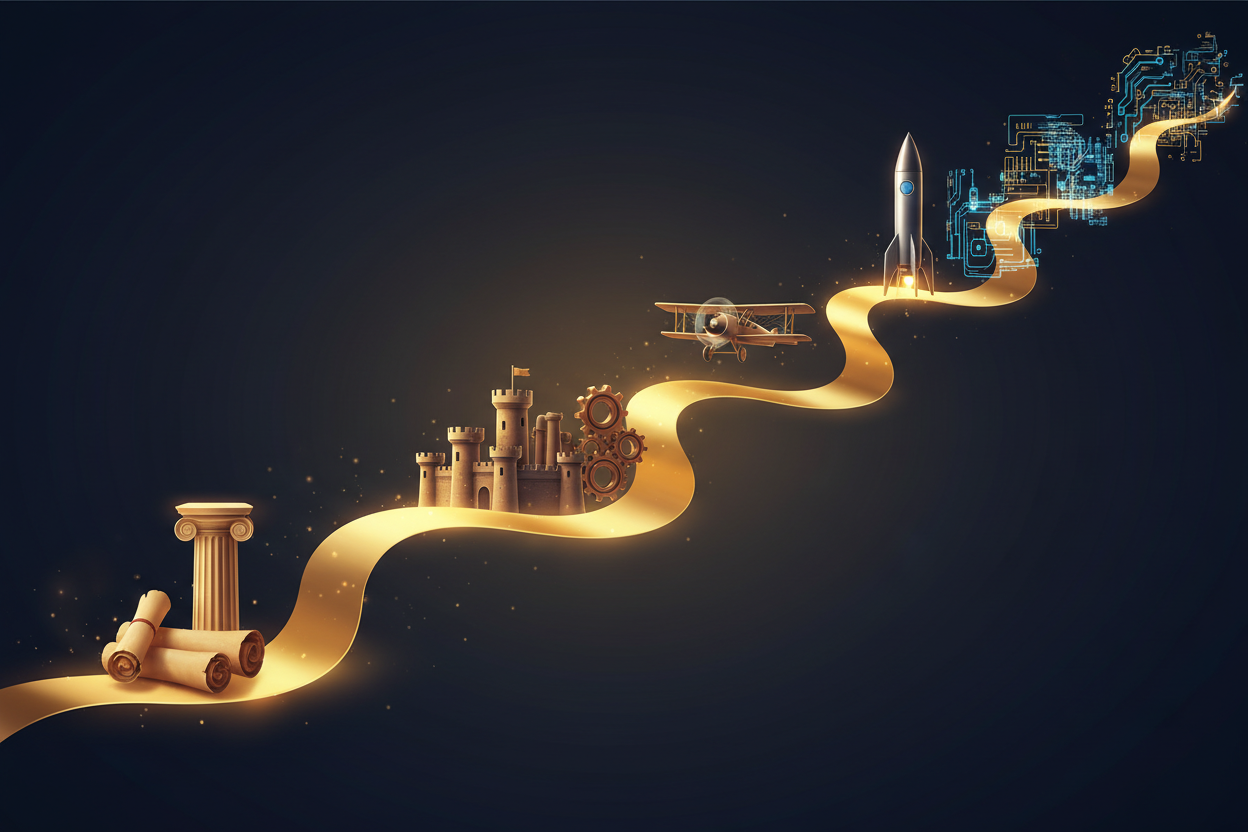
Top 10 Historical Events That Changed the World Forever
Throughout human history, certain moments have acted as pivotal turning points, reshaping civilizations, altering the course of nations, and fundamentally changing how we live, think, and interact with one another. These watershed events didn’t just influence their immediate surroundings—they sent ripple effects across continents and centuries, creating the world we know today.
From revolutionary discoveries to catastrophic wars, from groundbreaking inventions to social upheavals, these transformative moments remind us how quickly and dramatically our world can change. Understanding these events helps us appreciate the complex tapestry of human progress and the interconnected nature of our global society.
Let’s explore ten of the most significant historical events that forever altered the trajectory of human civilization, examining not just what happened, but why these moments continue to shape our lives today.
1. The Agricultural Revolution (10,000 BCE)
Perhaps no single development has had a more profound impact on human civilization than the transition from hunting and gathering to agriculture. This revolutionary shift, which began around 10,000 BCE in various parts of the world, fundamentally changed everything about how humans lived.
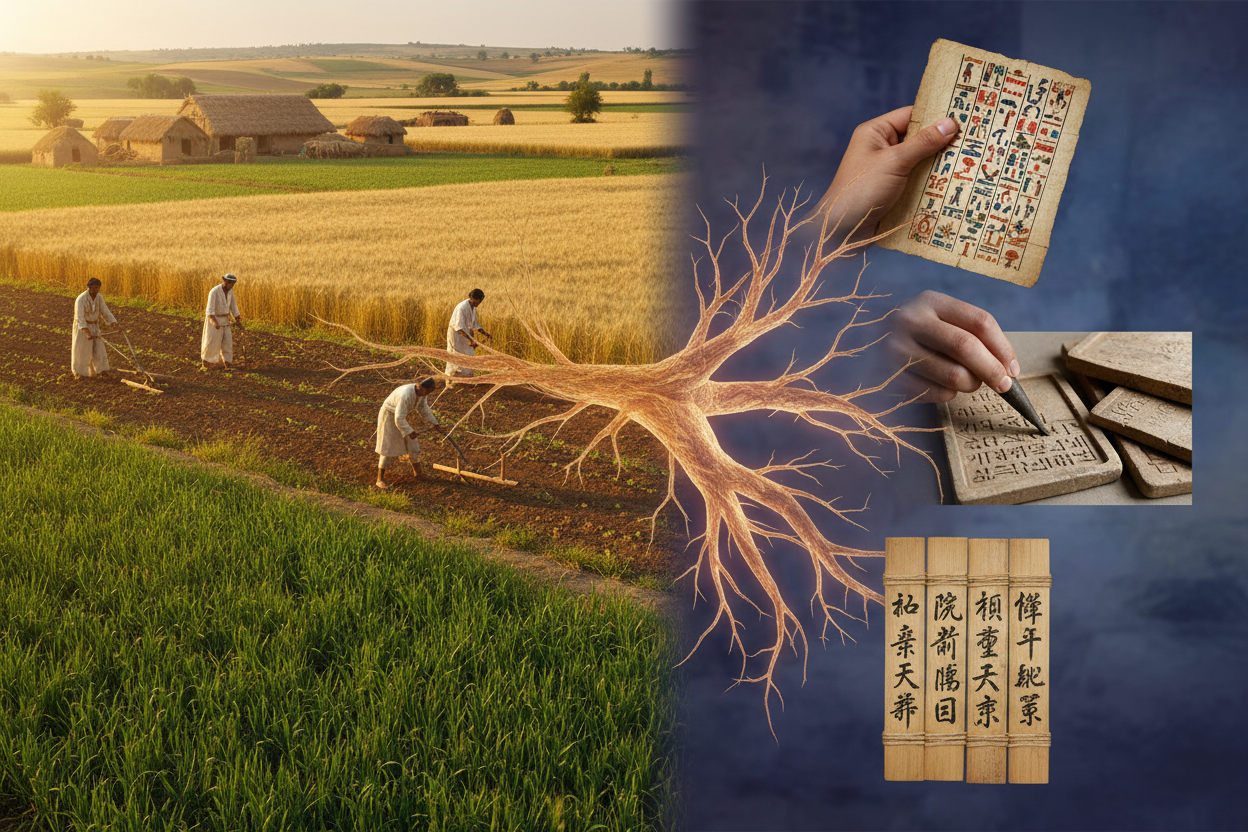
Before agriculture, our ancestors lived in small, nomadic groups, constantly moving in search of food. The ability to cultivate crops and domesticate animals allowed people to settle in one place, leading to the first permanent settlements. This stability enabled population growth, the development of specialized skills, and the accumulation of surplus resources.
The Agricultural Revolution laid the foundation for everything that followed: cities, governments, writing systems, and complex societies. Without this crucial development, none of the other transformative events on this list would have been possible.
2. The Fall of the Roman Empire (476 CE)
For over a thousand years, the Roman Empire dominated much of the known world, creating a unified system of law, language, and culture across vast territories. When the Western Roman Empire finally collapsed in 476 CE, it marked the end of an era and the beginning of what historians call the Dark Ages.
The fall of Rome had cascading effects across Europe and beyond. Trade networks collapsed, cities emptied, and much classical knowledge was lost or preserved only in monasteries. The power vacuum left by Rome’s decline led to the rise of feudalism, the expansion of Christianity, and the fragmentation of Europe into countless small kingdoms.
Yet this collapse also paved the way for new civilizations to emerge. The Byzantine Empire continued Roman traditions in the east, while Islamic civilization flourished and preserved much classical learning. The fall of Rome ultimately set the stage for the eventual Renaissance and the modern world.
3. The Printing Press Revolution (1440)
Johannes Gutenberg’s invention of the movable-type printing press around 1440 revolutionized the spread of information in ways that still resonate today. Before the printing press, books were painstakingly copied by hand, making them expensive and rare. Literacy was largely confined to the wealthy and the clergy.
The printing press changed everything. Books became affordable and widely available, leading to a dramatic increase in literacy rates. Ideas could spread rapidly across vast distances, fueling the Renaissance, the Reformation, and the Scientific Revolution. The printing press democratized knowledge, breaking the monopoly that institutions had held over information for centuries.
This invention essentially created the first information revolution, establishing principles of mass communication that would later influence newspapers, radio, television, and ultimately the internet. The printing press taught humanity the transformative power of making information accessible to everyone.
4. The Discovery of the Americas (1492)
Christopher Columbus’s voyage to the Americas in 1492 connected two hemispheres that had been isolated from each other for thousands of years. This event, often called the Columbian Exchange, triggered one of the most significant periods of cultural, biological, and economic exchange in human history.
The consequences were both profound and tragic. European diseases decimated indigenous populations who had no immunity to smallpox, measles, and other illnesses. Entire civilizations were destroyed or forever altered. At the same time, crops like potatoes, tomatoes, and corn revolutionized European agriculture, while horses, cattle, and wheat transformed life in the Americas.
The discovery of the Americas also launched the age of European colonialism, reshaped global trade patterns, and led to the forced migration of millions of Africans through the slave trade. The economic wealth generated from the Americas helped fuel European expansion and the eventual rise of capitalism as a global economic system.
5. The Scientific Revolution (1543-1687)
The Scientific Revolution fundamentally changed how humans understand the natural world and our place within it. Beginning with Copernicus’s heliocentric theory in 1543 and culminating with Newton’s Principia in 1687, this period saw the development of the scientific method and groundbreaking discoveries that overturned centuries of accepted wisdom.
Galileo’s telescopic observations, Kepler’s laws of planetary motion, and Newton’s laws of physics didn’t just advance scientific knowledge—they challenged the authority of the church and established reason and empirical observation as the primary means of understanding reality. This shift in thinking laid the groundwork for the Enlightenment and modern rational thought.
The Scientific Revolution’s impact extends far beyond academia. It sparked technological innovations that would eventually lead to the Industrial Revolution, modern medicine, and space exploration. More importantly, it established the principle that human reason and observation could unlock the secrets of the universe, a belief that continues to drive scientific progress today.
6. The Industrial Revolution (1760-1840)
The Industrial Revolution transformed human society more rapidly and thoroughly than any previous change in history. Beginning in Britain around 1760, this period saw the mechanization of production, the rise of factories, and the shift from agricultural to industrial economies.
Steam engines, textile mills, and new manufacturing processes didn’t just change how things were made—they revolutionized where and how people lived. Millions migrated from rural areas to rapidly growing industrial cities, creating new social classes and economic relationships. The pace of life accelerated dramatically as railroads and steamships compressed time and distance.
The Industrial Revolution’s effects were global and lasting. It created the modern capitalist economy, sparked urbanization, and established the foundation for today’s technological society. However, it also brought new forms of exploitation, environmental degradation, and social inequality that societies continue to grapple with today.
7. World War I (1914-1918)
World War I was supposed to be “the war to end all wars,” but instead, it ushered in a century of unprecedented global conflict and change. The scale of destruction was unlike anything humanity had previously experienced, with new technologies like machine guns, poison gas, and aircraft making warfare deadlier than ever before.
The war’s end brought the collapse of four great empires: the German, Austro-Hungarian, Russian, and Ottoman empires. New nations emerged from their ashes, redrawing the map of Europe and the Middle East. The Russian Revolution during the war led to the creation of the Soviet Union, while the harsh terms of the Treaty of Versailles set the stage for World War II.
World War I also accelerated social changes, particularly regarding women’s roles in society. The war effort brought women into the workforce in unprecedented numbers, contributing to the eventual achievement of women’s suffrage in many countries. The war’s trauma also influenced art, literature, and philosophy, reflecting a loss of innocence and faith in traditional institutions.
8. World War II (1939-1945)
If World War I changed the world dramatically, World War II reshaped it entirely. This global conflict involved more countries, caused more casualties, and had more far-reaching consequences than any event in human history. The war’s end marked the beginning of the modern international order that still exists today.
The Holocaust and other genocides during the war led to the establishment of international human rights law and the United Nations. The development and use of atomic weapons introduced a new era of warfare and international relations. The war’s outcome established the United States and Soviet Union as superpowers, setting up the Cold War that would dominate global politics for the next four decades.
World War II also accelerated decolonization, as European powers weakened by the war could no longer maintain their overseas empires. The war’s technological innovations, from radar to computers, laid the foundation for the technological revolution that followed. Perhaps most importantly, the war’s horrors led to a renewed commitment to international cooperation and the prevention of future conflicts.
9. The Digital Revolution (1940s-present)
The invention of the computer and the subsequent digital revolution has transformed virtually every aspect of human life. Beginning with early computers in the 1940s and accelerating through the development of the internet, personal computers, and mobile devices, this ongoing revolution continues to reshape our world.
The digital age has revolutionized communication, commerce, education, and entertainment. Information that once took days or weeks to transmit now travels instantly across the globe. The internet has created new forms of social interaction, democratic participation, and economic activity while also raising new challenges related to privacy, security, and the spread of misinformation.
Perhaps more than any other development since the printing press, the digital revolution has democratized access to information and tools for creation and communication. It has enabled globalization on an unprecedented scale while also creating new forms of inequality between those with and without access to digital technologies.
10. The COVID-19 Pandemic (2020-present)
While it may seem premature to include such a recent event, the COVID-19 pandemic has already proven to be one of the most transformative global events in modern history. The pandemic has affected virtually every person on Earth and accelerated changes that might have taken decades to occur naturally.
The global response to COVID-19 demonstrated both the interconnectedness of our modern world and the speed with which everything can change. Lockdowns and social distancing measures transformed work, education, and social interaction almost overnight. Remote work became mainstream, online learning expanded rapidly, and digital technologies became even more central to daily life.
The pandemic has also highlighted and exacerbated existing inequalities while spurring remarkable scientific achievements, including the rapid development of effective vaccines. Its long-term impacts on international relations, economic systems, and social norms are still unfolding, but it’s clear that the post-pandemic world will be significantly different from the one that existed before 2020.
Conclusion: Understanding Our Interconnected History
These ten historical events remind us that change is the only constant in human history. Each of these moments built upon previous developments while setting the stage for future transformations. The Agricultural Revolution made civilization possible, the printing press spread ideas that sparked revolutions, and the digital age continues to reshape how we live and work.
What’s particularly striking is how interconnected these events are. The Scientific Revolution built upon knowledge preserved after Rome’s fall, the Industrial Revolution was enabled by scientific discoveries, and both world wars accelerated technological development. Today’s digital revolution connects us globally in ways that make events like the COVID-19 pandemic truly worldwide phenomena.
Understanding these transformative moments helps us appreciate both how far humanity has come and how quickly our world can change. As we face current challenges like climate change, artificial intelligence, and global inequality, history reminds us that humans have repeatedly demonstrated remarkable adaptability and resilience in the face of unprecedented change.
The next great transformation may already be beginning. By studying the past, we can better prepare for whatever changes lie ahead, ensuring that future generations will look back on our era as another pivotal moment when humanity rose to meet the challenges of its time.
Frequently Asked Questions
What makes a historical event truly world-changing?
A world-changing historical event typically has several characteristics: it affects multiple regions or civilizations, creates lasting changes that persist for generations, fundamentally alters how people live or think, and often serves as a catalyst for additional transformations. These events usually have both immediate dramatic effects and long-term consequences that continue to influence the world centuries later.
Why isn’t the invention of writing included in this list?
The invention of writing is indeed one of humanity’s most important developments. However, writing systems developed independently in different civilizations over several millennia rather than as a single, discrete event. The Agricultural Revolution, which enabled the settled societies where writing could develop, was chosen as the more fundamental transformation that made writing possible.
How do we know these events will remain historically significant?
Historical significance is determined by an event’s lasting impact on human civilization. The events on this list have already demonstrated their enduring importance through their continued influence on modern society. While our understanding and interpretation of these events may evolve, their fundamental importance to human development is well-established through extensive historical research and analysis.
Are there other events that could be considered equally important?
Absolutely. History is rich with transformative events, and different historians might emphasize different developments. Other candidates might include the rise of major religions, the Mongol conquests, the Renaissance, the French Revolution, or the development of nuclear weapons. The events chosen here represent a broad consensus among historians about the most fundamentally transformative moments in human history.
How do these historical events relate to current global challenges?
Many current challenges have historical precedents that can inform our responses. Climate change requires global cooperation similar to responses to past pandemics, technological disruption echoes previous industrial revolutions, and information warfare has parallels to the propaganda of past conflicts. Studying how humanity has navigated previous transformations provides valuable insights for addressing contemporary challenges.