


Top 10 Crypto Coins to Watch Closely: Digital Currency Investment Guide
The cryptocurrency landscape has evolved dramatically since Bitcoin’s inception in 2009, transforming from a niche digital experiment into a trillion-dollar asset class that’s capturing the attention of retail investors, institutions, and governments worldwide. With thousands of digital currencies now available, navigating this complex ecosystem can feel overwhelming for both newcomers and seasoned investors alike.
As we move through 2024, the crypto market continues to mature, bringing with it new opportunities and challenges. While the space remains highly volatile and speculative, certain cryptocurrencies have demonstrated resilience, innovation, and strong fundamentals that make them worth monitoring closely. This comprehensive guide will walk you through ten digital currencies that deserve your attention, whether you’re looking to diversify your investment portfolio or simply stay informed about the future of finance.
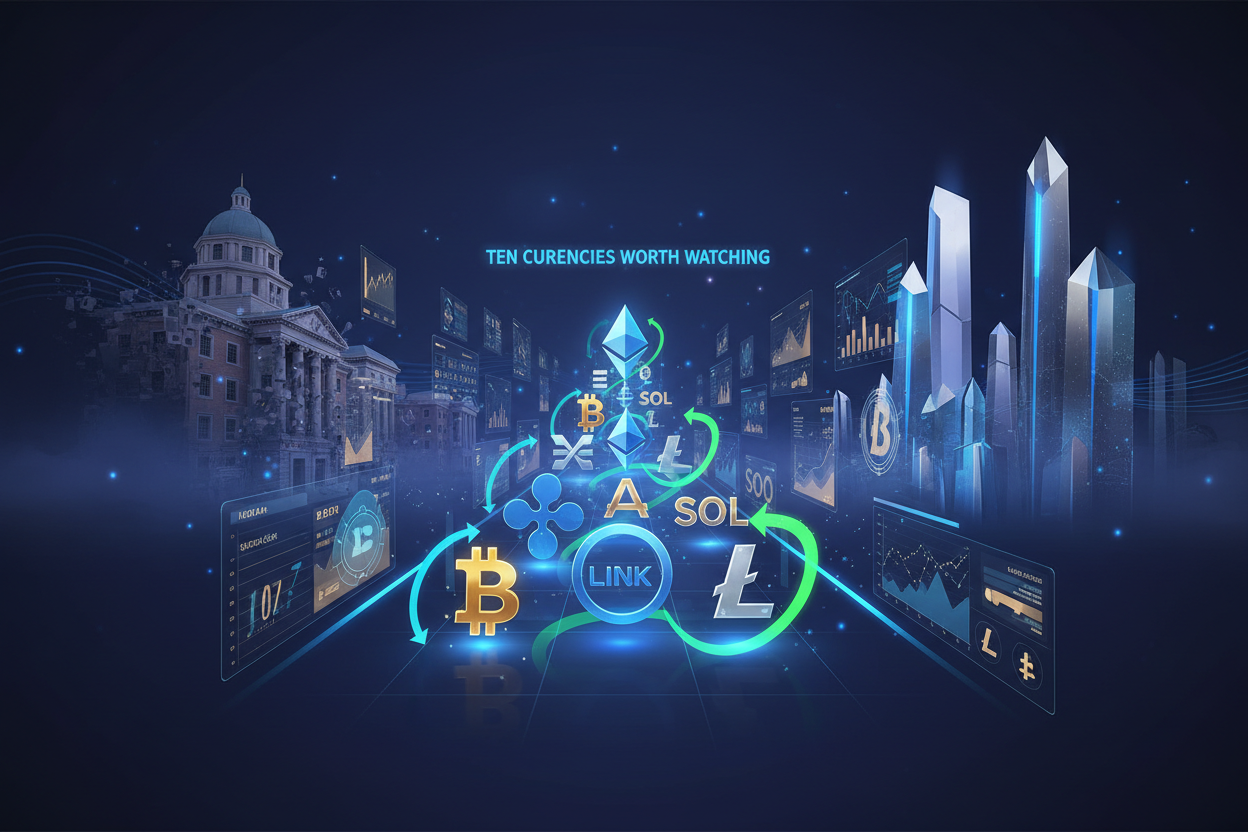
Before we dive into our carefully selected list, it’s crucial to remember that cryptocurrency investing carries significant risks. The market’s notorious volatility means prices can swing dramatically in short periods, and regulatory changes can impact valuations overnight. Always conduct thorough research and never invest more than you can afford to lose.
Understanding Cryptocurrency Investment Fundamentals
Successful cryptocurrency investing goes beyond simply buying coins and hoping for the best. Smart investors evaluate multiple factors including technology, team expertise, real-world utility, market capitalization, and community support. Unlike traditional stocks, cryptocurrencies often derive their value from network effects, adoption rates, and technological innovation rather than traditional financial metrics.
Market sentiment plays an enormous role in crypto valuations, often driving prices based on news, social media buzz, and broader economic conditions. This makes fundamental analysis even more critical, as projects with strong underlying technology and clear use cases tend to weather market storms better than speculative tokens without substance.
Bitcoin (BTC): The Digital Gold Standard
Bitcoin remains the undisputed king of cryptocurrencies, commanding respect as both a store of value and a hedge against inflation. Often called “digital gold,” Bitcoin has proven its resilience through multiple market cycles, consistently recovering from major downturns to reach new heights. Its fixed supply of 21 million coins creates scarcity that appeals to investors seeking protection against currency debasement.
Recent institutional adoption has been remarkable, with companies like Tesla, MicroStrategy, and Square adding Bitcoin to their treasury reserves. The approval of Bitcoin ETFs has further legitimized the asset class, making it accessible to traditional investors who prefer regulated investment vehicles. Despite its maturity, Bitcoin continues to evolve through technological improvements like the Lightning Network, which addresses scalability concerns.
Ethereum (ETH): The Smart Contract Pioneer
Ethereum revolutionized blockchain technology by introducing smart contracts, enabling developers to build decentralized applications (dApps) on its platform. This innovation sparked the entire DeFi (Decentralized Finance) movement and made Ethereum the backbone of countless blockchain projects. The recent transition to Ethereum 2.0, featuring a proof-of-stake consensus mechanism, has significantly reduced energy consumption while improving scalability.
The platform hosts the majority of NFT marketplaces, DeFi protocols, and tokenized assets, creating strong network effects that reinforce its market position. While facing competition from newer, faster blockchains, Ethereum’s first-mover advantage and robust developer ecosystem continue to attract new projects and users. The upcoming upgrades promise to address current limitations around transaction fees and processing speed.
Solana (SOL): The High-Performance Blockchain
Solana has emerged as a formidable competitor to Ethereum, offering lightning-fast transaction speeds and significantly lower fees. Capable of processing over 50,000 transactions per second, Solana has attracted developers building everything from DeFi protocols to gaming applications. Its unique proof-of-history consensus mechanism contributes to its impressive performance metrics.
The ecosystem has experienced rapid growth, with numerous high-profile projects choosing Solana over other platforms due to its technical capabilities. However, the network has faced some stability challenges, experiencing several outages that raised concerns about centralization and reliability. Despite these setbacks, continued development and ecosystem expansion make Solana worth monitoring closely.
Cardano (ADA): The Research-Driven Platform
Cardano takes a methodical, academic approach to blockchain development, with each upgrade undergoing peer review before implementation. This careful methodology has resulted in a highly secure and sustainable blockchain platform that prioritizes energy efficiency and scalability. The recent introduction of smart contract functionality has opened doors for DeFi and NFT applications.
Founded by Ethereum co-founder Charles Hoskinson, Cardano emphasizes real-world utility, particularly in developing nations where traditional financial infrastructure is limited. The platform’s focus on identity solutions, supply chain tracking, and educational credentials demonstrates its commitment to solving practical problems rather than chasing speculative trends.
Polygon (MATIC): Ethereum’s Scaling Solution
Polygon addresses Ethereum’s scalability issues by providing a layer-2 scaling solution that maintains compatibility with the Ethereum ecosystem. This approach allows users to enjoy faster transactions and lower fees while still benefiting from Ethereum’s security guarantees. Major companies like Disney, Meta, and Starbucks have chosen Polygon for their blockchain initiatives.
The platform’s success stems from its ability to bridge the gap between Ethereum’s security and the need for practical, cost-effective blockchain solutions. As Ethereum continues to face congestion issues, Polygon’s role as a scaling solution becomes increasingly valuable. The team’s continuous innovation and strategic partnerships position it well for future growth.
Chainlink (LINK): Bridging Blockchain and Reality
Chainlink solves a critical problem in the blockchain space by providing reliable, tamper-proof data feeds that connect smart contracts to real-world information. This oracle network enables blockchain applications to access external data sources, weather information, sports scores, and financial market data. Without oracles like Chainlink, smart contracts would be limited to on-chain data only.
The project has secured partnerships with major corporations and financial institutions, demonstrating real-world adoption beyond speculative trading. As blockchain technology becomes more integrated with traditional systems, the demand for reliable oracle services is likely to grow significantly. Chainlink’s first-mover advantage and technical excellence make it a cornerstone of the blockchain infrastructure.
Avalanche (AVAX): The Subnet Innovator
Avalanche offers a unique approach to blockchain scalability through its subnet architecture, allowing developers to create custom blockchains tailored to specific use cases. This flexibility has attracted enterprise clients and DeFi projects seeking high performance without sacrificing decentralization. The platform can process thousands of transactions per second with near-instant finality.
The subnet model enables different blockchains to interoperate while maintaining their independence, creating a network of specialized chains rather than a one-size-fits-all solution. This innovative approach has led to partnerships with traditional finance companies and government entities exploring blockchain solutions for various applications.
Polkadot (DOT): The Interoperability Champion
Polkadot addresses the blockchain interoperability challenge by enabling different blockchains to communicate and share information seamlessly. Created by Ethereum co-founder Gavin Wood, Polkadot’s parachain architecture allows specialized blockchains to connect to a central relay chain while maintaining their unique features and governance structures.
The platform’s vision of a multi-chain future resonates with developers who recognize that no single blockchain can serve all use cases effectively. By facilitating cross-chain communication and shared security, Polkadot creates value for the entire blockchain ecosystem rather than competing directly with other platforms.
The Meme Coin Phenomenon: Dogecoin (DOGE)
While it started as a joke, Dogecoin has evolved into a legitimate cryptocurrency with a passionate community and real-world utility. Elon Musk’s endorsement and the coin’s use for tipping and small transactions have given it staying power beyond its meme origins. The low transaction fees and fast confirmation times make it practical for microtransactions and charitable donations.
Dogecoin’s success demonstrates the power of community and social media in the cryptocurrency space. While its unlimited supply and lack of advanced features limit its investment appeal compared to other cryptocurrencies, its cultural significance and widespread recognition ensure continued relevance in the crypto ecosystem.
Emerging Contender: Arbitrum (ARB)
Arbitrum represents the next generation of Ethereum scaling solutions, using optimistic rollup technology to dramatically increase transaction throughput while reducing costs. The platform has quickly gained traction among DeFi protocols and developers seeking Ethereum compatibility without the associated high fees and slow confirmation times.
The recent launch of ARB tokens has given the community governance rights over the protocol’s future development. As layer-2 solutions become increasingly important for Ethereum’s ecosystem, Arbitrum’s technical advantages and growing adoption make it a compelling project to monitor closely.
Risk Management and Investment Strategies
Investing in cryptocurrencies requires a disciplined approach to risk management. Dollar-cost averaging can help smooth out volatility by spreading purchases over time rather than making large lump-sum investments. Setting clear profit-taking and stop-loss levels before investing helps remove emotion from decision-making during volatile periods.
Diversification remains crucial even within the cryptocurrency space. Rather than concentrating holdings in a single coin, spreading investments across different categories such as layer-1 platforms, DeFi tokens, and infrastructure projects can help reduce portfolio risk. Remember that correlation between cryptocurrencies tends to increase during market stress, limiting the benefits of diversification.
Looking Ahead: Future Trends and Considerations
The cryptocurrency landscape continues evolving rapidly, with new technologies and use cases emerging regularly. Central Bank Digital Currencies (CBDCs) may impact the broader crypto market, while environmental concerns drive innovation in energy-efficient consensus mechanisms. Regulatory clarity in major markets will likely influence which projects succeed long-term.
Institutional adoption appears to be accelerating, with pension funds, insurance companies, and sovereign wealth funds beginning to allocate capital to digital assets. This trend could provide more stability and legitimacy to the market while potentially reducing the extreme volatility that has characterized crypto markets historically.
The integration of artificial intelligence and blockchain technology presents exciting possibilities for new applications and improved user experiences. Projects that successfully combine these technologies may gain significant advantages in the competitive cryptocurrency landscape.
Conclusion
The ten cryptocurrencies highlighted in this guide represent diverse approaches to solving real-world problems through blockchain technology. From Bitcoin’s store-of-value proposition to Ethereum’s smart contract platform and Solana’s high-performance architecture, each project offers unique value propositions that warrant careful consideration.
Success in cryptocurrency investing requires patience, continuous learning, and emotional discipline. The market’s volatility can be both an opportunity and a threat, depending on your approach and risk tolerance. By focusing on projects with strong fundamentals, active development teams, and clear use cases, investors can position themselves to benefit from the continued growth of the digital economy.
Remember that this rapidly evolving space demands ongoing research and adaptation. What looks promising today may face unexpected challenges tomorrow, while new projects may emerge to disrupt established players. Stay informed, invest responsibly, and never risk more than you can afford to lose in this exciting but unpredictable market.
Frequently Asked Questions
What makes a cryptocurrency worth watching or investing in?
Key factors include strong technology fundamentals, active development teams, real-world utility, growing adoption rates, and sustainable tokenomics. Look for projects solving genuine problems rather than following hype cycles.
How much should I invest in cryptocurrencies?
Financial experts typically recommend limiting cryptocurrency exposure to 5-10% of your total investment portfolio due to the high volatility and risk involved. Never invest money you cannot afford to lose completely.
Is it too late to invest in Bitcoin and Ethereum?
While these cryptocurrencies have experienced significant growth, many investors and analysts believe they still have room for appreciation as adoption increases and institutional investment grows. However, potential returns may be lower than smaller, emerging projects.
How do I safely store my cryptocurrencies?
For long-term holding, hardware wallets offer the best security by storing your private keys offline. For smaller amounts or active trading, reputable exchange wallets with strong security measures can be sufficient.
What’s the difference between layer-1 and layer-2 cryptocurrencies?
Layer-1 refers to base blockchain protocols like Bitcoin and Ethereum, while layer-2 solutions like Polygon and Arbitrum build on top of existing blockchains to improve scalability and reduce costs.
Should I focus on established cryptocurrencies or newer projects?
A balanced approach often works best, combining established projects with proven track records and smaller positions in promising newer projects. Established cryptocurrencies offer more stability, while newer projects may provide higher growth potential with increased risk.